


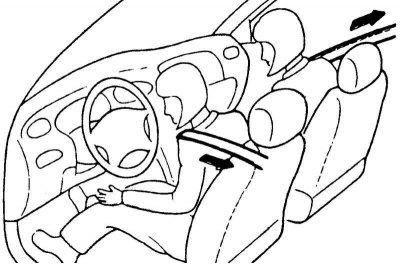
Fig. 1.123. Seat belt activation in an emergency situation
Under normal conditions, a pretensioner seat belt works in the same way as a belt with a standard locking mode (ELR). (If the car brakes suddenly, the belt will lock. It will also lock if the occupant leans forward suddenly.) However, in a moderate to severe frontal impact, the pretensioner instantly retracts the seat belt. This helps to firmly secure the occupant with the seat belt and reduce the distance between them.
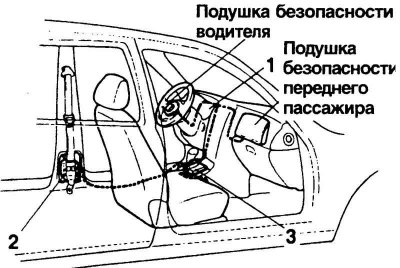
Fig. 1.124. Seat belt system with pretensioner: 1 – SRS indicator lamp; 2 – seat belt pretensioner assembly; 3 – SRS electronic control unit
The pretensioner seat belt system consists of the components shown in Figure 1.124.
Note: When the seat belt pretensioners deploy, a small amount of smoke and a loud popping sound are released. These phenomena are normal and not dangerous. Although the smoke is not toxic, you should not inhale it because it may cause irritation or coughing. After the seat belt pretensioners deploy, wash your face and hands thoroughly.
Caution! After turning the ignition key to the "ON" position, the SRS (airbag) indicator lamp flashes for approximately 6 seconds and then goes out. This occurs because the sensor that activates the SRS airbags is included in the seat belt pretensioner circuit.
Caution: This lamp also lights up if the seat belt with pretensioner is faulty.
Seat belt pretensioners are designed for single use. After activation, seat belt pretensioners are replaced. All seat belts must be replaced after a traffic accident, regardless of the type of seat belt.
Caution! After the seat belt pretensioner assembly is activated, some parts of the pretensioner will be hot. Do not touch them for several minutes.
Warning: Do not attempt to check or replace seat belt pretensioner mechanisms yourself.
Warning! Do not strike the seat belt pretensioners. Do not attempt to service or repair the seat belt system with pretensioners yourself.