


Hyundai's Supplemental Restraint System (SRS) consists of airbags mounted under the pads in the center of the steering wheel and in the panel on the front passenger side above the glove compartment. The purpose of this system is to provide additional safety for the driver and/or front passenger in addition to the seat belt system in moderate to severe frontal impacts.
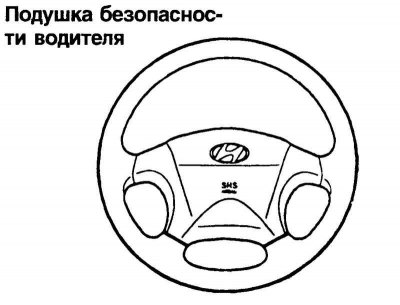
Fig. 1.125. Driver's airbag
Note: Be sure to read the SRS information on the labels located on the back of the driver's side sun visor and inside the glove compartment.
The SRS system is designed to complement and work in conjunction with the three-point driver and front passenger seat belts and is not a replacement for them. Therefore, always wear your seat belts while in the car. It is important to remember that airbags are deployed only in the event of a sufficiently strong frontal impact and only once. Therefore, you must always wear your seat belts.
Airbags do not deploy in minor impacts where seat belts are sufficient to protect occupants.
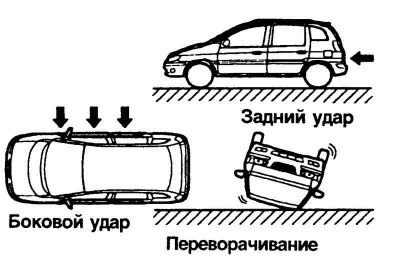
Fig. 1.126. Example of emergency situations in which airbags do not deploy
Airbags are not designed to deploy in rear impacts, side impacts, or rollovers. In addition, airbags will not deploy in a frontal impact at speeds below a certain threshold vehicle speed (Figure 1.126).
Do not replace disconnected SRS components yourself or subject them to impact, as this may result in injury.
The driver should adjust the seat so that they are as far away from the airbag as possible, but still have easy access to all vehicle controls. Do not lean or sit too close to the airbag when the vehicle is moving - this could cause serious injury if the airbag inflates.
Do not place any objects on or near the airbag modules - on the steering wheel, instrument panel and panel in front of the front passenger - they may cause injury when the airbags deploy.
If the airbags have deployed, they must be replaced at an authorized Hyundai dealer service station.
Avoid striking the Supplemental Restraint System (SRS) wiring or components as this may result in unexpected airbag deployment or system failure.
Do not install any child restraint system (child seat) in the front seat. In the event of an accident, the front passenger air bag could injure or kill the child in the child restraint system (child seat). Do not allow children to be in the area in front of the front seat. If an adult child is sitting in the front seat, he or she should be secured with a seat belt and the seat should be moved as far back as possible.
To ensure maximum protection in all types of collisions, all occupants, including the driver, should always wear seat belts, regardless of whether the seat has an airbag, to help minimize the risk of injury or death in the event of a crash.
To provide protection in a collision, the SRS airbags inflate very quickly and with great force. If the occupant is not wearing a seat belt, the airbag can strike the occupant with great force, which can cause serious or fatal injury.
Functions and elements of the SRS system
The Supplemental Restraint System (SRS) includes the following components:
- driver's front airbag assembly;
- front passenger front airbag assembly;
- sRS (SRI) warning light;
- sRS (supplemental restraint system) electronic control unit (SRSCM).
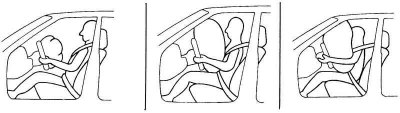
Fig. 1.127. Airbag deployment
The SRS (Supplemental Restraint System) Control Module (SRSCM) continuously monitors all system components when the ignition switch is in the "ON" position and determines whether a frontal or near-frontal impact is severe enough to deploy the air bags (Fig. 1.127).
The SRS indicator light (SRI) on the instrument cluster flashes for approximately 6 seconds after the ignition switch is turned to the ON position or the engine is started, and then goes out.
The air bags are located in the center of the steering wheel and in the panel opposite the front passenger seat above the storage compartment. When the SRS (Supplemental Restraint System) Control Module (SRSCM) detects a frontal impact of sufficient force, it automatically deploys the air bags.
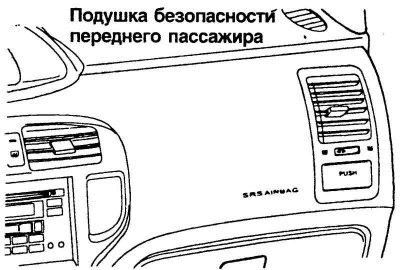
Fig. 1.128. Panel under which the front passenger airbag is located
During deployment, the airbag, which expands when inflated by gas, knocks out the cover, which breaks along a special seam (Fig. 1.128).
A fully deployed airbag, in combination with a properly fastened seat belt, slows the forward motion of the driver or front passenger, thereby reducing the risk of injury to the head and chest.
Warning! Do not install or place any foreign objects (cup holder, cassette holder, sticker, etc.) on the dashboard above the glove compartment on vehicles equipped with a front passenger airbag. When the front passenger airbag deploys, such objects may be thrown into the vehicle interior and cause serious injury.
Once fully inflated, the airbag immediately begins to deflate, providing the driver with forward visibility.
Warning! When the SRS airbag deploys, a sharp, loud bang is heard and some smoke and dust (powder) are released. These phenomena are not dangerous and are normal. However, the dust (powder) generated when the airbags are inflated can cause skin irritation. After the airbags deploy, be sure to wash your face and hands with soap and warm water.
The SRS system operates only when the ignition switch is in the "ON" position. If the SRS indicator lamp does not come on or comes on continuously after flashing for approximately 6 seconds after the ignition switch is turned to the "ON" position, after the engine is started, or comes on while the vehicle is moving, this indicates a malfunction in the SRS system.
Before replacing a fuse or disconnecting a battery cable, turn the ignition switch to the "LOCK" position or remove the key from the ignition switch. Never remove the SRS fuse with the ignition switch in the "ON" position, otherwise the SRS indicator light will come on.
Side airbags (optional equipment)
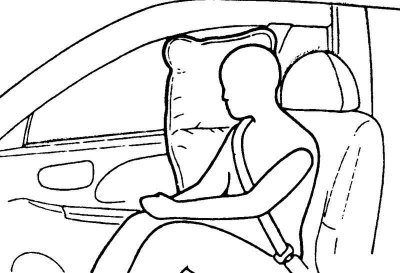
Fig. 1.129. Side airbag
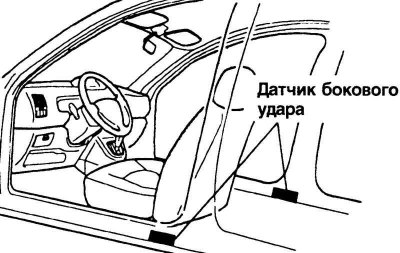
Fig. 1.130. Side airbag impact sensor
The vehicle may be equipped with side airbags for each front seat. The side airbag provides protection for the driver and front passenger in addition to the seat belts. Side airbags are designed to deploy only in some cases of side impacts, depending on the force and angle of the impact, the speed of the vehicle, and the location of the impact. Side airbags are not designed to deploy in all cases of side impacts (Fig. 1.130).