


Contents: Three-point driver's seat belt with…⇓ Adjusting the seat belt ⇓ Unfastening the seat belt ⇓ Two-point seat belt (rear seat…⇓ Adjusting the position of the rear…⇓ Removal the rear seat belt ⇓
Height-adjustable front seat shoulder belt anchorages
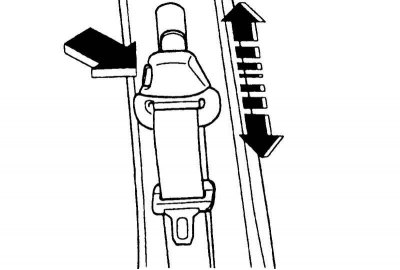
Fig. 1.116. Removing the seat belt
The height of the front seat belt anchorage can be adjusted to one of 4 positions. If the anchorage is too close to the neck, the belt will not provide maximum protection. The shoulder portion of the belt should be adjusted so that it passes across the chest and in the middle of the shoulder closest to the door. To adjust the height of the belt anchorage, press the seat belt height locking button and move the belt anchorage down or up to the desired position that ensures good contact between the belt and the shoulder. To lock the belt anchorage, release the locking button. Then try moving the seat belt anchorage down or up to make sure it is securely locked in that position.
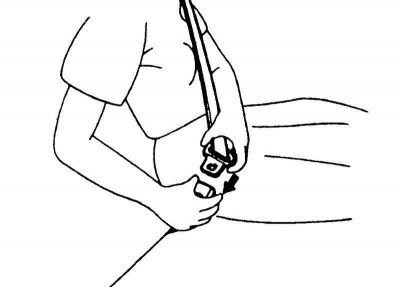
Fig. 1.117. Fastening the seat belt
Attention! The seat belt fastening must be secured while the vehicle is moving.
Warning: Incorrect adjustment of the seat belt height can significantly reduce its effectiveness in an accident.
Three-point driver's seat belt with clamping and inertia locking mechanisms
To fasten the seat belt, pull it out of the retractor and insert the belt bar (latch tongue) into the buckle until it clicks. The seat belt automatically selects the required length only after the lap belt has been adjusted. Make sure that the belt is properly fastened and is not twisted.
Adjusting the seat belt
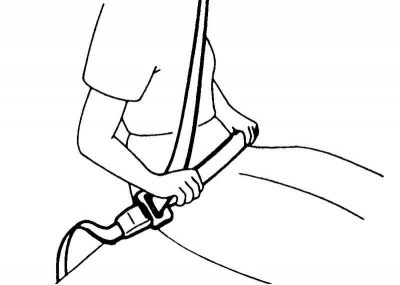
Fig. 1.118. Correct position of the fastened seat belt
Never place the lap belt across the abdomen. In the event of an accident, the belt may cut sharply into the abdomen and increase the risk of injury. When the belt is positioned too high, there is an increased risk of the occupant sliding out from under the belt in the event of an accident or sudden braking. This could result in death or serious injury. Both hands should not be under or over the belt at the same time. One hand should be under and the other over the belt, as shown in Figure 1.118.
Never place the seat belt under the arm closest to the door.
Unfastening the seat belt
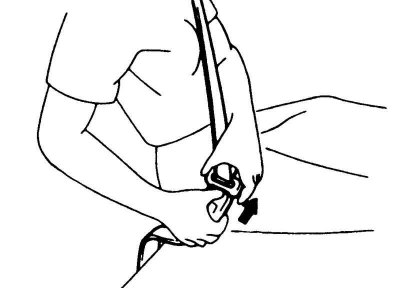
Fig. 1.119. Unfastening the seat belt
To unfasten the seat belt, grasp the bar (latch tongue) and press the button on the belt buckle. When the belt is unfastened, it will automatically retract back into the retractor mechanism.
If this does not happen, check the belt for twists and try again.
Two-point seat belt (rear seat center belt)
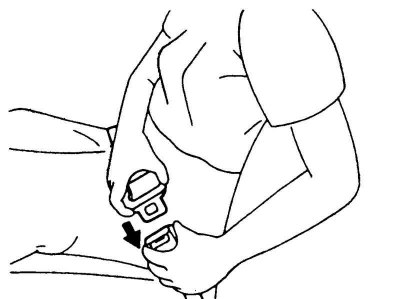
Fig. 1.120. Fastening the rear seat belt
To fasten the two-point seat belt, insert the latch tongue into the buckle. The buckle will lock into place with a clicking sound. Check that the seat belt buckle is securely fastened and that the belt is not twisted.
Adjusting the position of the rear seat belt
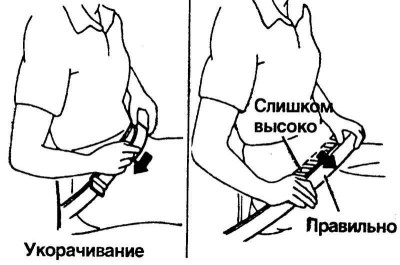
Fig. 1.121. Adjusting the position of the rear seat belt
When using a two-point seat belt, adjust its length so that it fits snugly around your body. Fasten the belt and pull it slightly to remove any slack. The belt should be positioned as low on your hips as possible. A high belt position increases the risk of injury in the event of a traffic accident.
Removal the rear seat belt
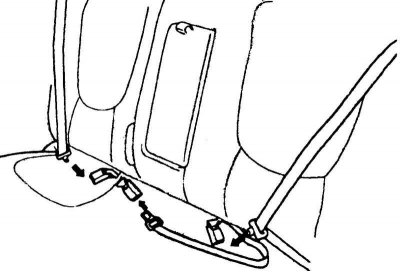
Fig. 1.122. Unfastening the rear seat belt
To unfasten the seat belt, grasp the bar (latch tongue) and press the button on the belt buckle.
Caution! The rear seat lap center belt fastening mechanism is different from the rear seat shoulder belt fastening mechanisms. When fastening the rear seat shoulder belt or lap center belt, make sure to use the correct buckle to obtain maximum protection.