


Technical characteristics of the system
| System components | Purpose | Notes |
| Crankcase ventilation system | ||
| Positive Crankcase Ventilation (PCV) Valve | Reducing hydrocarbon emissions. (NS) | With variable flow |
| Fuel vapor collection system | ||
| Vapor collection tank | Reduction of hydrocarbon emissions (HC) | Solenoid valve |
| Evaporative Emissions Purge Solenoid Valve (EVAP) | ||
| Exhaust system | Feedback is provided by a heated oxygen sensor | |
| Injection system (control of the combustible mixture composition) | Reduction of hydrocarbon (HC), carbon monoxide (CO), nitrogen oxides (NOx) emissions | |
| Three-way catalytic converter | Monolithic type | |
Tightening torque, Nm
Positive Crankcase Ventilation (PCV) Valve - 8-12
Troubleshooting
| Sign | Probable cause | Elimination |
| The engine does not start or starts with difficulty | The vacuum hose is disconnected or damaged | Repair or replace |
| EVAP purge valve malfunction | ||
| Unstable engine idling or engine stalling | The vacuum hose is disconnected or damaged | Repair or replace |
| PCV valve malfunction | Replace | |
| Purge system malfunction | Check the system. If defects are found, check the system components | |
| Increased oil consumption | The crankcase ventilation line is clogged | Check the crankcase ventilation line and its components |
Location of system components
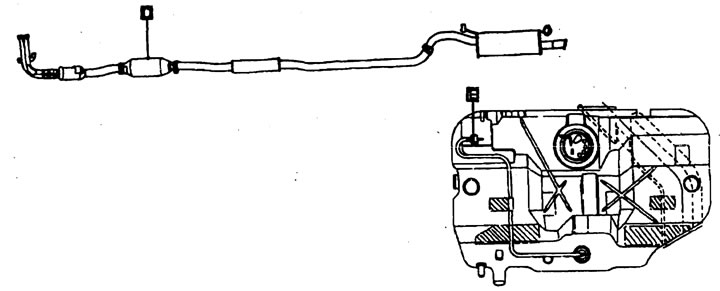
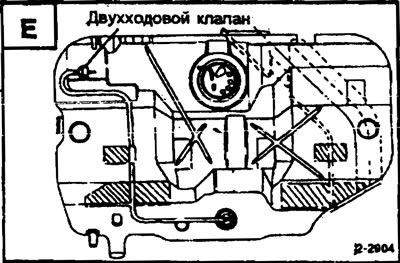
Fuel tank assembly - top view
- A - PCV ventilation valve
- B - EVAP purge solenoid valve
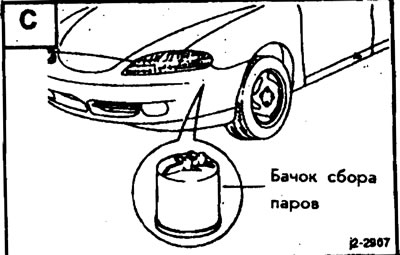
- C - Vapor collection tank
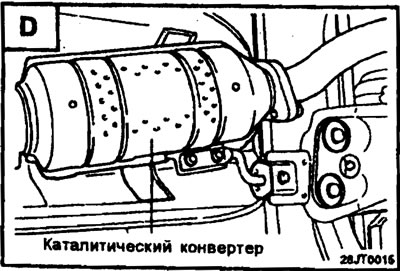
- D - Catalytic converter
- E - Two-way valve
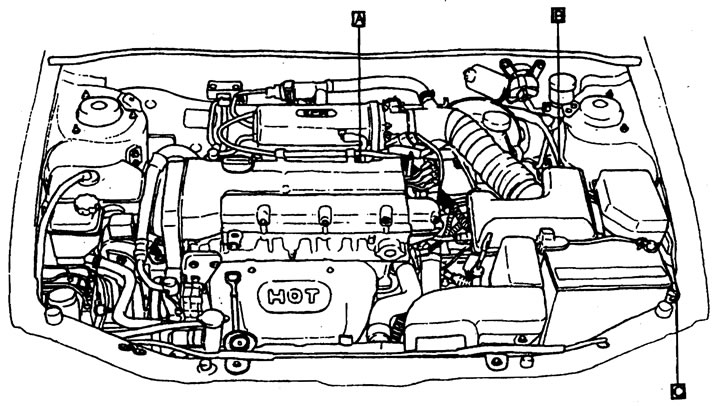
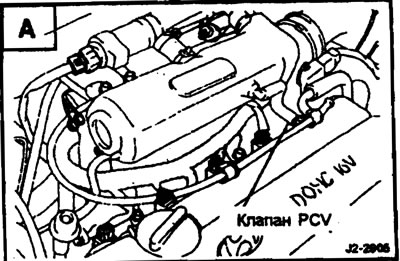
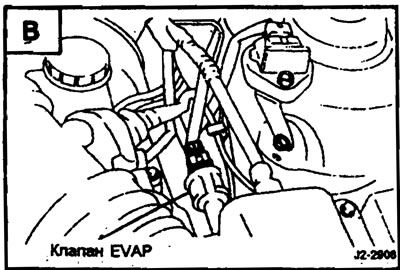
- A - PCV ventilation valve
- B - EVAP purge solenoid valve
- C - Vapor collection tank
- D - Catalytic converter
- E - Two-way valve