HyundaiBook.ru
Repair Chevrolet Repair Honda Repair Toyota Repair Land Rover Repair VAZ Repair Renault Repair Nissan
English Русский
Български
Беларускі
Український
Српски
Hrvatski
Română
Polski
Slovenský
Magyar
ArticlesSitemapContacts  


  Accent   Elantra   Getz   Grandeur   Sonata   Santa Fe   Tucson   Others
Elantra 1 (1990-1995, petrol) Elantra 2 (1995-2000, petrol) Elantra 3 (2000-2006)
  • Main
  • Elantra
  • J1 (1990-1995)
  • Power unit
  • Cooling system
  • Diagnostics of cooling system faults

Diagnostics of cooling system faults (Hyundai Elantra J1)

0
The engine cooling system ensures its operation in an optimal temperature range of 88-100°C under various operating conditions.

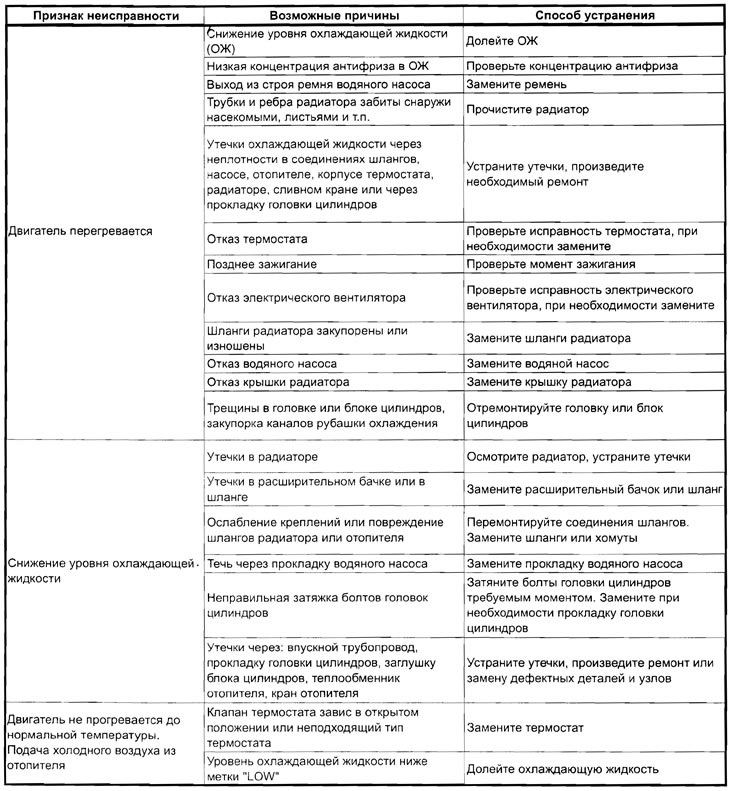
Typical malfunctions of the cooling system are leaks and insufficient cooling efficiency of the engine. The first occurs due to damage to the hoses and their connections, the liquid pump seal, damage to the gaskets, cracks, and the second - due to a malfunction of the fan, breakdowns of the water pump, malfunction of the thermostat, internal and external contamination of the radiator as a result of scale formation.

Signs of a faulty cooling system include engine overheating and boiling coolant in the radiator, unless they are the result of prolonged and heavy engine load or improper adjustment of the ignition system or fuel system.

Thermostat Troubleshooting Algorithm
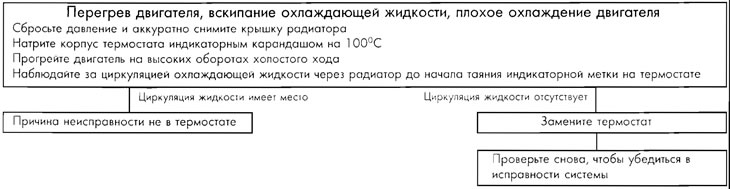


Thermostat Troubleshooting Algorithm

Thermostat Troubleshooting Algorithm

Note: The indicator pencil is similar to a regular pencil and contains a material with certain chemical additives that provide a given melting point. By applying a pencil mark to the thermostat housing at 88°C and 100°C, you can check the thermostat's operating temperature. These bags should melt when the coolant reaches temperatures of 88°C and 100°C respectively. These temperatures determine the thermostat's operating range. Therefore, if circulation does not occur, this means that the thermostat may be faulty.


Note: The indicator pencil is similar…

(The original material is located on the website: HyundaiBook)
This article is available at russian, bulgarian, belarusian, ukrainian, serbian, croatian, romanian, polish, slovak, hungarian
This article has been reviewed by: Konstantin Smirnov
Add to social network:

Previous
Elantra 1: Cooling system
Next

How to distinguish low-quality hoses
Cooling System Hoses — Maintenance and Repair in Emergency Situations
Antifreeze and corrosion inhibitors — general information
Expansion tank
Troubleshooting on the road
We recommend other articles on the topic of Hyundai manuals:

Cooling system Hyundai Accent 1 (1994-1999)
Checking the electric fans of the cooling system Hyundai Getz (2002-2011)
Engine cooling system Hyundai Sonata 3 (1993-1998)
Checking the electric fans of the cooling system Hyundai Santa Fe 2 (2007-2012, petrol)
Technical characteristics of the cooling system Hyundai Tucson 1 (2005-2010)
Checking the electric fans of the cooling system Hyundai Matrix (2001-2010, petrol)

Link in different formats to this article

Visitor comments
No comments yet


How much will 24 + 41 ?


Elantra 3 (2000-2006) 
  • User manual
  • Control devices
  • Audio system
  • Starting the engine and driving
  • Faults en route
  • Maintenance and care
  • Technical information
  • Power unit
  • Gasoline engines
  • Diesel engines
  • Lubrication system
  • Cooling system
  • Fuel system (gasoline)
  • Fuel system (diesel)
  • Decreased toxicity
  • Ignition system
  • Transmission
  • Clutch
  • Mechanical gearbox
  • Automatic gearbox
  • Drive shafts and axles
  • Chassis
  • Car suspension
  • Steering
  • Brake system
  • Body
  • Exterior (external elements)
  • Interior (internal elements)
  • Air conditioning system
  • Electrical equipment
  • Equipment and devices
  • Headlights and lighting
  • Power devices
  • Electrical circuits
Elantra 2 (1995-2000, petrol) 
  • General information
  • Maintenance
  • Power unit
  • Engine repair
  • Cooling system
  • Intake and exhaust system
  • Fuel system
  • Transmission
  • Clutch
  • Manual gearbox
  • Automatic gearbox
  • Drive shafts and axles
  • Chassis
  • Front suspension
  • Rear suspension
  • Steering
  • Brake system
  • Body
  • Body elements
  • Electrical equipment
  • Equipment and devices
  • Electrical diagrams
Elantra 1 (1990-1995, petrol) 
  • General information
  • Introduction to the guide
  • Maintenance
  • Power unit
  • Minor engine repair
  • Engine overhaul
  • Lubrication system
  • Cooling system
  • Fuel injection system
  • Ignition system
  • Exhaust system
  • Transmission
  • Clutch
  • Manual gearbox
  • Automatic gearbox
  • Drive shafts
  • Chassis
  • Front suspension
  • Rear suspension
  • Steering
  • Wheels and tires
  • Troubleshooting
  • Brake system
  • Body
  • Body elements
  • Electrical equipment
  • Equipment and devices
  • Power devices
  • Heating and air conditioning
  • Electrical circuits
HyundaiBook.ru © 2018-2026 · Mobile version · Sitemap: EN BG BY UA RS HR RO PL SK HU · Administration · Site search · Hyundai owners Accent 1 · Accent 2 · Accent 3 · Elantra 1 · Elantra 2 · Elantra 3 · Getz · Sonata 3 · Sonata 4 · Santa Fe 2 · Tucson 1 · Tucson 2 · Matrix ·
This site uses cookies to optimize its functionality. By continuing, you agree to our terms.