


Contents: Fuel consumption indicator (eco) (if…⇓ Airbag warning light (if equipped) ⇓ Anti-lock brake system (ABS) warning…⇓ Electronic Brakeforce Distribution…⇓ Light and sound signals about…⇓ Direction indicator lamps ⇓ Low beam indicator (if equipped) ⇓ High beam indicator lamp ⇓ Parking light indicator (if equipped) ⇓ Front fog light indicator lamp (if…⇓ Rear fog light indicator (if…⇓ Low Engine Oil Pressure Warning Light ⇓ Oil level warning signal (for diesel…⇓ Parking brake and low brake fluid…⇓ TPMS (Tire Pressure Monitoring…⇓ Gear Selection Indicator (if…⇓ Manual transmission shift indicator…⇓ Charging system indicator light ⇓ Door open warning light ⇓ Tailgate opening indicator lamp ⇓ Door opening indicator (including…⇓ Immobilizer operation indicator (if…⇓ Low Fuel Warning Light ⇓ Engine Malfunction Indicator Light ⇓ Electronic Stability Program (ESP)…⇓ ESP system deactivation indicator…⇓ Cruise control indicator light (if…⇓ DBC (Downhill Brake Control)…⇓ KEY OUT indicator (if equipped) ⇓ Pre-heating system indicator lamp…⇓ Fuel filter warning light (for…⇓ All-wheel drive system indicator…⇓ 4WD LOCK indicator (if equipped) ⇓ Coolant Temperature Warning Light…⇓ Electric Power Steering (EPS)…⇓ Warnings displayed on the LCD…⇓
When the ignition key is turned to the ON position, all indicator lights are checked for proper operation (do not start the engine). Any light that does not come on should be checked by an authorized Hyundai dealer. After starting the engine, check that all indicator lights go out. If any light remains on, this indicates a condition that requires attention. When the parking brake is released, the parking brake indicator light should go out. The low fuel indicator light will remain on if the fuel level is low.

Fuel consumption indicator (eco) (if available)
ECO mode ON/OFF (petrol only)
The ECO indicator informs about the operation of the system that helps to drive the car in an economical mode. It is displayed when the car is driven with low fuel consumption, which helps the driver to improve its economy.
The ECO indicator (green) will illuminate when the vehicle is driven in fuel economy mode and the ECO mode is on. If you do not want the indicator to be displayed, you can switch the ECO ON mode to the ECO OFF mode by pressing the TRIP button. Fuel efficiency may vary depending on driving style and road conditions.
The ECO indicator will not work when the automatic transmission selector is in the P (Park), N (Neutral) and R (Reverse) positions.
Caution: Do not keep the indicator in your field of view while driving. This will distract you while driving and may cause an accident and serious injury.
Active ECO system (diesel engines only)
When the active ECO system is operating, the ECO indicator lights up green.

Airbag warning light (if equipped)
This indicator light comes on for approximately six seconds each time the ignition switch is turned to the ON position. This light also comes on if there is a malfunction in the air bag system. If this light does not come on or remains on six seconds after the ignition switch is turned to the ON position or the engine is started, or if it comes on while the vehicle is being driven, have the air bag system checked by an authorized Hyundai dealer.

Anti-lock brake system (ABS) warning light (if equipped)
This light comes on when the ignition key is turned to the ON position and goes out after about three seconds if the system is normal. If this light remains on after the ignition is turned on, comes on while driving, or does not come on after the ignition is turned on, this indicates a possible malfunction of the ABS system. In this situation, contact an authorized Hyundai dealer as soon as possible to have the vehicle checked. The vehicle's braking system will continue to function, but without the support of the anti-lock system.

Electronic Brakeforce Distribution (EBD) Warning Light
If both warning lights come on at the same time while driving, both the ABS and EBD systems are faulty. In this case, the ABS and main brake systems may not operate normally. You should contact an authorized Hyundai dealer as soon as possible to have the vehicle checked.
Caution: If the ABS warning light and the brake warning light come on and stay on at the same time, it means that the vehicle's brake system will not operate normally. Therefore, you may encounter an unexpected and dangerous situation when braking abruptly. In this case, avoid driving at high speeds and braking abruptly. Have your vehicle checked by an authorized Hyundai dealer as soon as possible.
Note: If the ABS or Electronic Brakeforce Distribution (EBD) malfunction indicator light stays on, the speedometer or trip meter (odometer)/trip meter may not work. Also, the EPS indicator light may come on, and the steering effort may increase or decrease. In this case, have the vehicle inspected by an authorized Hyundai dealer as soon as possible.

Light and sound signals about unfastened seat belt (if available)
As a reminder to the driver, the seat belt status indicator lights will flash for approximately 6 seconds each time the ignition switch is turned to the ON position, regardless of whether the seat belts are fastened or not.

Direction indicator lamps
Flashing green arrows on the instrument panel indicate the direction the turn signals are pointing. If the arrow lights up but does not flash, flashes more quickly than usual, or does not light up at all, there is a problem with the turn signal system. Contact an authorized dealer to have it repaired. The indicator will also flash when the warning switch is on.

Low beam indicator (if equipped)
This indicator lights up when the low beam headlights are turned on.

High beam indicator lamp
This lamp comes on when the headlights are switched to high beam or when the high beam is briefly switched on using the turn signal control lever.

Parking light indicator (if equipped)
This indicator illuminates when the rear lights and headlights are on.

Front fog light indicator lamp (if equipped)
This lamp lights up when the front fog lights are turned on.

Rear fog light indicator (if equipped)
The indicator lights up when the rear fog lights are turned ON.

Low Engine Oil Pressure Warning Light
This lamp indicates low pressure in the engine lubrication system. If it lights up while the vehicle is moving:
1. Carefully move to the edge of the roadway and stop.
2. With the engine off, check the oil level. If the oil level is below the norm, add oil as required.
If this indicator light remains on after adding oil to the engine or if there is no oil available, consult an authorized Hyundai dealer.
Caution: Failure to turn off the engine immediately after the low engine oil pressure warning light comes on may result in serious damage.
Attention.
- If the low engine oil pressure warning light stays on while the engine is running, this situation can cause serious damage. This light comes on when the pressure in the lubrication system drops below normal. It normally comes on when the ignition is turned on and then goes out after the engine starts. If the low oil pressure warning light comes on while the engine is running, this indicates a serious malfunction.
- In this situation, stop the vehicle as soon as it is safe to do so, turn off the engine and check the oil level. If the engine oil level is low, add oil to the correct level and restart the engine. If the light remains on while the engine is running, turn the engine off immediately. In any case, if the low oil pressure warning light remains on while the engine is running, have the vehicle checked by an authorized Hyundai dealer before restarting the engine.

Oil level warning signal (for diesel engine, if equipped)
The oil level warning light comes on when it is time to check the oil level. When the warning light comes on, check the oil level as soon as possible and top up if necessary. Add the recommended brand of oil little by little into the filler neck (top up volume is approximately 0.6-10 l). Use only the recommended brand of oil. Do not add more oil than necessary so that the oil level does not rise above the F mark on the dipstick.
Note: If you drive about 50 km after adding oil, the warning light will go out.
Turn the ignition key from OFF to ON three times at intervals of 10 seconds, the warning light will go out immediately. However, if you turn off the warning light without adding oil, it will light up again after about 50 km.
Caution. If the warning light remains on after adding oil even after 50 km, you should contact your nearest authorized Hyundai dealer and have the system checked. Even if the light does not come on after starting the engine, you should still periodically check the oil level and add oil.

Parking brake and low brake fluid warning light
Parking brake warning
This lamp comes on when the parking brake is set and the ignition key is in the START or ON position. This lamp should go out when the parking brake is released with the engine running.
Low brake fluid warning
If this warning light remains on, it indicates that the brake fluid level in the expansion tank is low. If this warning light remains on:
1. Carefully move to the nearest safe place and stop the car.
2. With the engine off, immediately check the brake fluid level and top up as required. Then check all brake system components for leaks.
3. Do not continue driving the vehicle if leaks are detected, if the warning light remains on, or if the brake system is not operating normally.
The vehicle should be towed to an authorized Hyundai dealer for a brake system check and any necessary repairs. This vehicle is equipped with a dual braking system, which is designed in a diagonal pattern. This means that even if one line fails, the brakes on both wheels of the vehicle will still be operational. In this situation, a greater pedal travel and greater force will be required to stop the vehicle.
In addition, the stopping distance of a vehicle with only a part of the brake system functioning will be longer than normal. If the brakes fail while the vehicle is moving, shift into a lower gear to use engine braking and stop the vehicle as soon as it is safe to do so. To check the operation of the parking brake and low brake fluid warning light, make sure it lights when the ignition key is turned to the ON position.
Caution: It is dangerous to drive the vehicle while the brake warning light is on. If the brake warning light remains on, have the brake system checked and repaired immediately by an authorized Hyundai dealer.
TPMS (Tire Pressure Monitoring System) Indicator (if equipped)
 Low Tire Pressure Indicator
 Low pressure wheel position indicator device
After the ignition switch is turned to the ON position, the low tire pressure warning light comes on for three seconds. The low tire pressure and wheel position indicators come on when one or more tires have significantly lost pressure. If there is a malfunction in the tire pressure monitoring system, the low tire pressure indicator will flash for approximately one minute and then remain on. In this case, contact an authorized Hyundai dealer as soon as possible to have the system checked.
Attention. Safe braking.
- The TPMS system is not designed to alert you to sudden tire failure caused by external factors.
- If the vehicle's handling becomes unstable, immediately remove your foot from the gas pedal, press the brake pedal smoothly and with little force, and slowly stop the vehicle in a safe place on the road.

Gear Selection Indicator (if equipped)
This indicator shows the position of the automatic transmission selector (P, R, ND and sport mode).

Manual transmission shift indicator (if equipped)
This indicator tells the driver which gear to select, which helps save fuel.
For example:
- indicates that it is desirable to shift to third gear (currently second gear is engaged).
- indicates that it is desirable to shift to third gear (currently fourth gear is engaged).
Note: When the system is not working properly, the up/down arrow indicator and gear number are not displayed.

Charging system indicator light
This warning light indicates a fault with either the alternator or the battery charging system. If it comes on while the vehicle is moving:
1. Move the vehicle to the nearest safe location.
2. With the engine off, check the tension of the generator drive belt and that it is not broken.
3. If the belt tension is normal, there is a problem somewhere in the battery charging system. Contact an authorized Hyundai dealer as soon as possible to have the problem corrected.

Door open warning light
This indicator light comes on if the door is not closed securely, regardless of the position of the key in the ignition switch.

Tailgate opening indicator lamp
This indicator lamp comes on if the tailgate is not closed securely, regardless of the position of the key in the ignition switch.

Door opening indicator (including luggage compartment)
This indicator lights up when a door or trunk is not closed securely. The indicator shows which door (or trunk) is open.

Immobilizer operation indicator (if available)
Without electronic key system
This light comes on when the key with the immobilizer transmitter is inserted into the ignition switch and turned to the ON position to start the engine. The engine can then be started. After the engine starts, this light goes out. If this light flashes when the ignition switch is in the ON position before the engine starts, have the system checked by an authorized Hyundai dealer.
With electronic key system
If one of the following situations occurs in a vehicle equipped with an electronic key, the immobilizer indicator lamp comes on, flashes, or goes out.
- If the smart ignition key is in the vehicle, when the Start/Stop button is set to the ACC or ON position, the indicator will light for approximately 30 seconds, indicating that the engine can be started.
- However, if the smart ignition key is not in the vehicle, when the Start/Stop button is pressed, the indicator will flash for a few seconds, indicating that the engine cannot be started.
- If the indicator comes on for two seconds and goes out when the Start/Stop button is turned to the ON position with the smart ignition key in the vehicle, the system should be checked by an authorized Hyundai dealer.
- If the battery charge level is low, when you press the engine start/stop button, the indicator lamp will flash and you will not be able to start the engine. However, you will still be able to start the engine by inserting the electronic key into the holder. If there is a malfunction in the parts related to the electronic key system, the indicator lamp will flash.

Low Fuel Warning Light
This light indicates that the vehicle's fuel tank is almost empty. In this situation, it is necessary to refuel the vehicle as soon as possible. Continuing to drive with the low fuel light on or with the fuel gauge needle below the "E" mark may cause the engine cylinder to misfire and damage the catalytic converter.

Engine Malfunction Indicator Light
This warning light is part of the engine management system that monitors the status of various components of the emission control system. If this light comes on while the vehicle is being driven, it indicates that there may be a malfunction somewhere in the system. In addition, this light comes on after the ignition key is turned to the ON position, and then goes out a few seconds after the engine is started. If it comes on while the vehicle is being driven or does not come on after the ignition key is turned to the ON position, you should take the vehicle to your nearest authorized Hyundai dealer to have the system checked. In general, the vehicle can be driven, but you should take the vehicle to your authorized Hyundai dealer immediately to have the system checked.
Caution: Continued driving with the emission control system malfunction indicator light on may cause damage to emission control system components, which may affect vehicle performance and/or fuel consumption.
Caution: Gasoline engine: If the emission control system malfunction indicator illuminates, the catalytic converter may be damaged, which may cause loss of engine power. Have the engine control system checked by an authorized Hyundai dealer as soon as possible.
Caution: Diesel engine (if equipped with a diesel particulate filter): If the malfunction indicator lamp is flashing, you can stop the flashing by driving at a speed higher than 60 km/h or driving in a gear higher than second with the engine speed at 1500-2000 rpm (for about 25 minutes). If the malfunction indicator lamp continues to flash despite this procedure, contact an authorized Hyundai dealer and then have the DPF system checked. If you continue driving with the malfunction indicator lamp flashing for a long period of time, the DPF system may be damaged and fuel economy may deteriorate.
Caution: If the emission control system malfunction indicator flashes, it indicates an error in the fuel injection amount control, which may result in loss of engine power, combustion noise and poor emissions. Have the system checked by an authorized Hyundai dealer as soon as possible.

Electronic Stability Program (ESP) Warning Light (If Equipped)
This indicator light comes on when you turn the ignition key to the ON position and should go out within about three seconds. When the ESP system is on, it monitors the vehicle's driving conditions. If the conditions are normal, the indicator light for this system does not come on. When you enter a slippery road surface and the tires' grip on the road decreases, the ESP system begins to operate. At the same time, its indicator light begins to flash, informing you that this system is working. However, if the ESP system is faulty, the light comes on and does not go out. In this situation, you should contact an authorized Hyundai dealership to have the vehicle checked.

ESP system deactivation indicator lamp (if equipped)
This indicator light comes on when the ignition key is turned to the ON position and should go out within about three seconds. To deactivate the ESP system, press the corresponding button. The indicator light will come on, indicating that the system is deactivated. If this light comes on when the ESP system is on, there may be a fault with the system.
Cruise control indicator light (if equipped)

Cruise control system indicator light
This light comes on when the cruise control system is turned on. This light on the instrument panel comes on when you press the cruise control switch button located on the steering wheel. It goes off when you press the cruise control switch button again.

Cruise control system SET indicator light
This light comes on when the cruise control function switches (-SET or RES+) are moved. The cruise control SET indicator light on the instrument panel comes on when the cruise control -SET or RES+ switch is pressed. This light does not come on when the cruise control CANCEL switch is pressed or when the cruise control is turned off.

DBC (Downhill Brake Control) indicator (if equipped)
The DBC indicator lights up when you press the DBC button and turn on the DBC system. When driving downhill at a speed of less than 35 km/h (22 mph), the DBC system is activated and the indicator flashes. If the red indicator lights up, the DBC system may be faulty. Have the vehicle's DBC system checked by an authorized Hyundai dealer.

KEY OUT indicator (if equipped)
If the engine start/stop button is in the ACC or ON position and one of the doors is open, the system checks for the presence of the electronic key. If the electronic key is not in the vehicle, the indicator flashes and, if all the doors are closed, a beep sounds for about five seconds. The indicator turns off when the vehicle is moving. Keep the electronic key in the vehicle or install it in a special holder.
Key in ignition reminder buzzer (if equipped)
If you open the driver's door with the key in the ignition (in the ACC or LOCK position), the corresponding buzzer starts working. This is necessary to prevent forgetting the keys in a closed car. It works until the key is removed from the ignition or the driver's door is closed.

Pre-heating system indicator lamp (for diesel vehicles)
This lamp lights up after turning the ignition key to the ON position. The engine can be started after the pre-heating lamp goes out. Its glow time depends on the engine coolant temperature, ambient air temperature and battery condition.
Note: If the engine is not started within 10 seconds after the preheating procedure is completed, turn the ignition key to the LOCK position again within 10 seconds and then to the ON position to start the preheating procedure again.
Caution: If the glow plug indicator light remains on or flashes after the engine has warmed up or while driving, have the system checked by an authorized Hyundai dealer as soon as possible.

Fuel filter warning light (for diesel vehicles)
This warning light comes on about three seconds after the ignition key is turned to the ON position or after the engine is started, and then goes out. If it comes on while the engine is running, it indicates that water has accumulated inside the fuel filter. In this case, remove the water from the fuel filter.
Caution: When the fuel filter warning light comes on, engine power (vehicle speed and engine idle speed) may decrease. Continuing to drive with the fuel filter warning light on may cause damage to engine components and the common rail injection system. In this situation, contact an authorized Hyundai dealer as soon as possible to have the vehicle checked.

All-wheel drive system indicator light (if equipped)
When you turn the ignition key to the ON position, the 4WD indicator comes on for a few seconds and then goes out. If the 4WD indicator light comes on, it indicates a malfunction in the 4WD system. In this case, contact an authorized Hyundai dealer as soon as possible to have the system checked.

4WD LOCK indicator (if equipped)
When the 4WD LOCK button is pressed, the 4WD LOCK indicator light comes on. The purpose of 4WD LOCK mode is to increase drive power when driving on dry road surfaces, wet road surfaces, snow-covered roads and/or off-road. The 4WD LOCK indicator light turns off by pressing the button again.
Caution: Do not use 4WD LOCK mode on dry paved roads or highways, as this may cause noise, vibration or damage to 4WD related parts.

Coolant Temperature Warning Light (if equipped)
The warning light comes on if the coolant temperature is above 120±3°C. Do not continue driving if the engine is overheated.
Note: If the coolant temperature warning light comes on, it indicates overheating, which can cause engine damage.

Electric Power Steering (EPS) Warning Light (If Equipped)
The indicator light comes on after the ignition switch is turned to the ON position and then goes out. This light also comes on when there is a problem with the EPS system. If it comes on while driving, have your vehicle checked by an authorized Hyundai dealer.
Warnings displayed on the LCD display (if equipped)
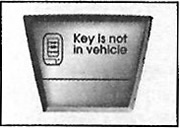 "Key is not in vehicle"
If the smart key is not in the vehicle and the door is opened or closed with the start button in the ACC, ON or START position and the engine is stopped, a warning is displayed on the LCD display. In addition, if the door is closed and the smart key is not in the vehicle, a buzzer sounds for five seconds. Always keep the smart key with you.
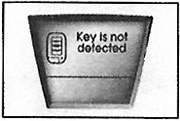 "Key is not detected"
If the electronic key is not in the vehicle or is not detected by the sensors, a warning message is displayed on the LCD for 10 seconds when the engine start/stop button is pressed. In addition, the immobilizer indicator and key holder indicator flash for 10 seconds.
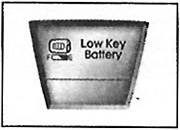 "Low key battery" (Low battery level of the electronic key)
If the engine start/stop button is turned to the OFF position when the electronic key battery is low, a warning message is displayed on the LCD for about 10 seconds. In addition, a single beep sounds. In this case, the electronic key battery needs to be replaced.
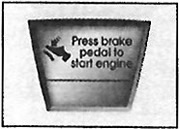 "Press brake pedal to start engine" (automatic transmission)
If the engine start/stop button is moved to the ACC position twice by repeatedly pressing the button without depressing the brake pedal, this message is displayed on the LCD for 10 seconds. It indicates that the brake pedal must be depressed to start the engine.
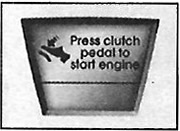 "Press cluch pedal to start engine" (manual transmission)
If the ENGINE START/STOP button is turned to the ACC position twice in succession by pressing the button without depressing the clutch pedal, a warning message will appear on the LCD display for 10 seconds indicating that the clutch pedal must be depressed before the engine can be started.
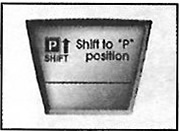 "Shift to "P" position" (Shift the gearbox to the P position)
If you attempt to turn off the engine when the shift lever is not in the P (Park) position, the engine start/stop button will change to the ACC position. When you press the button again, it will change to the ON position. A message will be displayed on the LCD for 10 seconds indicating that you must press the engine start/stop button with the shift lever in the P (Park) position to turn off the engine. In addition, a buzzer will sound for 10 seconds (if equipped).
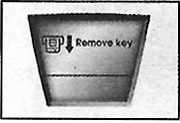 "Remove key"
If the electronic key is in the holder when the engine is turned off, this message is displayed on the LCD for about 10 seconds. In addition, the electronic key holder indicator flashes for 10 seconds. To remove the electronic key, press it once and then pull it out of the holder.
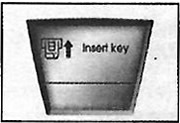 "Insert key"
When you press the engine start/stop button while the message "Key is not detected" is displayed on the LCD, the message "Insert key" appears for approximately 10 seconds. In addition, the immobilizer indicator and key holder indicator flash for approximately 10 seconds.
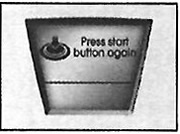 "Press start button again"
If the engine start/stop button does not operate due to a malfunction of the relevant system, this message is displayed for 10 seconds and a buzzer sounds, indicating that the engine start/stop button must be pressed again. The buzzer stops if the engine start/stop button operates properly or the anti-theft alarm is armed. If this warning is displayed every time the engine start/stop button is pressed, the relevant vehicle systems must be checked by an authorized Hyundai dealer.
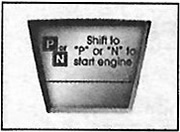 "Shift to "P" or "N" to start the engine" (Turn on the P or N gear to start the engine)
If you try to start the engine without the gearshift lever in the P (Park) or N (Neutral) position, this message will be displayed on the LCD display for approximately 10 seconds. The engine can be started in Neutral (N), but it is still recommended to use P (Park).
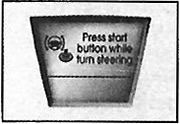 "Press start button while turn steering"
If the steering wheel is not unlocked after pressing the engine start/stop button, this message is displayed on the display for 10 seconds. In addition, a buzzer sounds and the engine start/stop button indicator flashes for 10 seconds. In this case, press this button while turning the steering wheel left and right.
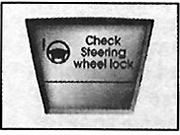 "Check steering wheel lock" (check steering wheel lock)
If the steering wheel is not locked after the engine start/stop button is turned to the OFF position, this message is displayed on the display for 10 seconds. In addition, a buzzer sounds for three seconds and the engine start/stop button indicator flashes for 10 seconds.