
HyundaiBook.ru
Repair Chevrolet Repair Honda Repair Toyota Repair Land Rover Repair VAZ Repair Renault Repair Nissan
English Русский
Български
Беларускі
Український
Српски
Hrvatski
Română
Polski
Slovenský
Magyar
ArticlesSitemapContacts  


  Accent   Elantra   Getz   Grandeur   Sonata   Santa Fe   Tucson   Others
Tucson 1 (2005-2010) Tucson 2 (2009-2015)
  • Main
  • Tucson
  • LM (2009-2015)
  • General information
  • User manual
  • Technical information of the car

Technical information of the car (Hyundai Tucson LM)

0
Contents: Vehicle serial number (VIN) ⇓ Table of technical…⇓ Engine serial number ⇓ Overall dimensions ⇓ Power of lighting lamps ⇓ Tires and wheels ⇓ Recommended lubricants and volume…⇓ Recommendations for choosing motor…⇓ Recommended SAE viscosity grade…⇓

Vehicle serial number (VIN)
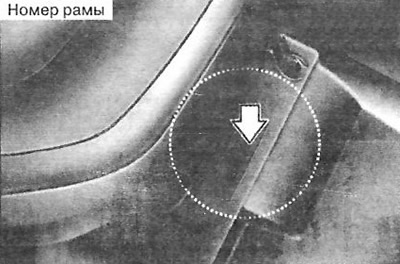


Vehicle serial number (VIN)


The vehicle serial number is the number that is used when registering your vehicle and in all legal matters relating to vehicle ownership, etc.

The number is stamped on the floor under the passenger seat. To check the number, you need to open the cover.
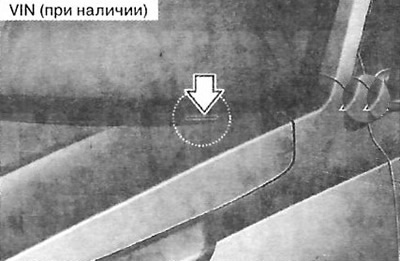
The number is stamped on the floor…


The Vehicle Identification Number (VIN) is also located on a plate on the top of the dashboard and is used on all models. The number on this plate is clearly visible from the outside of the car through the windshield.
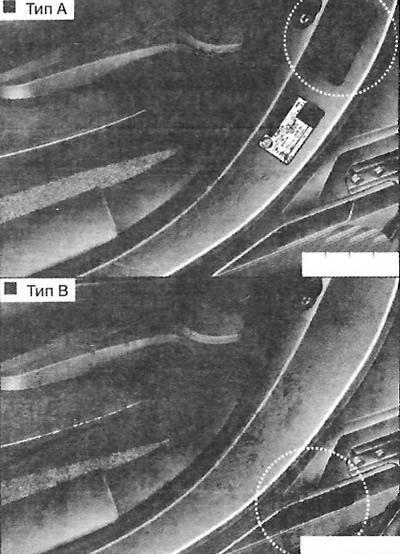


The Vehicle Identification Number (VIN)…


The vehicle's certification plate (located on the B-pillar on the driver or passenger side) contains the vehicle identification number (VIN).

Table of technical characteristics/tire pressure values
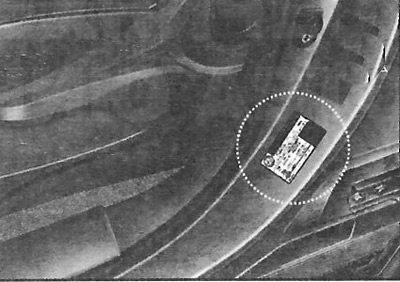


Table of technical characteristics/tire…


The tires installed on your vehicle are selected to provide the best possible handling characteristics. The tire specification label is located on the outside panel of the driver's side B-pillar and provides information about the recommended tire pressure for your vehicle.

Engine serial number
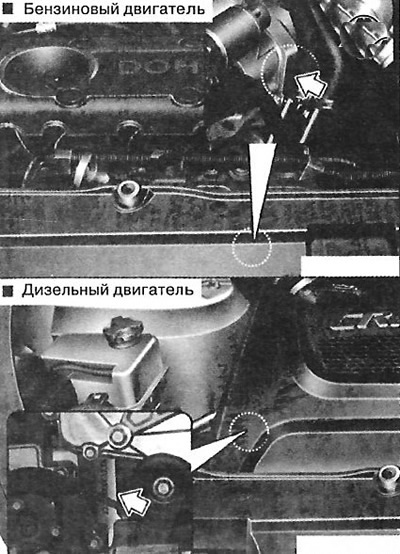


Engine serial number


The engine serial number is stamped on the cylinder block as shown in the figure.


Overall dimensions



Overall dimensions

Note: *With roof rack.


Power of lighting lamps
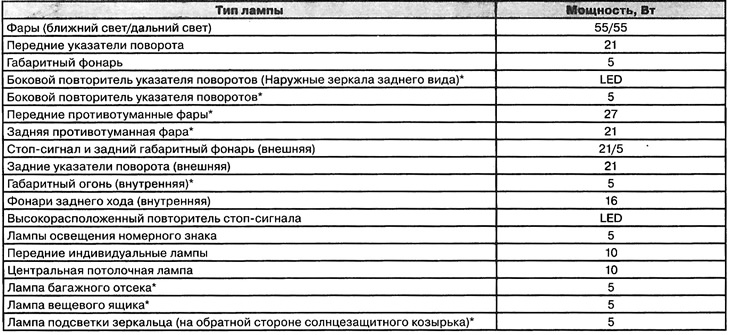


Power of lighting lamps

Note: *If available. LED-light-emitting diodes.


Tires and wheels



Tires and wheels

Recommended lubricants and volume information


To achieve optimal engine and transmission performance and extend their service life, use only high-quality lubricants. High-quality lubricants also affect engine efficiency and reduce fuel consumption. The following lubricants and fluids are recommended for use in your vehicle:



To achieve optimal engine and…

Note.
  • *1 See recommended SAE viscosity index.
  • *2 Currently, there is an oil labeled: "Energy Conserving ОН" (Energy-saving motor oil). In addition to other positive effects, the use of such oil helps save fuel by reducing the fuel consumption required to overcome the friction of engine parts. Often, these improvements are difficult to assess in daily driving, but the total savings in money and energy per year are impressive.
  • *3Diesel particulate filter.


*3Diesel particulate filter.


Recommendations for choosing motor oil
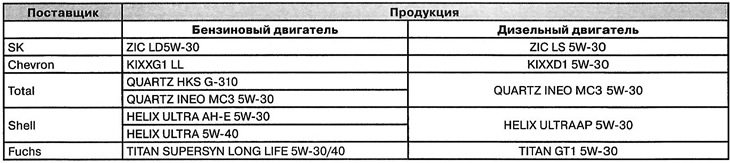


Recommendations for choosing motor oil

Recommended SAE viscosity grade values


Caution: Always make sure the area around any filler cap, drain plug, and dipstick is clean before checking the oil level or changing it. This is especially important when operating the vehicle in dusty or dirty conditions or when driving on unpaved roads. Cleaning the cap and dipstick will prevent dust and sand from getting into the engine and other mechanisms, which can be damaged.


Engine oil viscosity affects fuel economy and cold weather performance (engine starting and oil delivery). Low viscosity engine oil provides better fuel economy and cold weather performance, while high viscosity oil is needed to provide the required engine lubrication in hot conditions.

Using oils with viscosity coefficient values other than those recommended may cause engine failure. When choosing an oil type, consider the temperature range in which your vehicle will be used until the next oil change. Select the recommended viscosity coefficient values from the table.
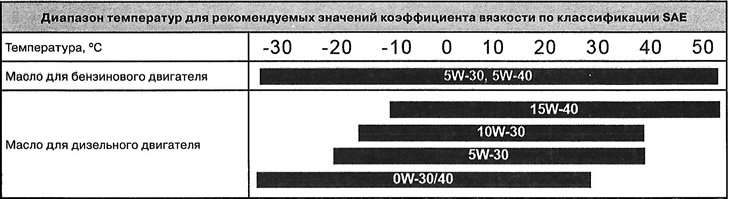
Using oils with viscosity coefficient…
This article is available at russian, bulgarian, belarusian, ukrainian, serbian, croatian, romanian, polish, slovak, hungarian
This article has been reviewed by: Konstantin Smirnov
Add to social network:

Previous
Tucson 2: User manual
Next

General view of the interior and dashboard
Dashboard
Devices — design description
Control and indicator lamps
Emergency light signaling
We recommend other articles on the topic of Hyundai manuals:

Technical characteristics of the cooling system Hyundai Accent 1 (1994-1999)
General information and technical parameters of engines Hyundai Elantra 1 (1990-1995, petrol)
General information about the brake system Hyundai Getz (2002-2011)
General information — technical specifications Hyundai Sonata 3 (1993-1998)
Tire information Hyundai Santa Fe 2 (2007-2012, petrol)
Checking the technical condition of the car Hyundai Matrix (2001-2010, petrol)

Link in different formats to this article

Visitor comments
No comments yet


How much will 14 + 31 ?


Tucson 2 (2009-2015) 
  • General information
  • Faults en route
  • User manual
  • Maintenance
  • Power unit
  • Gasoline engines
  • Diesel engines
  • Engine cooling system
  • Engine lubrication system
  • Engine power system
  • Control system
  • Intake and exhaust systems
  • Engine electrical equipment
  • Transmission
  • Clutch
  • Mechanical gearbox
  • Automatic gearbox
  • Drive shafts
  • Chassis
  • Suspension and wheels
  • Brake system
  • Steering
  • Body
  • Exterior (external elements)
  • Interior (internal elements)
  • Security systems
  • Air conditioning and heater
  • Electrical equipment
  • Electrical circuits
Tucson 1 (2005-2010) 
  • General information
  • User manual
  • Maintenance
  • Power unit
  • Gasoline engine G6BA
  • Gasoline engine G4GC
  • Diesel engine D4EA
  • Fuel system (gasoline)
  • Fuel system (diesel)
  • Engine lubrication system
  • Engine cooling system
  • Engine electrical equipment
  • Transmission
  • Clutch
  • Car gearbox
  • Drive shafts and cardan
  • Chassis
  • Car suspension
  • Steering
  • Brake system
  • Body
  • Exterior (external elements)
  • Interior (internal elements)
  • Air conditioning and heater
  • Airbags
  • Electrical equipment
  • Equipment and devices
  • Electrical circuits
HyundaiBook.ru © 2018-2026 · Mobile version · Sitemap: EN BG BY UA RS HR RO PL SK HU · Administration · Site search · Hyundai owners Accent 1 · Accent 2 · Accent 3 · Elantra 1 · Elantra 2 · Elantra 3 · Getz · Sonata 3 · Sonata 4 · Santa Fe 2 · Tucson 1 · Tucson 2 · Matrix ·
This site uses cookies to optimize its functionality. By continuing, you agree to our terms.
