Contents: Fuses and fuses ⇓ Multi-fuse ⇓ Description of the fuse and relay…⇓ Interior fuse panel (instrument…⇓ Engine Compartment Fuse Panel ⇓ Engine compartment, additional fuse…⇓
Fuses and fuses
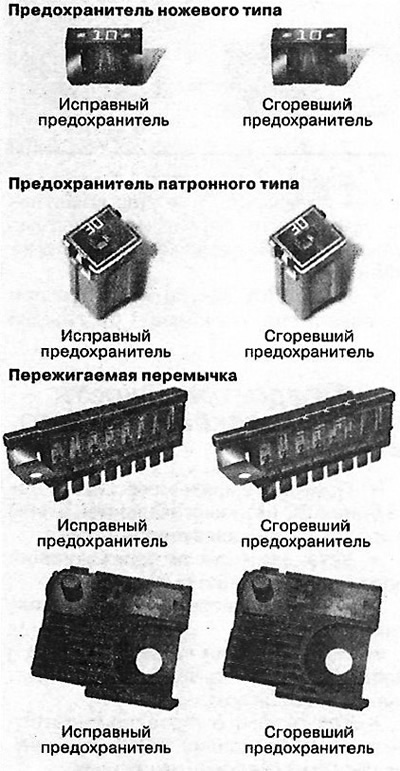
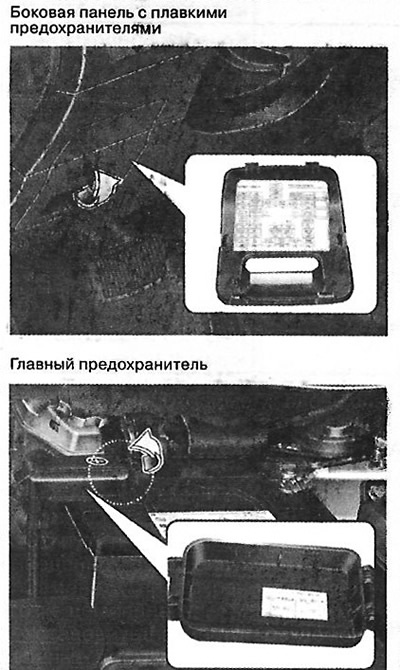
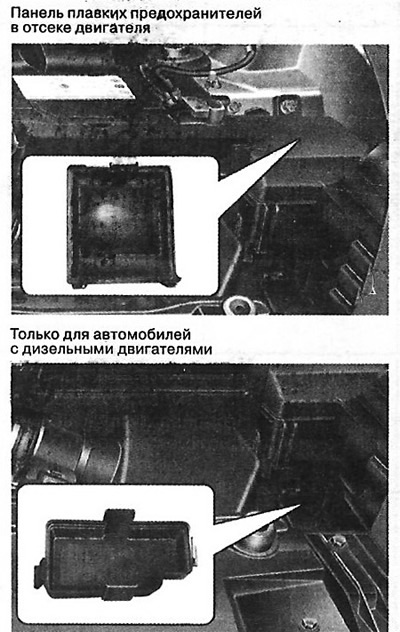
Fuses are used to protect the vehicle's electrical system from failure due to electrical overload. This vehicle has two (or three) fuse panels. One is located under the driver's side panel, while the others are located in the engine compartment near the battery. If your vehicle does not have any lighting devices, additional electrical equipment, or controls working, check the fuse of the appropriate circuit. If the fuse is blown, the conductor inside it will be molten. If the electrical system does not work, first check the fuse panel installed on the driver's side. To replace a blown fuse, always use a fuse of the same rating.
If the fuse blows again after replacement, this indicates a malfunction in the electrical system components. Stop using the affected vehicle system and consult an authorized Hyundai dealer.
Note. The following types of fuses are used: knife-type fuses with low rated current values, cartridge-type fuses, burn-through jumpers for higher rated current values.
Attention.
- Replacing the fuse.
- When replacing a fuse, always use a fuse of the same rating.
- Installing a fuse with a higher rated current may cause damage to electrical equipment and cause a fire.
- Do not install jumper wires, even temporarily, in place of the corresponding fuses. This may damage the electrical wiring and cause a fire.
Caution: Do not use a screwdriver or any other metal object to remove fuses, as this may cause a short circuit and damage the electrical system.
Replacing the fuse installed on the interior panel
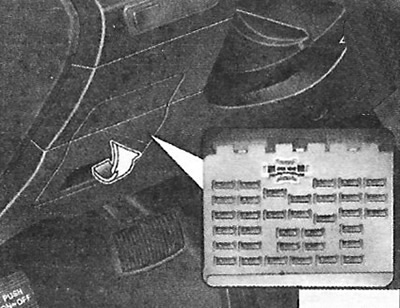
1. Turn the ignition key and all other switches to the "Off" position.
2. Open the fuse panel cover.
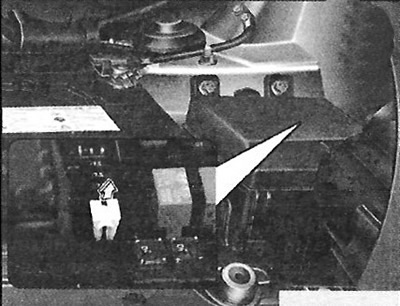
3. Remove the fuse that appears to be faulty by pulling it out at a right angle to the panel. Use the tool supplied with your vehicle to remove fuses from the panel in the engine compartment.
4. Check the removed fuse; if it is burnt out, replace it with a new one.
5. Insert a new fuse of the same current rating and make sure it is securely seated in the clips.
If the clamps are loose, contact an authorized Hyundai dealer.
Note: If spare fuses are not available, use fuses of the same rating installed in the circuits of devices, such as the cigarette lighter, that are not essential for the operation of the vehicle.
If the headlights or other electrical components do not work and the fuses in the passenger compartment panel are good, check the fuse panel in the engine compartment. If the fuse is blown, it should be replaced.
Memory fuse (shunt connector)
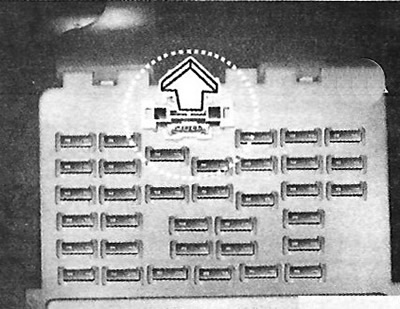
The vehicle is equipped with a memory fuse (SHUNT connector) to prevent the battery from discharging if the vehicle is parked and not used for an extended period of time. Before parking the vehicle for an extended period of time, perform the following steps:
1. Turn off the engine.
2. Turn off the headlights and taillights.
3. Open the driver's side panel cover and remove the memory fuse (SHUNT connector).
Note.
- If the fuse is removed from the fuse panel, the horn, audio system, clock, interior lights, etc. will not operate. After replacing the fuse, some instruments will need to be re-adjusted.
- Even with the memory fuse removed, the battery may continue to discharge due to the operation of headlights or other electrical devices.
Replacing the fuse installed on the panel in the engine compartment
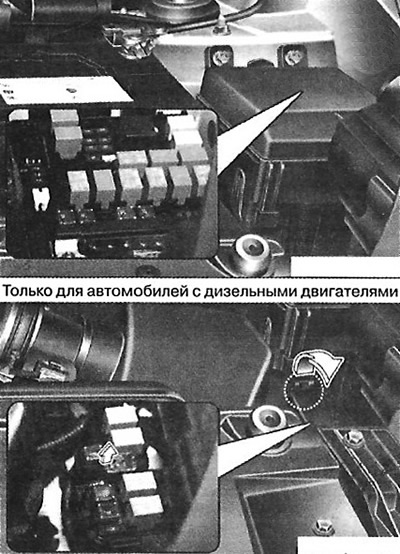
1. Turn the ignition key and all other switches to the "Off" position.
2. Press down on the fuse panel cover and remove it.
3. Check the removed fuse; if it is blown, replace it with a new one. Use a fuse puller to remove or install a fuse on the panel in the engine compartment.
4. Insert a new fuse with the same current rating and make sure it is securely fastened in the clips. If the clips are loose, contact an authorized Hyundai dealer.
Caution: After checking the fuse panel in the engine compartment, securely fasten its cover. Otherwise, the electrical system may be damaged due to water entering the panel.
Main fuse
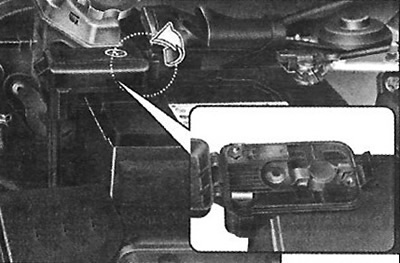
If the main fuse is blown, it must be removed as follows:
1. Stop the engine.
2. Disconnect the cable from the negative ("-") terminal of the battery.
[The article is based on information website: hyundaibook]
3. Unscrew the nuts shown in the figure above.
4. Replace the fuse with a new one of the same rating.
5. Reinstall all removed parts in reverse order.
Multi-fuse
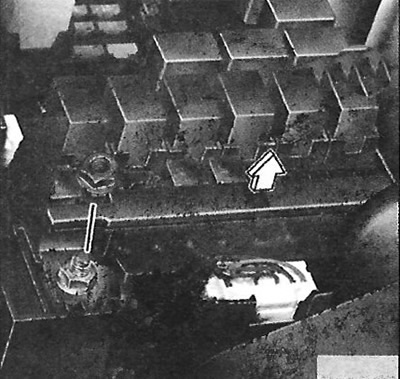
If the multi-fuse has blown, it must be replaced as follows:
1. Turn off the engine.
2. Disconnect the negative battery terminal.
3. Remove the fuse panel, which is located on the right side of the engine compartment.
4. Unscrew the nuts shown in the figure above.
5. When replacing a blown fuse, always use a fuse of the same rating.
6. Installation is carried out in the reverse order of disassembly.
Note: If the main fuse or multi fuse is blown, consult an authorized Hyundai dealer.
Description of the fuse and relay panel
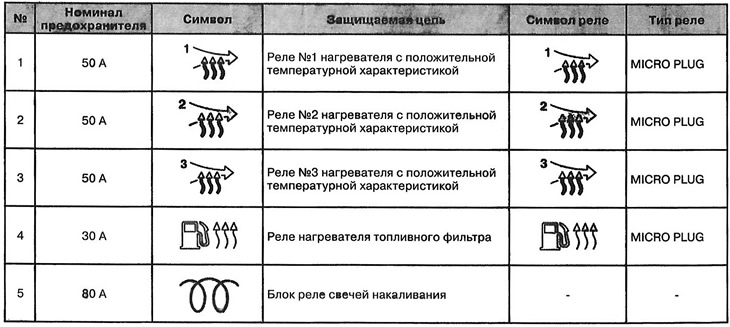
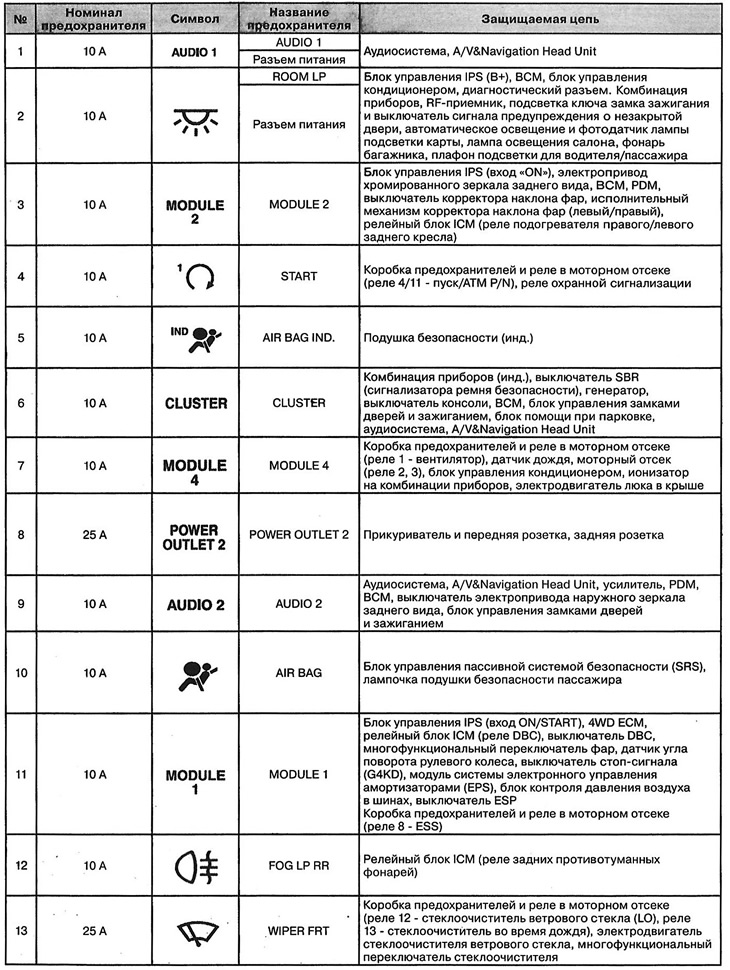
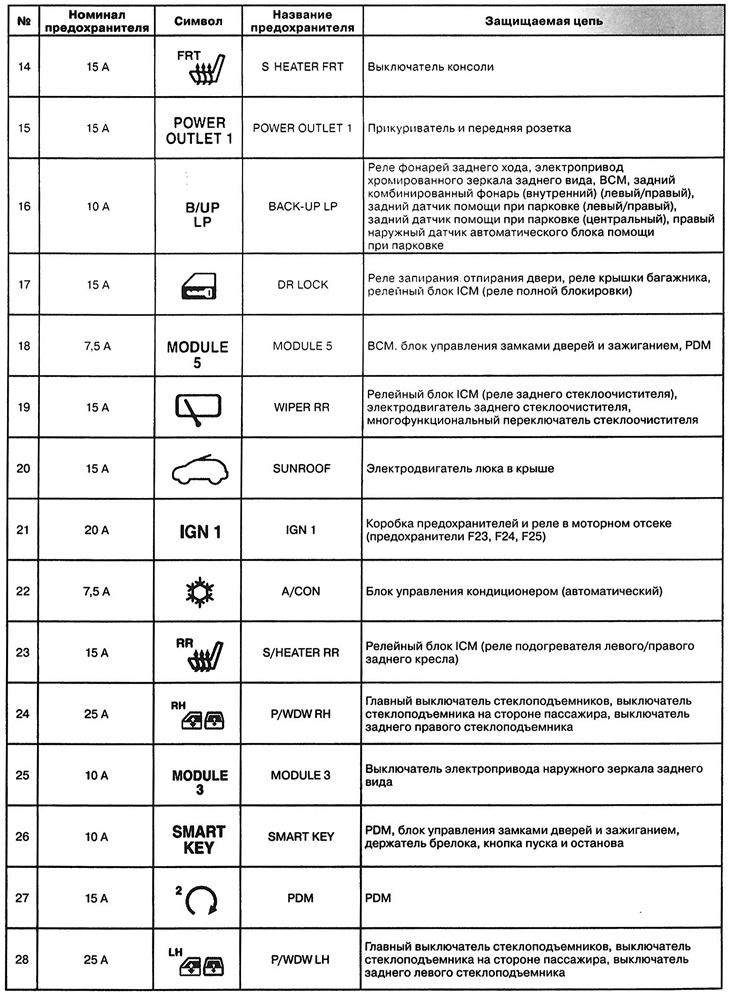
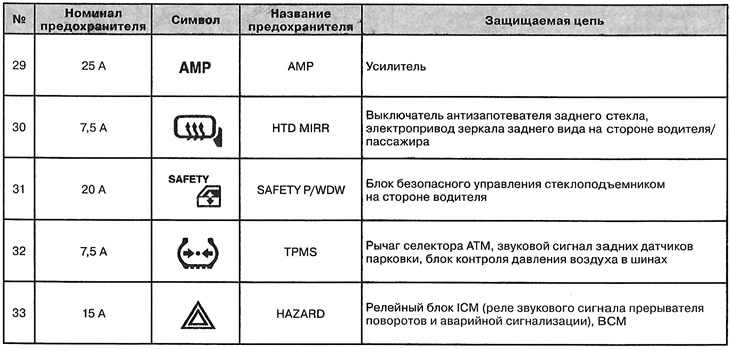
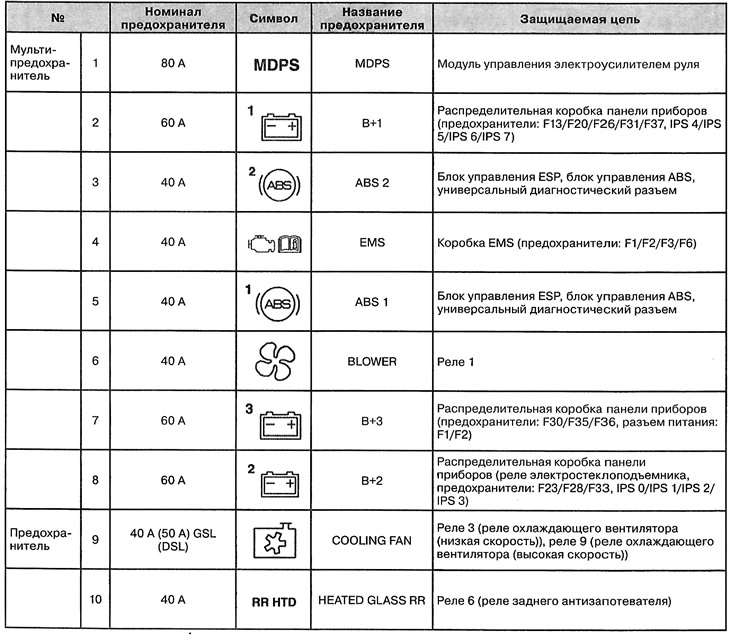
Under the cover of the fuse and relay panel there is a plate with the names of the fuses/relays and their rated current values.
 |
 |
Note: Some fuse panel descriptions may not apply to your vehicle. The description is complete at the time of publication. When checking your vehicle's fuse panel, use the label located on the fuse panel body.
Interior fuse panel (instrument panel)
Engine Compartment Fuse Panel
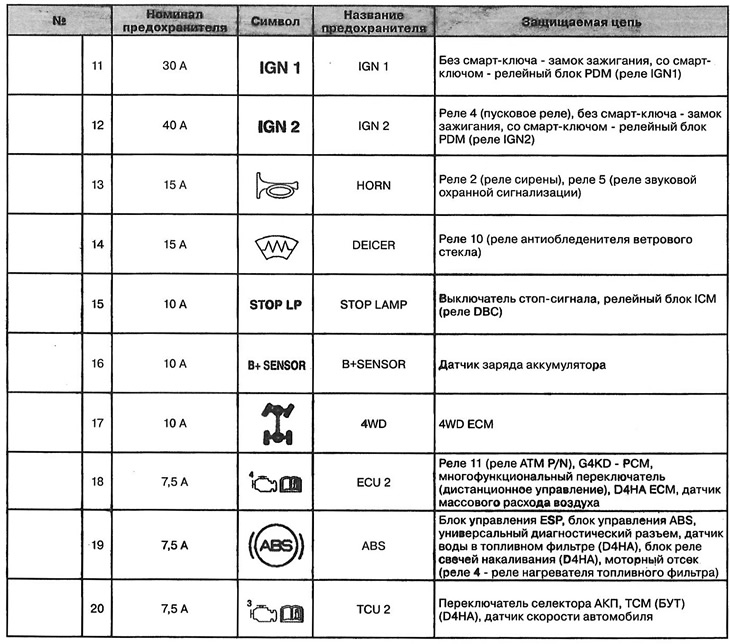
Engine compartment, additional fuse panel (diesel engine)