


Replacing the fuse link
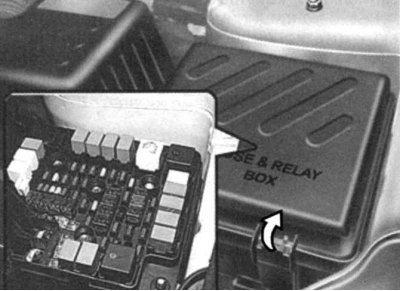
Fig. 1.226. Fuse box cover
In the event of an overload of the electrical circuit, the fuse link burns out, thereby preventing damage to the entire wiring harness. (This can be caused by a short circuit or an excessively high current). To facilitate their testing, the fuse links are located in the relay block (Fig. 1.226).
Caution! When replacing a fuse link, use only a new fuse link with the same or lower rated current. Do not use a wire or fuse link with a higher rated current. This may cause serious damage and cause a fire.
Replacement of fuse links of auxiliary equipment circuits
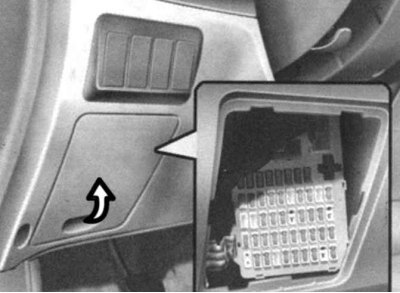
Fig. 1.227. Fuse box in the passenger compartment of the car
The fuse box protecting the lighting circuits and other electrical equipment is located under the instrument panel opposite the driver's seat (Fig. 1.227).
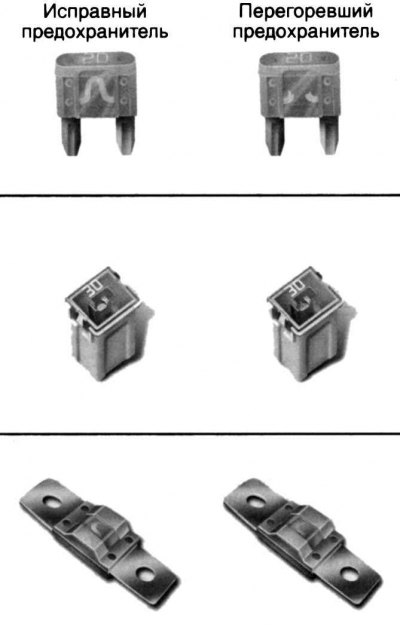
Fig. 1.228. Example of a working and blown fuse
Inside the unit there is a table of protected circuits. If any of the car's lamps or electrical equipment stops working, the cause may be a blown fuse. If the fuse is blown, the metal strip inside it will be torn off (Fig. 1.228).
To replace the fuse, turn off the ignition and all other switches.
Open the fuse box and check the integrity of each fuse. Remove each fuse by pulling it towards you (there is a special puller in the fuse box to make this operation easier).
Replace the blown fuse with a new one of the same rating. The fuse must be firmly inserted. If a spare fuse is not available, you can temporarily install a fuse of the same rating by removing it from the circuit of equipment that can be temporarily dispensed with (for example, a fuse protecting the radio or cigarette lighter circuits). Do not forget to reinsert the removed fuse.
Warning! A blown fuse indicates a fault in the electrical circuit. If a recently installed fuse blows again after a short time, contact an authorized Hyundai dealer to identify the cause of the fault and fix it. Never install a fuse with a rated current greater than that specified by technical requirements, or any substitute fuses. This may cause the electrical wiring to overheat and cause a fire.
Power connector
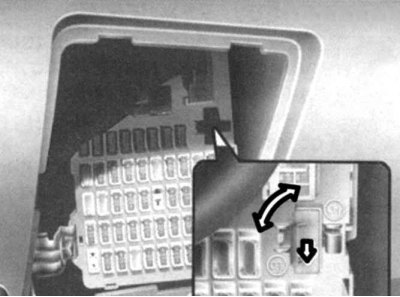
Fig. 1.229. Power connector
The vehicle is equipped with a power socket, which is designed to prevent the battery from discharging during long periods of vehicle parking (Fig. 1.229).
Turn off the engine.
Turn off the vehicle's exterior lights.
Open the fuse panel located under the instrument panel on the driver's side and disconnect the power connector.
The connection is made in the reverse order.
Note: If the power connector is disconnected, the alarm system, audio system, electronic clock, interior lights, etc. will not work. After connecting the power connector, you must configure the following:
- electronic clock;
- trip computer;
- climate control;
- audio systems.
The article is based on information website [HyundaiBook.ru]