


Contents: Adjusting the seat position in the…⇓ Adjusting the seat backrest tilt ⇓ Adjustable seat headrests ⇓ Adjusting the lumbar support (for…⇓ Seat cushion height adjustment…⇓
Warning: Do not adjust the seat position while the vehicle is moving. This could result in loss of vehicle control or an accident resulting in death, serious injury or property damage.
Adjusting the seat position in the longitudinal direction
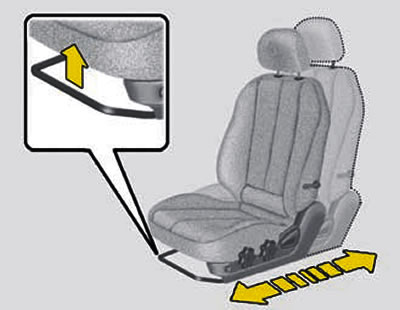
To move the seat longitudinally, pull up on the locking handle. This unlocks the seat's connection to the runners and allows it to be moved forward or backward to the desired position. Then release the locking handle and slightly slide the seat forward or backward along the runners until the latch clicks into place.
Warning: To ensure that the seat is securely locked, try moving the seat forward or backward without pressing the locking handle.
Adjusting the seat backrest tilt
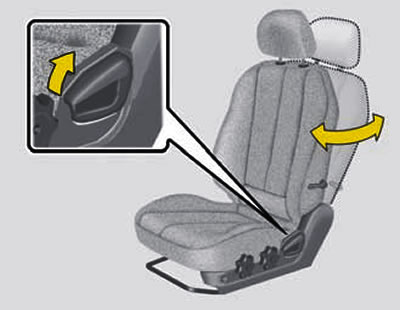
To achieve the desired seatback tilt, relieve the load on the seatback by leaning forward and pulling up on the seatback tilt adjustment handle located on the outside of the seat cushion. After this, set the backrest at the desired angle by pressing on it with your back. Lock the backrest by releasing the backrest tilt adjustment handle.
Warning:
- To reduce the risk of serious injury in the event of a collision or sudden braking, the driver's and passenger's seatbacks should always be in the upright position while the vehicle is moving. At a large angle of inclination of the backrests, the protective effect of the airbags and seat belts is significantly reduced. If the seat back is reclined too far in the event of a collision, there is a serious risk that the driver or passenger will be ejected from under the seat belt, which could result in serious injury.
- If the seat back is reclined too far, the seat belt does not provide full protection for the occupant.
Adjustable seat headrests
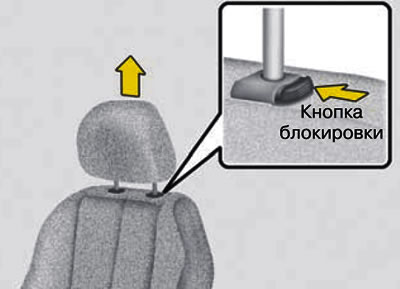
Headrests reduce the risk of neck injuries. To raise the headrest, pull it up, and to lower it, press it down by pressing the lock button. To remove the headrest, lift it up as far as it will go and remove it from the seat back by pressing the locking button.
The original can be read on the resource: HYUNDAIBOOK
Warning:
- For maximum protection in the event of a traffic accident, adjust the head restraint so that its top edge is at the same height as the occupant's ears. Therefore, it is not recommended to put a pillow under your back, since this increases the distance between the back of the seat and the body of the person sitting.
- Do not remove the headrests from the vehicle. This could cause serious injury in a traffic accident. When properly positioned, head restraints provide protection against severe neck injuries.
- Do not adjust the head restraints while driving.
Adjusting the lumbar support (for driver's seat only)
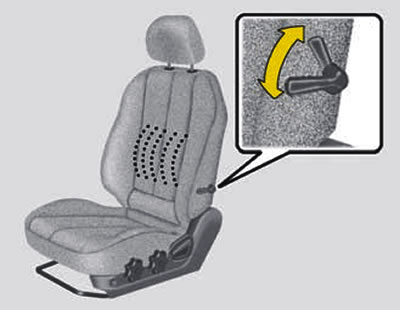
To adjust the lumbar support, turn the lumbar support adjustment lever located on the outside or left side of the seat back. To increase the amount of support, move the lumbar support adjustment lever toward the front of the vehicle. To decrease the support force, move the lumbar support adjustment lever toward the rear of the vehicle.
Seat cushion height adjustment (driver's seat only)
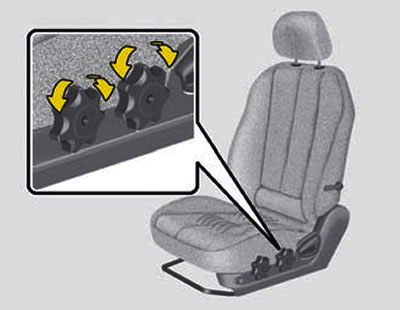
To raise or lower the front of the seat cushion, turn the front handle forward or backward. To raise or lower the rear of the seat cushion, turn the rear handle forward or backward.