
HyundaiBook.ru
Repair Chevrolet Repair Honda Repair Toyota Repair Land Rover Repair VAZ Repair Renault Repair Nissan
English Русский
Български
Беларускі
Український
Српски
Hrvatski
Română
Polski
Slovenský
Magyar
ArticlesSitemapContacts  


  Accent   Elantra   Getz   Grandeur   Sonata   Santa Fe   Tucson   Others
Tucson 1 (2005-2010) Tucson 2 (2009-2015)
  • Main
  • Tucson
  • LM (2009-2015)
  • Chassis
  • Brake system
  • Brake system maintenance

Brake system maintenance (Hyundai Tucson LM)

0
Contents: Checking the brake booster ⇓ Pumping the system ⇓

Checking the brake booster


To simply check the operation of the vacuum booster, you need to do the following.

1. Start the engine, let it run for 1-2 minutes, and stop it. Press the brake pedal several times with normal force. If the pedal goes down the first time you press it, but gradually rises the second or third time you press it, the brake booster is working properly. If the pedal height does not change, the booster is faulty.
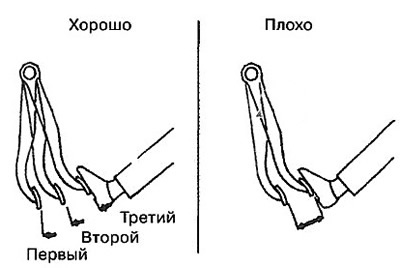
1. Start the engine, let it run for 1-2…


2. With the engine off, press the brake pedal several times and check the change in pedal height. Then press the pedal and start the engine. If the pedal moves down a little, the booster is working properly. If the pedal height remains the same, the booster is faulty.
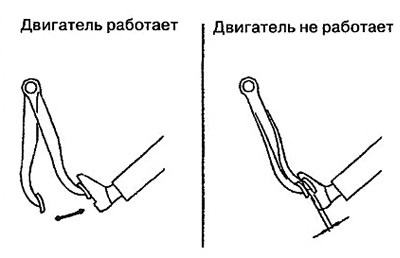
2. With the engine off, press the brake…


3. With the engine running, press the brake pedal and stop the engine. Keep the pedal depressed for 30 seconds. If the pedal height does not change during this time, the booster is OK. If the pedal rises, the booster is faulty.


The original text is available on the website (HyundaiBook)

If any of the above checks reveal a fault, check the check valve, vacuum hose and booster and correct the faults. If the checks are positive, the booster is in good condition.
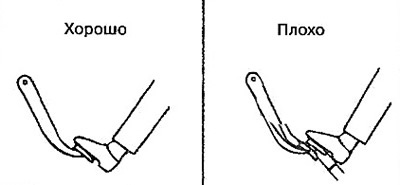
If any of the above checks reveal a…


Pumping the system


Attention.
  • Do not reuse brake fluid.
  • Always use only the recommended DOT 3 or DOT 4 brake fluid. Using non-original brake fluid can lead to corrosion and significantly reduce the service life of the brake system.
  • Make sure the brake fluid is free of impurities and contaminants.
  • Do not allow brake fluid to come into contact with the body surfaces, as this may damage the paintwork. If brake fluid does come into contact with the body, wash it off immediately with water.
  • The brake fluid level in the expansion tank should always be at the MAX mark. It is necessary to check the level regularly and add brake fluid to the system if necessary.


1. Make sure that the brake fluid level in the expansion tank is at the "MAX" mark.

2. Attach a vinyl hose to the bleed nipple on the wheel cylinder, lower the other end of the hose into a container of brake fluid.


3. Press the brake pedal several times.

4. With the pedal fully depressed, loosen the bleed screw (A) until brake fluid begins to flow out, then tighten the screw.
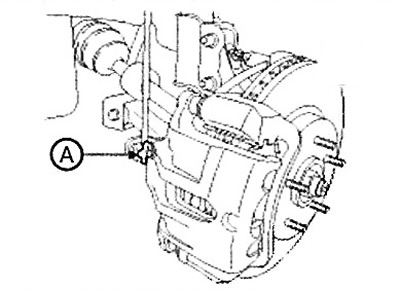
Front brake mechanisms
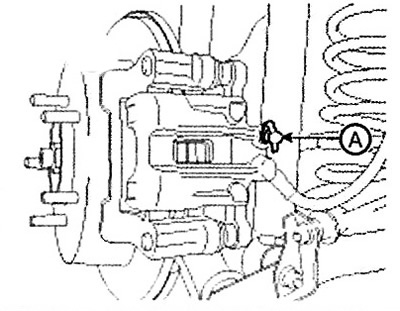
Front brake mechanisms


Rear brakes

Rear brakes


5. Repeat steps 3 and 4 until there are no air bubbles in the flowing liquid.

6. Tighten the air bleed screw.

7. Perform the specified operations on the remaining wheels in the order shown in the figure.
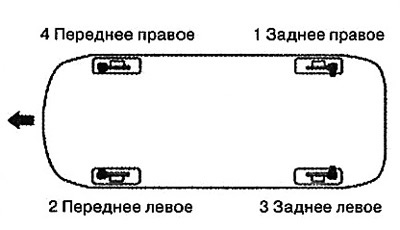
7. Perform the specified operations on…


8. Fill the expansion tank of the master brake cylinder to the "MAX" mark.
This article is available at russian, bulgarian, belarusian, ukrainian, serbian, croatian, romanian, polish, slovak, hungarian
This article has been reviewed by: Konstantin Smirnov
Add to social network:

Previous
Tucson 2: Brake system
Next

General information about the braking system
Vacuum booster
Master brake cylinder
Brake pipes
Brake pedal
Front brake mechanisms
Rear brakes
We recommend other articles on the topic of Hyundai manuals:

Brake system malfunctions Hyundai Accent 1 (1994-1999)
Cooling System Hoses — Maintenance and Repair in Emergency… Hyundai Elantra 1 (1990-1995, petrol)
Brake system specifications Hyundai Getz (2002-2011)
Possible malfunctions of the brake system Hyundai Sonata 3 (1993-1998)
Table 6.1. Technical characteristics (main brake system) Hyundai Santa Fe 2 (2007-2012, petrol)
Checking the brake system lines Hyundai Matrix (2001-2010, petrol)
Link in different formats to this article

Visitor comments
No comments yet


How much will 39 + 26 ?


Tucson 2 (2009-2015) 
  • General information
  • Faults en route
  • User manual
  • Maintenance
  • Power unit
  • Gasoline engines
  • Diesel engines
  • Engine cooling system
  • Engine lubrication system
  • Engine power system
  • Control system
  • Intake and exhaust systems
  • Engine electrical equipment
  • Transmission
  • Clutch
  • Mechanical gearbox
  • Automatic gearbox
  • Drive shafts
  • Chassis
  • Suspension and wheels
  • Brake system
  • Steering
  • Body
  • Exterior (external elements)
  • Interior (internal elements)
  • Security systems
  • Air conditioning and heater
  • Electrical equipment
  • Electrical circuits
Tucson 1 (2005-2010) 
  • General information
  • User manual
  • Maintenance
  • Power unit
  • Gasoline engine G6BA
  • Gasoline engine G4GC
  • Diesel engine D4EA
  • Fuel system (gasoline)
  • Fuel system (diesel)
  • Engine lubrication system
  • Engine cooling system
  • Engine electrical equipment
  • Transmission
  • Clutch
  • Car gearbox
  • Drive shafts and cardan
  • Chassis
  • Car suspension
  • Steering
  • Brake system
  • Body
  • Exterior (external elements)
  • Interior (internal elements)
  • Air conditioning and heater
  • Airbags
  • Electrical equipment
  • Equipment and devices
  • Electrical circuits
HyundaiBook.ru © 2018-2026 · Mobile version · Sitemap: EN BG BY UA RS HR RO PL SK HU · Administration · Site search · Hyundai owners Accent 1 · Accent 2 · Accent 3 · Elantra 1 · Elantra 2 · Elantra 3 · Getz · Sonata 3 · Sonata 4 · Santa Fe 2 · Tucson 1 · Tucson 2 · Matrix ·
This site uses cookies to optimize its functionality. By continuing, you agree to our terms.