Front brake mechanism
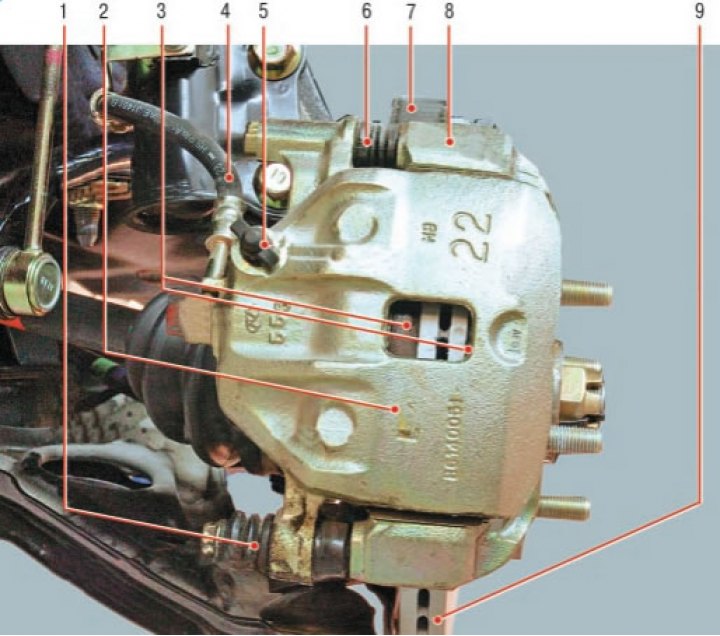
Front wheel brake mechanism: 1 - guide pin; 2 - support; 3 - brake pads; 4 - brake hose; 5 - air release valve; 6 - guide pin; 7 - brake shield; 8 - shoe guide; 9 - brake disc
Rear brake mechanism
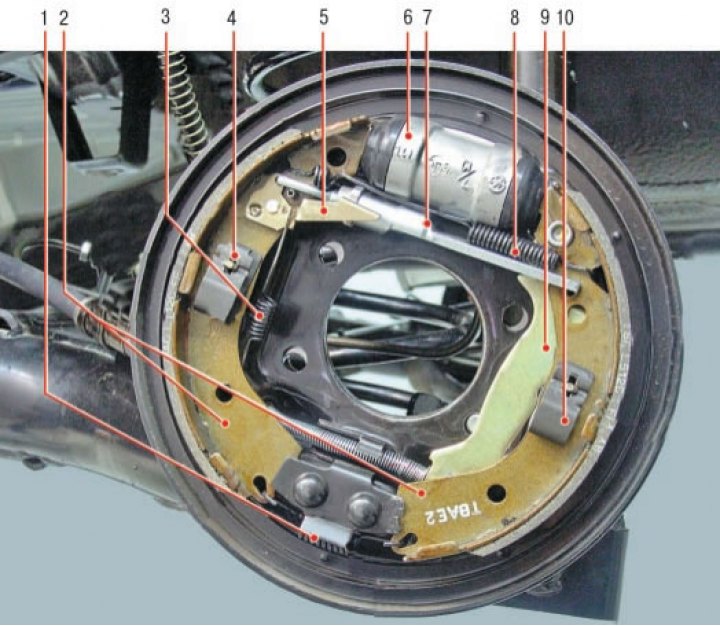
Rear wheel brake mechanism: 1 - lower brake shoe tension spring; 2 - brake pads; 3 - spring of the mechanism for automatic adjustment of the gap between the drum and the pads; 4 - brake shoe stand; 5 - lever of the mechanism for automatic adjustment of the gap between the drum and the pads; 6 - working cylinder; 7 - mechanism for automatic adjustment of the gap between the drum and the pads; 8 - upper brake shoe tension spring; 9 - release lever; 10 - spring plate
Master brake cylinder
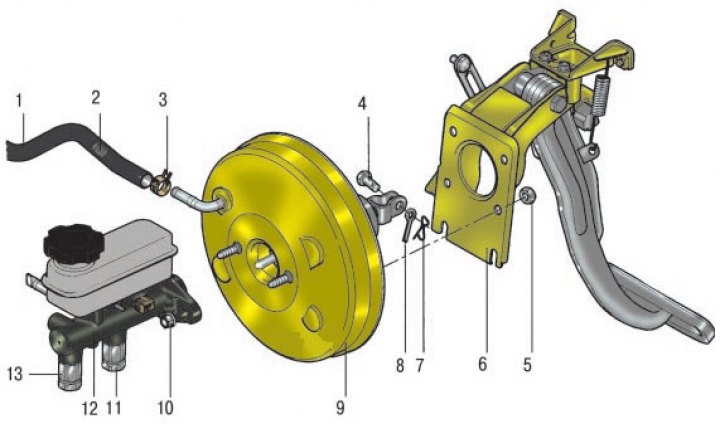
Master brake cylinder with vacuum booster: 1 - vacuum hose; 2 - check valve; 3 - clamp; 4 - pusher axis; 5 - nut; 6 - brake pedal assembly; 7 - cotter pin; 8 - washer; 9 - brake booster; 10 - nut; 11, 13 - pressure regulators; 12 - main brake cylinder
The brake system of this vehicle is of the servo-hydraulic type. The vehicle has front disc brakes and rear drum brakes. The brake system is activated by pressing the brake pedal and is actuated by working brake cylinders installed on each wheel. The working cylinders are equipped with control valves that control the pressure applied to the rear brake drums. The control valves prevent the shoes from jamming when the parking (hand) brake is activated. The mechanism for pre-setting the shoes to the working position and compensating for wear is activated automatically. When the rear brake shoes wear out, the mechanism for automatically tensioning the parking (hand) brake cables and compensating for the gaps between the shoes and the brake drum is activated. The parking (hand) brake provides independent mechanical control of the rear brake system (braking).
Technical data
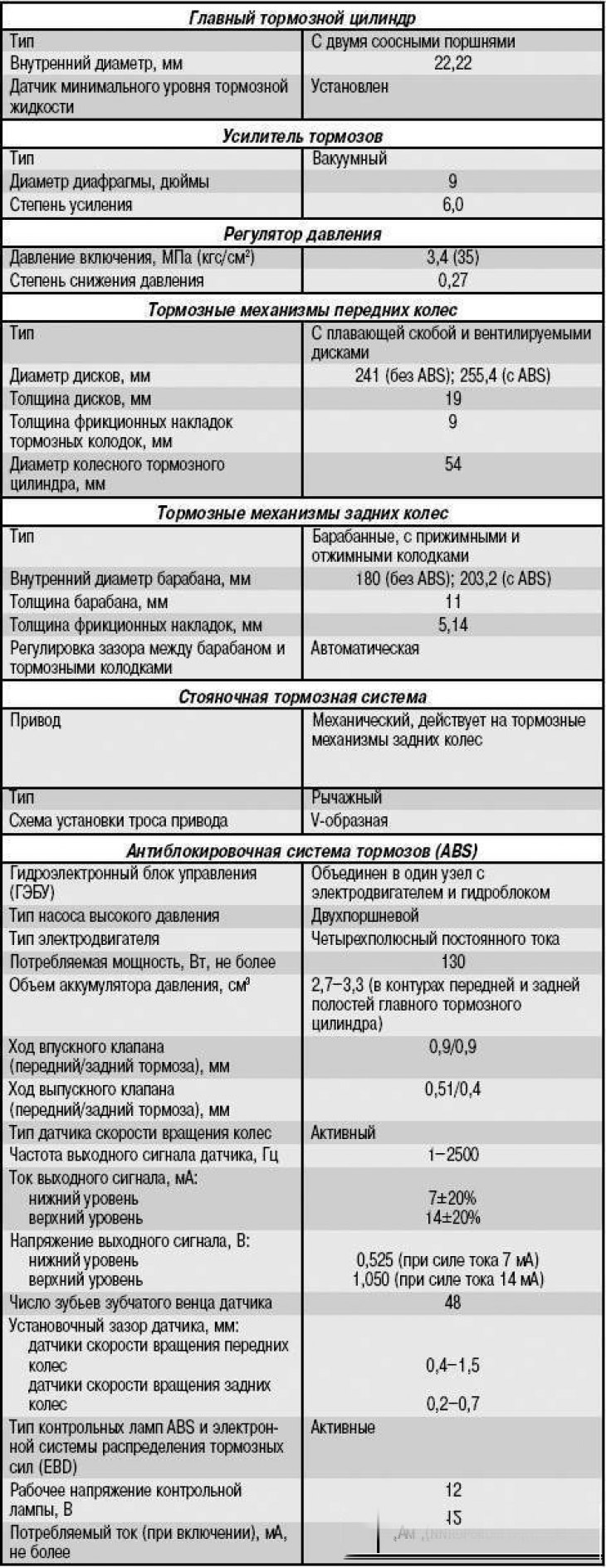
| Name | Meanings |
| Master brake cylinder | |
| - type | Tandem |
| — cylinder diameter, mm | 22,22 |
| Vacuum brake booster | |
| - type | Vacuum |
| — effective diaphragm diameter, mm | 228,6 |
| — degree of amplification | 6,0:1 |
| Pressure regulator | |
| — switching pressure, MPa | 3,4 |
| — degree of pressure reduction | 0,27:1 |
| Front brakes | |
| - type | With floating bracket and ventilated discs |
| — brake disc diameter, mm | 241 |
| - without ABS | 255,4 |
| — c ABS | 19 |
| — brake disc thickness, mm | 9 |
| — brake pad thickness, mm | 54 |
| — cylinder diameter, mm | |
| Rear drum brakes | |
| — inner diameter of the brake drum, mm | |
| - without ABS | 180 |
| — c ABS | 255,4 |
| — brake pad thickness, mm | 5,14 |
| — adjustment of the gap between the drum and brake shoes | Automatic |
| Parking brake | |
| - type | Mechanical, acting on the rear wheels |
Anti-lock braking system
| HECU hydraulic unit engine power, W | 130 |
| Volume of pressure accumulator, cm³ | 2;7–33 |
| Intake valve stroke (front/rear brakes), mm | 0,9/0,9 |
| Exhaust valve stroke (front/rear brakes), mm | 0,51/0,4 |
| Output frequency of the wheel speed sensor signal, Hz | 1–2500 |
| Output voltage of the wheel speed sensor signal, V - lower level - top level |
|
| Number of teeth on the wheel speed sensor ring gear | 48 |
| Wheel speed sensor installation gap, mm - front |
|
| - rear | 0,2–0,7 |
| Control lamp: ABS, EBD — supply voltage, V — current consumption, mA |
|
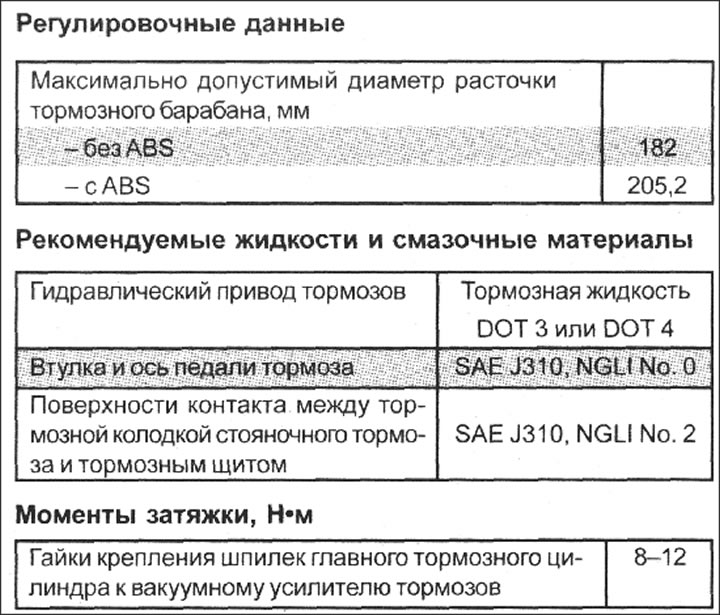
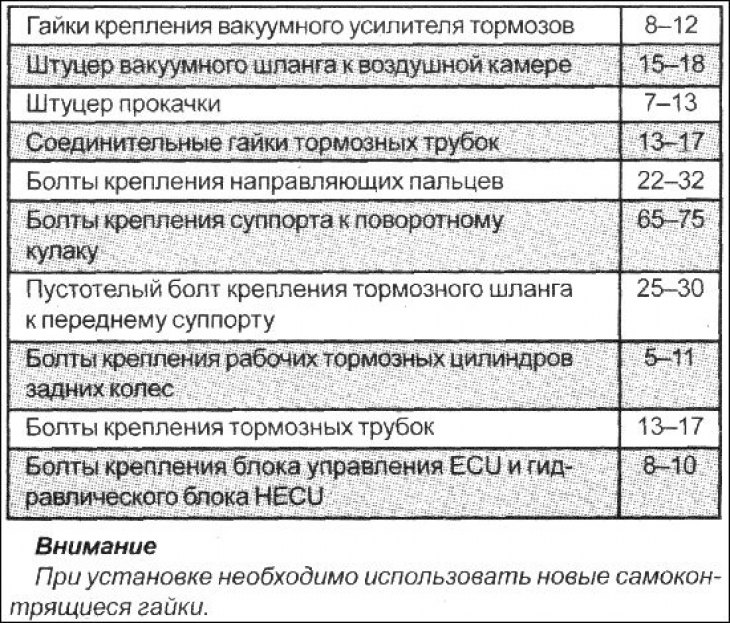
Adjustment data
| Brake pedal installation height, mm | 182,1 |
| Brake pedal travel, mm | 130 |
| Brake light switch gap, mm | 0,5–1,0 |
| Free travel of brake pedal, mm | 3–8 |
| Distance from the pressed brake pedal to the floor, mm | 61 |
| Clearance between brake booster pushrod and master cylinder, mm | 0 |
| Parking brake lever travel when tightened with a force of 196 N, clicks | 6–8 |
| Minimum permissible thickness of front brake pads, mm | 1 |
| Minimum permissible thickness of brake disc, mm | 17 |
| Minimum permissible thickness of rear brake shoe linings (drum brake), mm | 1,5 |