Contents: Air conditioning system ⇓ Blower module ⇓ Heater and Evaporator Module ⇓ General information precautions when…⇓ Precautions when replacing air…⇓ Installation of connecting parts ⇓ Precautionary measures that must be…⇓
Air conditioning system
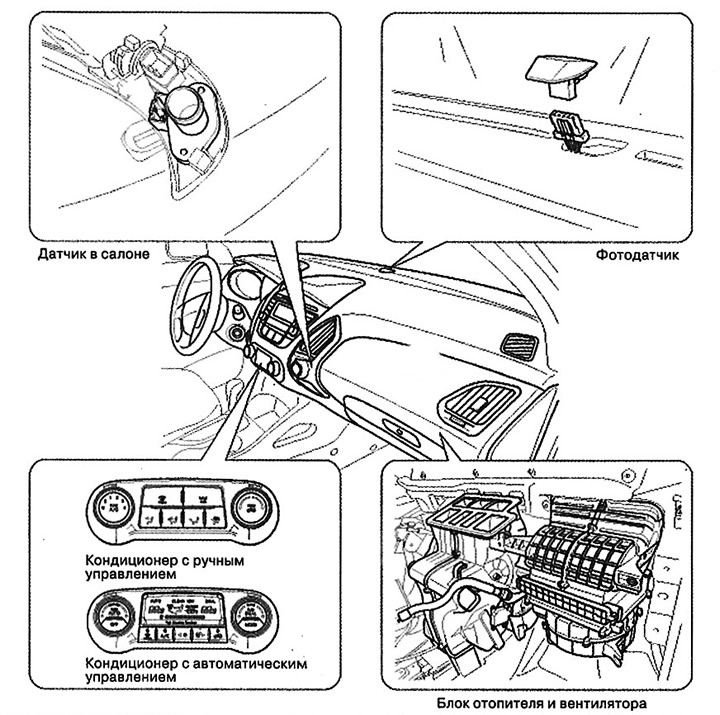
Blower module

Heater and Evaporator Module

General information precautions when handling refrigerant
1. R-134a refrigerant is highly volatile. If a drop of refrigerant gets on your skin, it can cause local frostbite. When working with refrigerant, it is necessary to use gloves.
2. Use goggles to protect your eyes and gloves to protect your hands. If refrigerant gets into your eyes, rinse them with water immediately.
3. The container with refrigerant R-134a is under high pressure. It is prohibited to store the container in places where it can be exposed to high temperatures. The storage temperature should not exceed 52°C.
4. Check the tightness of the system with an electronic leak detector. It should be remembered that the refrigerant R-134a, when exposed to an open flame, releases highly toxic phosgene gas.
5. Use only the specified oil to fill the R-134a refrigerant circuit. Using other oils may cause the system to fail.
6. Since PAG oil intensively absorbs moisture from the surrounding air, the following precautions should be taken:
When removing any parts of the refrigerant circuit, immediately plug the openings to prevent moisture from entering.
When installing refrigerant circuit parts, remove the hole plugs immediately before installing the parts.
Connect all pipes and hoses as quickly as possible to prevent moisture from entering the air conditioning system.
Use only the specified grade of compressor oil from a sealed container.
7. If refrigerant accidentally leaks from the system, ventilate the work area before continuing work.
Precautions when replacing air conditioning system parts
1. It is prohibited to loosen the connections of parts before draining the refrigerant from the system.
2. To prevent moisture from entering, immediately close open parts with caps or plugs.
3. Remove protective plugs only immediately before installing the part.
4. When connecting the fittings of the parts, be sure to install new sealing rings, having first applied refrigerant or oil to the fitting and seal.
Installation of connecting parts
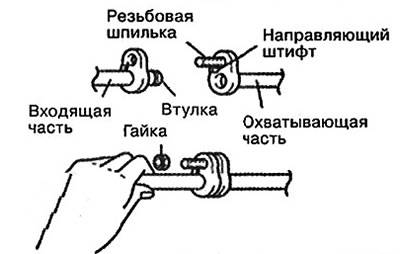
1. Flange connections with guide pin
1) Check the presence of the sealing ring, make sure it is not damaged and apply compressor oil to it.
2) Insert the stud as shown in the figure and tighten the nut by hand.
3) Tighten the nut to the required torque.
 |
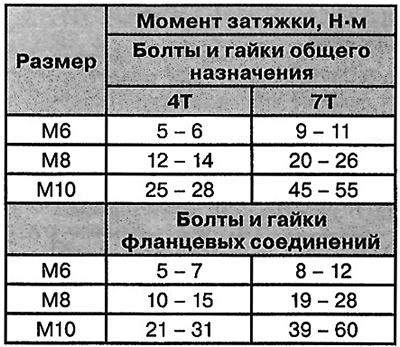 |
Note: The numerical designation with the "T" mark on the bolt head indicates the tensile strength of the bolt.
2. Maintenance of pipelines and connections
When using a moisture-free coolant and recommended lubricants, the internal surfaces of the cooling system components will maintain chemical resistance. Excessive amounts of dirt, moisture or air may compromise the chemical resistance of the internal surfaces, eventually causing malfunctions or serious damage.
Precautionary measures that must be observed
1. If it is necessary to depressurize the cooling system, prepare in advance all the tools and spare parts that will be required to perform maintenance on the system, so that the system remains in a depressurized state for the strictly necessary time.
2. Close all pipes and connections with plugs or caps immediately after disconnecting them to prevent the ingress of dirt and moisture.
3. All pipelines and other elements of vehicle systems stored in the spare parts warehouse must be hermetically sealed or their openings must be closed with plugs until they are ready for use.
4. Do not bend molded system piping elements to fit them in place. Use piping elements of the required shape when servicing refrigeration units.
5. All fittings, including the refrigerant filling manifold, the manifold for connecting the pressure gauge and the hoses for performing tests, must be clean and dry.
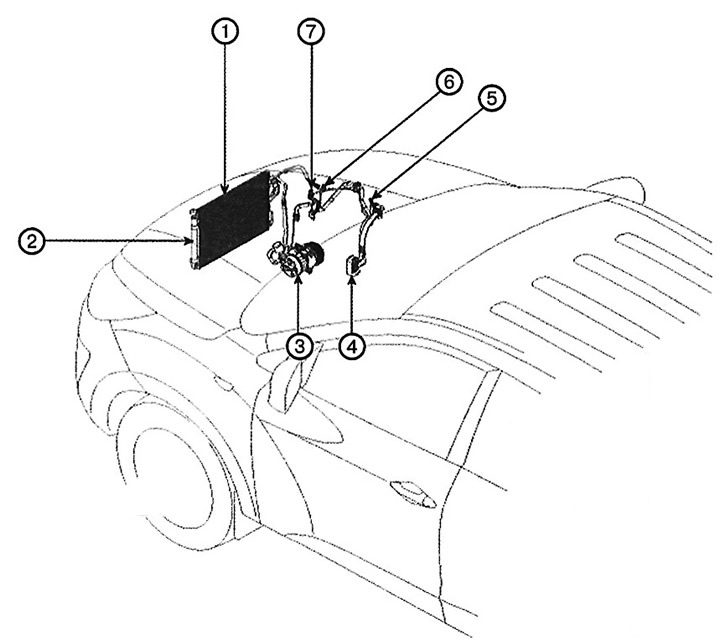
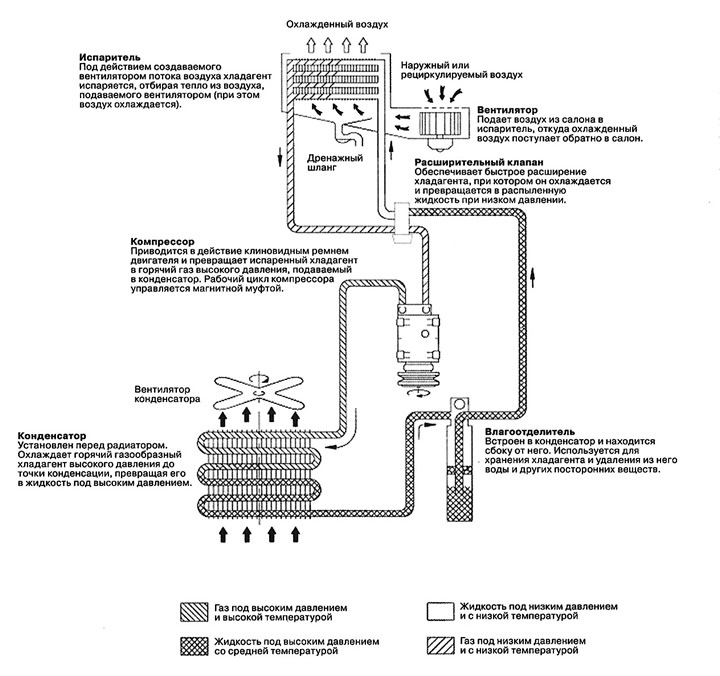
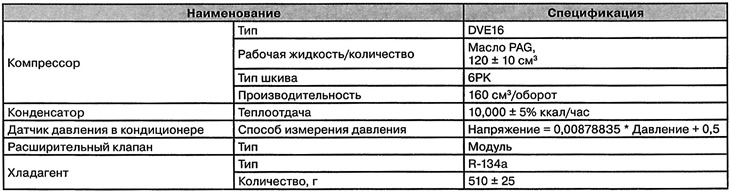
1. Capacitor
2. Receiver-dryer
3. Compressor
4. Expansion valve
5. High pressure hole
6. Low pressure hole
7. Air conditioning pressure sensor