


General information
The brake force distribution valve, depending on the rear axle load, distributes the brake fluid pressure in the brake circuits of the front and rear wheels to achieve high braking efficiency and prevent rear wheel locking and skidding. The brake force distribution valve cannot be disassembled, since its performance depends on the tension of the spring installed in it.
The system consists of two valves located on the nipples of the rear brake lines of the master brake cylinder.
Removal and installation
1. Disconnect the pipes, unscrew the mounting nuts and remove the master cylinder, then remove the brake force distribution valves.
2. Install the valves on the master cylinder.
- Tightening torque: 35-55 Nm
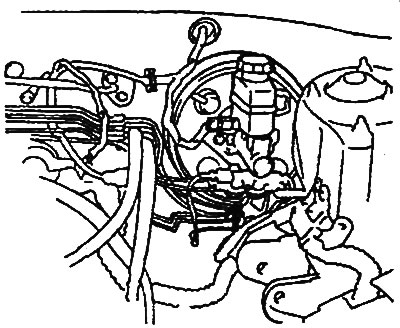
3. Install the master cylinder and tighten the mounting nuts.
- Tightening torque: 8-12 Nm
4. Connect the brake pipes, tighten the union nuts of the brake pipes and bleed the brake system.
- Tightening torque: 13-17 Nm
Examination
1. Remove the brake force distribution valve from the master cylinder.
2. To perform the test, you will need two pressure gauges. Connect the first pressure gauge to the valve inlet (between the valve and the master cylinder), and the second pressure gauge to the valve outlet (between the valve and the rear brakes).
Note: After installing the pressure gauges, bleed the brake system.
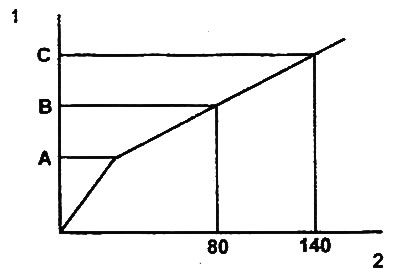
3. Press the brake pedal and measure the pressure at the input and output of the brake force distribution valve. If the measured pressure corresponds to the technical data, the valve is corrected.
Models before 2001.
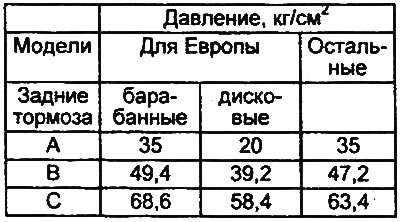
Checking the valve operation.
1 - outlet pressure scale (kg/cm²), 2 - inlet pressure scale (kg/cm²).
Models since 2001.
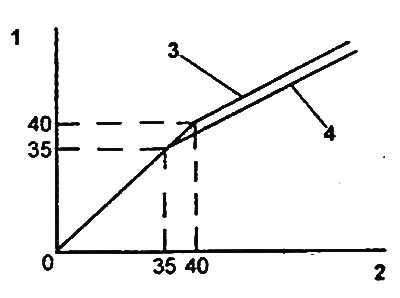
Checking the valve operation.
1 - outlet pressure scale (kg/cm²), 2 - inlet pressure scale (kg/cm²), 3 - rear disc brakes, 4 - rear drum brakes.
4. Install the valve, connect the brake pipes to their original position and bleed the brake system.