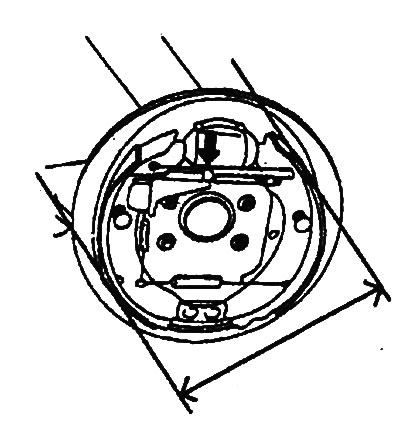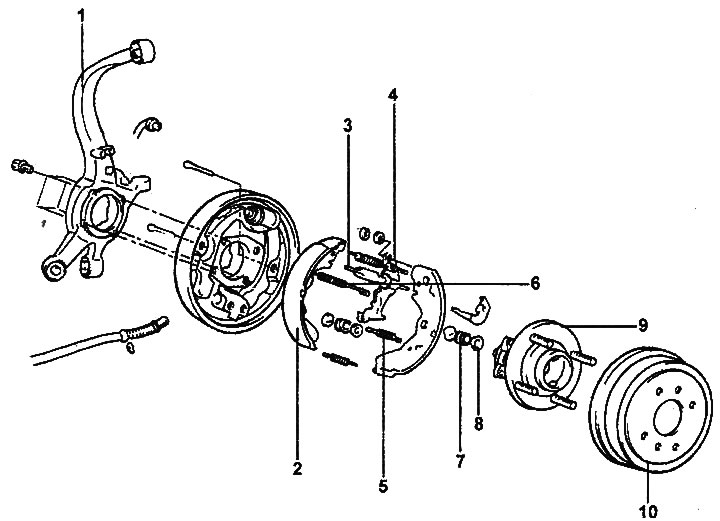
Rear drum brake mechanism.
1 - fist, 2 - brake shoe, 3 - regulator, 4 - shoe adjustment lever, 5, 6 - spring, 7 - retainer spring, 8 - washer, 9 - rear wheel hub, 10 - brake drum.
Removal
1. Jack up the car, unscrew the bolts and remove the rear wheel.
- Tightening torque: 90-110 Nm
2. Remove the brake drum.
Note:
- Make sure the parking brake lever is released.
- If you have any difficulties during removal, unscrew the bolts from the technological holes and change the position of the pads by turning the regulator.
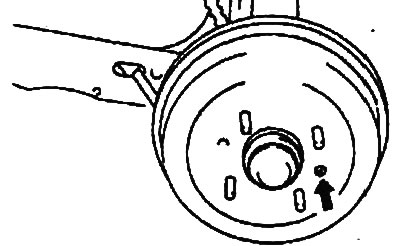
3. Remove the rear wheel hub.
4. Remove the brake shoe return springs, then remove the spring and brake shoe adjustment lever.
5. Remove the brake pads together with the adjuster.
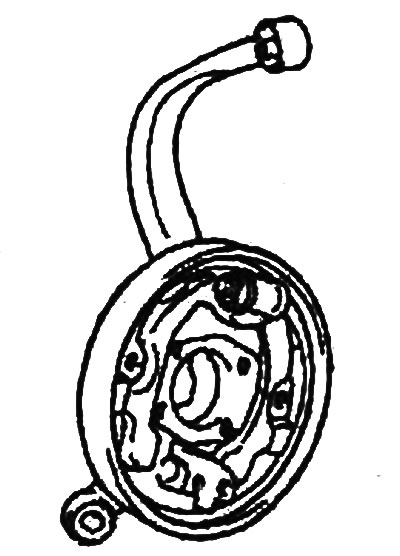
6. Disconnect the brake pipe from the wheel cylinder.
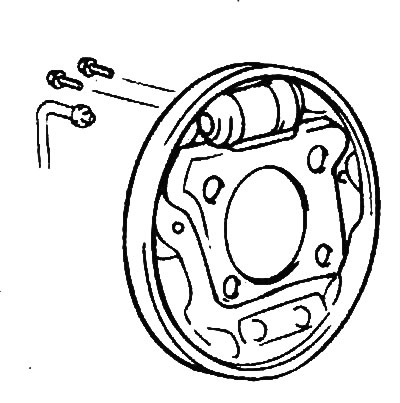
7. Loosen the bolts and remove the wheel cylinder.
- Tightening torque: 12-18 Nm
Disassembly
1. Remove the anthers.
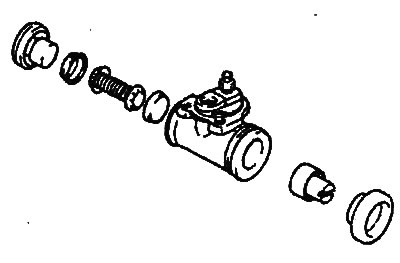
2. Remove the piston and piston seal ring.
3. Remove the return spring.
Assembly
1. Assembly is carried out in the reverse order of disassembly.
2. Before assembling the wheel cylinder, perform checks.
- a) Check the inner surface of the working brake cylinder and piston for wear, damage and rust.
- b) Measure the inner diameter of the working cylinder.
- Nominal cylinder bore: 19.05 mm
- c) Check the clearance between the piston and the cylinder
- Nominal clearance: 0.039-0.089 mm
- d) Check the body of the working brake cylinder for cracks and damage.
- d) Check the contact surface of the piston with the brake pads for wear.
- e) Check the piston return spring for looseness.
3. Please pay attention to the following operations.
- a) Before assembly, wash the piston and body of the working brake cylinder with isopropyl alcohol.
- b) Apply clean brake fluid to the piston seal ring and into the brake master cylinder body.
- c) Install only new piston dust boots and sealing rings.
Caution: Be careful not to lose the steel ball of the bleed nipple.
Examination
1. Measure the inside diameter of the brake drum.
- Nominal diameter: 228.6 mm
- Maximum diameter: 230.6 mm
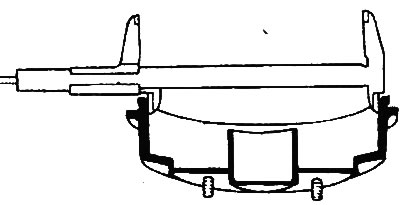
If the brake drum diameter does not match the specifications, replace the brake drum.
2. Measure the thickness of the brake shoe linings.
- Nominal thickness: 4.45 mm
- Minimum thickness: 1.5 mm
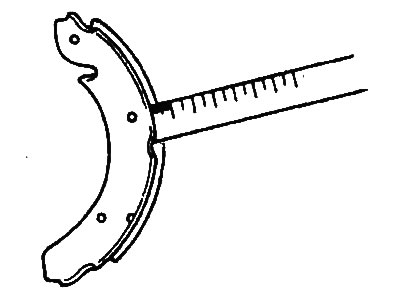
If the brake pad lining thickness does not correspond to the technical data, replace the brake pads as a set.
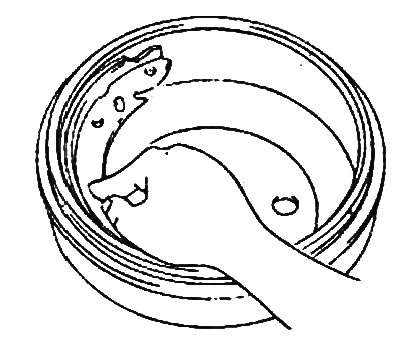
3. Check the contact between the shoe and the brake drum.
4. Check the outer surface of the wheel cylinder for damage or excessive wear.
Installation
1. The brake mechanism is installed in the reverse order of removal; the tightening torques for the bolts and nuts are specified in the text describing the removal procedure.
2. Please pay attention to the following points during installation.
- a) Apply grease to the contact surfaces of the brake shoes and the rear drum brake backing plate.
- b) Apply grease to the contact surfaces of the brake pads and adjuster.
- Grease: SAE J310, NLGI No.2
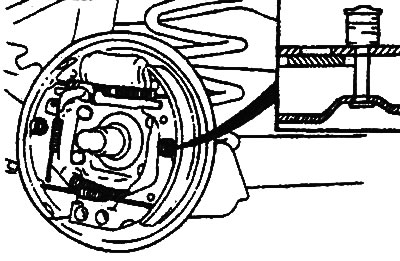
- c) Install the shoe support pin, spring and support pin cap as shown in the figure.
- d) Check the outer diameter of the brake pads.
- Nominal diameter: 227.6-228.1 mm