


Opening the fuel filler cap
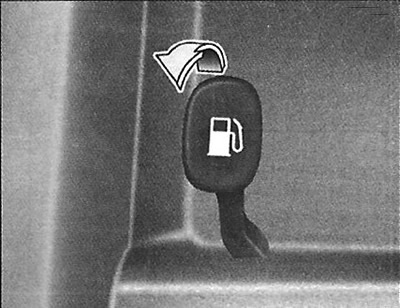
The fuel filler cap must be opened from inside the vehicle using the handle located on the driver's door.
Note. If the fuel tank cap does not open because ice has formed around it, tap it lightly or push it so that the ice breaks and it is released. Don't put in too much effort. If necessary, use a suitable ice removal fluid (do not use antifreeze from the engine cooling system) or move the vehicle to a warm place and wait for the ice to melt.
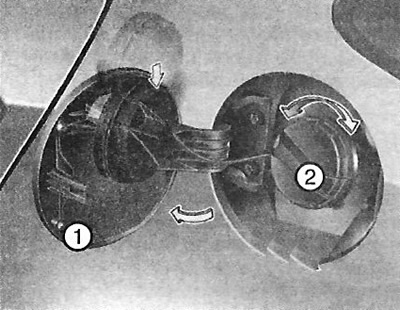
1. Turn off the engine.
2. To open the fuel filler cap, pull the cap handle upward.
(The text is taken from an online source hyundaibook.ru)
3. To open completely, pull the fuel filler cap (1) completely out.
4. To remove the cover (2), turn it counterclockwise.
5. Fill the tank with the required amount of fuel.
Closing the fuel filler cap
1. To replace the filler cap, turn it clockwise until it clicks. The click indicates that the cap is securely tightened.
2. Close the fuel filler cap and press it lightly, then make sure it is securely closed.
Attention.
- Refueling the car.
- If fuel is released under pressure, it may come into contact with your clothing or skin, posing a risk of fire or burns. Always open the fuel cap carefully and slowly. If fuel is leaking from the cap or a hissing sound is heard, wait until these phenomena stop and then open the cap completely.
- Do not add fuel to the tank up to the top of the filler neck after the fuel nozzle has automatically shut off during refueling.
- After filling up the vehicle with fuel, make sure that the fuel filler cap is tightly closed so that the fuel does not spill out in the event of a road accident.
Attention.
- Dangers when refueling a car.
- Automobile fuel is a flammable substance. When refueling the vehicle, you should carefully follow the recommendations below. Otherwise, you may be seriously injured, burned, or killed in a fire or explosion.
- When at a gas station, read and follow all warning instructions.
- Before refueling your vehicle, pay attention to the location of the emergency fuel shut-off button, if provided at the gas station.
- Before touching the fuel nozzle, you must discharge any potentially dangerous static electricity by touching any metal part of the vehicle that is a safe distance from the fuel filler neck, fuel nozzle, and other objects that come into contact with fuel.
- Do not enter the vehicle after you have started refueling, as this may cause a static charge to form by touching any object or piece of fabric (polyester, satin, nylon, etc.) that may cause this effect. The discharge of static electricity may cause the fuel vapors to ignite, causing the fire to spread rapidly. If you need to return to the vehicle, you must discharge the potentially dangerous static charge again. To do this, touch any metal part in the front of the vehicle that is a safe distance from the fuel filler neck, fuel nozzle, or other objects that come into contact with the fuel.
- If you use a fuel canister, be sure to place it on the ground before filling it with fuel. A static discharge from the canister may ignite the fuel vapors and cause a fire. Once you start refueling, maintain contact with the vehicle body until you finish. Use only plastic canisters that are designed for transporting and storing gasoline.
- Do not use cell phones when refueling. Electrical currents or interference caused by them may have a small chance of igniting fuel vapors and causing a fire.
- Always turn off the engine when refueling your vehicle. Sparks from the engine's electrical system may ignite fuel vapors and cause a fire. Once the refueling operation is complete, check that the fuel tank cap and filler cap are tightly closed before starting the engine.
- Do not use matches or a lighter, do not smoke or leave a lit cigarette in the car while it is at a gas station, especially during the process of refueling.
- Automotive fuel is highly flammable and if ignited it can cause a fire
- In case of fire during refueling, move away from the vehicle and immediately contact the gas station personnel and then the fire department. Follow all safety instructions.
Attention.
- If the fuel filler cap needs to be replaced, use only the original Hyundai plug or its equivalent designed for this vehicle. The use of an inappropriate plug may result in a serious failure of the fuel system or exhaust reduction system.
- Avoid spilling fuel on the exterior of your vehicle. Any type of fuel that comes into contact with painted surfaces may cause damage to the paintwork.
- After refueling your vehicle, make sure the fuel filler cap is securely closed to prevent fuel from spilling in the event of an accident.