Contents: Vehicle Identification Number (VIN) ⇓ Engine number ⇓ Tires ⇓ Winter tires ⇓ Anti-skid chains ⇓ Wheel rotation ⇓ Wheel balancing ⇓ Tire grip on the ground ⇓ Spare wheel and on-board tool ⇓ Fuel used ⇓
Vehicle Identification Number (VIN)

The Vehicle Identification Number (VIN) is used when registering a vehicle and in all legal matters relating to ownership, etc. It is located on the driver's side B-pillar and on the bottom of the front passenger seat.
Engine number
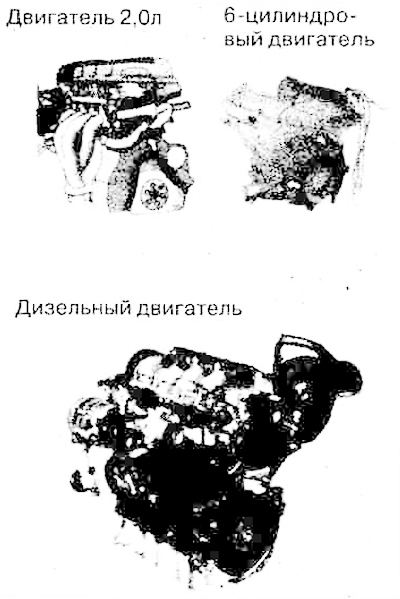
The engine number is stamped on the cylinder block in the places shown by arrows in the figure.
Tires
Hyundai is equipped with tires that provide the best driving performance for the vehicle under normal driving conditions.
Recommended tire pressures are indicated on a plate located on the driver's side B-pillar.

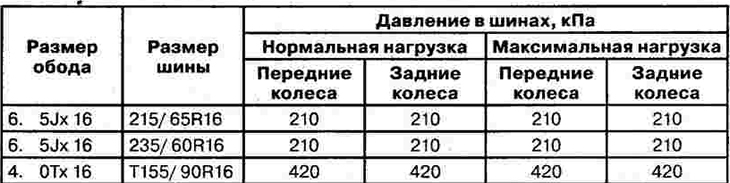
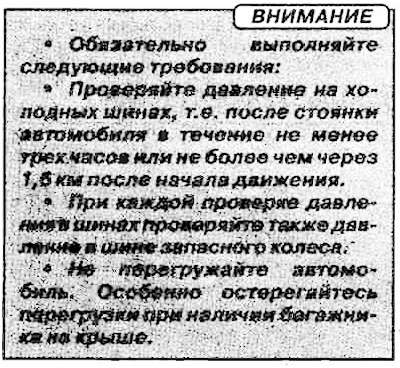
The pressure values specified provide a good combination of tyre characteristics in terms of ride comfort, wear and vehicle stability under normal operating conditions. The tyre pressure should be checked at least once a month. The required tyre pressure should be maintained for the following reasons:
- Low tire pressure causes uneven tread wear and poor vehicle handling.
- High pressure increases the risk of damage to tires from impacts and also leads to uneven wear.
Winter tires
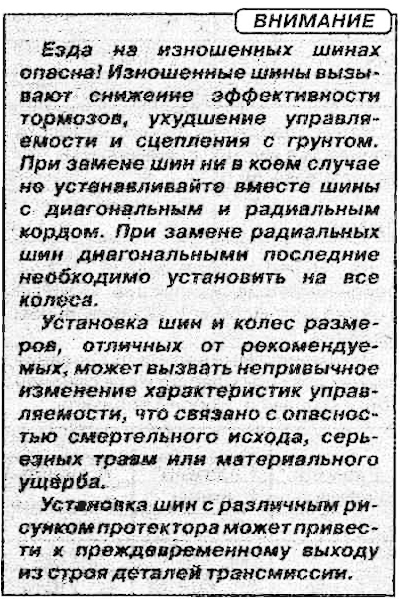
Winter tires must be the same size and load capacity as the standard tires. To avoid deterioration in handling, winter tires must be installed on all four wheels.
The winter tyre pressure should be 28 kPa higher than the recommended pressure for standard tyres, as indicated on the label on the end of the driver's door, or equal to the maximum permissible pressure indicated on the sidewall of the tyre, whichever is lower. After installing winter tyres, do not exceed a speed of 120 km/h
Anti-skid chains
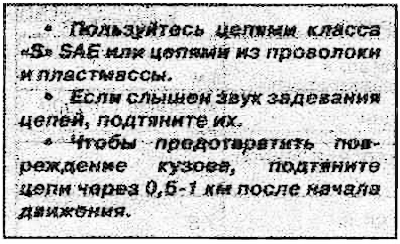
If necessary, install chains on the front wheels. Chains must be of the correct size and installed in accordance with the manufacturer's instructions. To prevent wear on the tires and chains, remove the chains as soon as they are no longer needed.

Wheel rotation
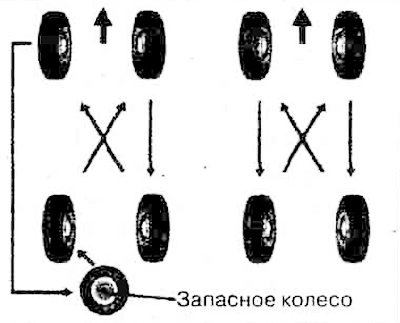
Tires should be rotated every 10,000 km. If uneven tire wear is observed between rotations, have your Hyundai dealer inspect the vehicle to determine the cause.
After rotating the wheels, set the required tire pressure and check the tightness of the wheel nuts.

Wheel balancing
Wheel imbalances negatively affect handling and tire wear. A new Hyundai vehicle is delivered to the owner with balanced wheels, but over time they may need to be rebalanced. Each time the wheels are repaired, they must be balanced before being installed on the vehicle.
Tire grip on the ground
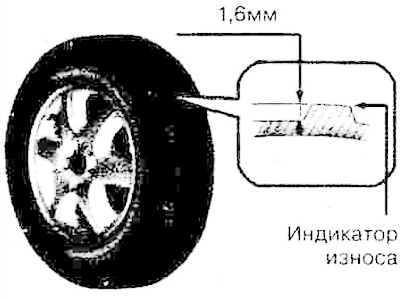
The grip of tires on the ground decreases when they wear out, the pressure in them does not match the norm, or on slippery roads. Tires must be replaced as soon as the tread wear indicators appear. To reduce the risk of losing control of the vehicle, slow down on wet, snowy, or icy road surfaces.
Your vehicle's standard tires have wear indicators that appear when the tread depth decreases to 1.6 mm. The tire should be replaced when the indicators appear as a continuous welt in two or more tread grooves. Install tires of the specified size only. When replacing wheel rims, install rims whose size and offset meet Hyundai requirements.
Spare wheel and on-board tool

Your Hyundai vehicle comes equipped with a spare tire, lug nut wrench, spanner, screwdriver, and jack.
Fuel used
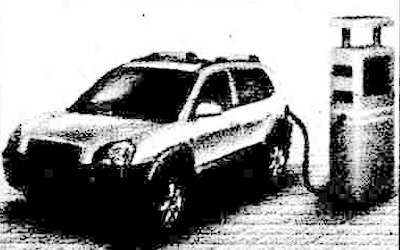
Gasoline. Hyundai vehicles must use unleaded gasoline with an octane rating of at least 91 (research method). Use of leaded gasoline will cause failure of the catalytic converter of exhaust gases and disruption of the toxicity reduction systems.
In addition, this will increase the maintenance costs of the Hyundai vehicle. To prevent accidental filling with leaded gasoline, the filler neck of the vehicle's fuel tank has a reduced diameter, into which it is impossible to insert a filling nozzle used for leaded gasoline.
Diesel fuel. If both types of fuel are available, use summer or winter fuel respectively at the following outside temperatures:
- Above -5°C: summer diesel fuel.
- Below -5°C: winter summer fuel.
Carefully monitor the fuel level in the tank: if the engine stops when the fuel is completely used up, you will need to bleed air from the entire fuel system to start the engine.

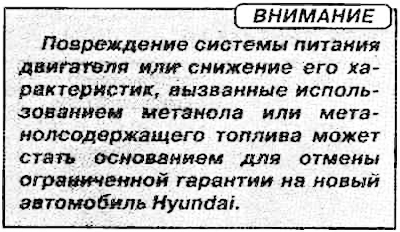
Do not use methanol. Do not use fuel containing methanol (wood alcohol) in your Hyundai, as it will reduce engine performance and damage fuel system components.