


General information
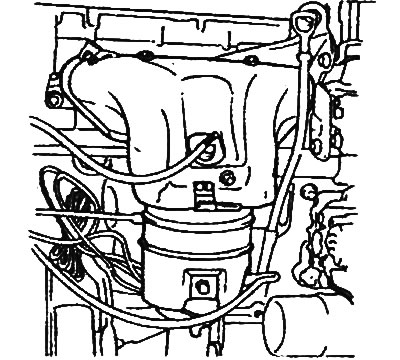
The oxygen sensor determines the concentration of oxygen in the exhaust gases and accordingly changes the voltage of the signal that is sent to the electronic engine control unit.
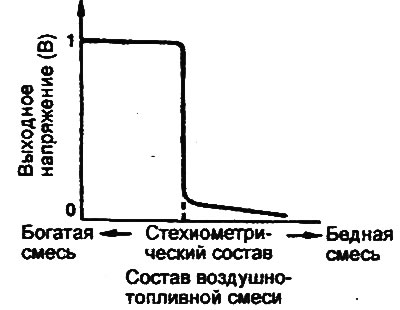
On models with 2.0L/2.4L engines, a zirconium oxygen sensor (ZrO2) is installed, the signal voltage of which is approximately 1 V if the air-fuel mixture is richer than the stoichiometric ratio (i.e. if the concentration of oxygen in the exhaust gases is low). If the air-fuel mixture is leaner than the stoichiometric ratio (i.e. if the concentration of oxygen in the exhaust gases is high), the signal voltage of the sensor is approximately 0 V. Based on this signal, the electronic engine control unit regulates the fuel supply to the cylinders so that the air-fuel mixture is as close to the stoichiometric ratio as possible.
The oxygen sensor is equipped with a heater, which ensures stable operation of the sensor in all modes.
Troubleshooting Guide
1. If the oxygen sensor is faulty, the exhaust gases will contain an increased content of toxic substances.
2. If the oxygen sensor signal (output voltage) differs from the nominal value after the test showed the sensor to be in good condition, then the cause of the malfunction is in the components of the air-fuel mixture control system:
- a) Injector malfunction;
- b) Air enters the intake manifold through a damaged gasket;
- c) Malfunction of the air flow sensor, intake manifold air temperature sensor, intake manifold absolute pressure sensor and coolant temperature sensor;
- d) Poor contact or incorrect connection of connectors.
[The material is reprinted from another resource HyundaiBook.ru]
Note:
- If you suddenly release the accelerator pedal when the engine is running at 4000 rpm, the fuel supply will be cut off for a short period of time and when reading the data, the tester will show an oxygen sensor signal voltage of 200 mV or lower.
- If you press the accelerator pedal sharply, the air-fuel mixture will be enriched and the tester will show an oxygen sensor signal voltage of 600 - 1000 mV.
- If the engine is idling, the oxygen sensor signal voltage will fluctuate within 400-600 mV. In this case, the oxygen sensor can be considered serviceable.
Checking the sensor
Note:
- Before checking, warm up the engine until the coolant temperature reaches 80-95°C.
- When taking measurements, use a high-precision digital voltmeter.
1. Disconnect the oxygen sensor connector and measure the resistance between terminals "3" and "4".
- Nominal value (at 400°C): 30 kOhm or more
2. If there is a malfunction, replace the oxygen sensor.
3. Connect the power supply (battery voltage) directly to terminals "3" and "4" of the sensor.
Note: Be careful when performing this operation. Applying voltage to terminals "1" and "2" will damage the oxygen sensor.
4. Connect a high resistance digital voltmeter between terminals "1" and "2".
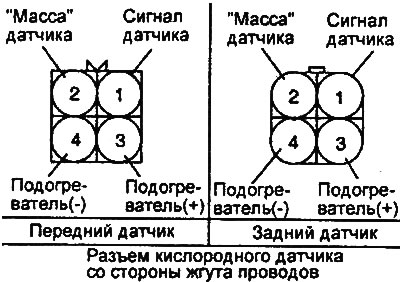
5. Measure the output voltage of the oxygen sensor by periodically pressing the accelerator pedal. The nominal value (when pressing the accelerator pedal):
- Oxygen sensor output voltage: minimum 0.6 V
- Resistance: 30 ohms or more
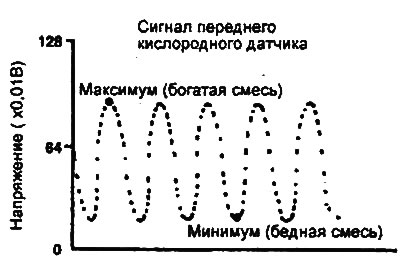
6. If the sensor signal is not normal, the oxygen sensor may be faulty and needs to be replaced.
Tightening torque:
- Oxygen sensor: 40-50 Nm
- Oxygen sensor wiring retainer bolt: 8-12 Nm