Contents: Cars without power steering ⇓ Cars with power steering ⇓ Power steering hoses and lines ⇓ Power steering pump ⇓ Electric power steering ⇓ Troubleshooting Guide ⇓ Error codes (when using the HI-SCAN…⇓ Emergency modes of operation of the…⇓
Cars without power steering
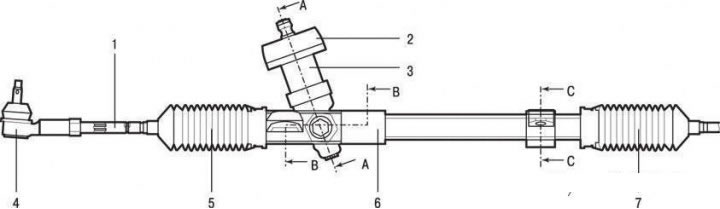
Steering gear for vehicles without power steering: 1 – steering rod; 2 – anther; 3 – dust cap; 4 – steering rod end; 5 – steering rod protective cover; 6 – steering gear housing; 7 – steering rod protective cover
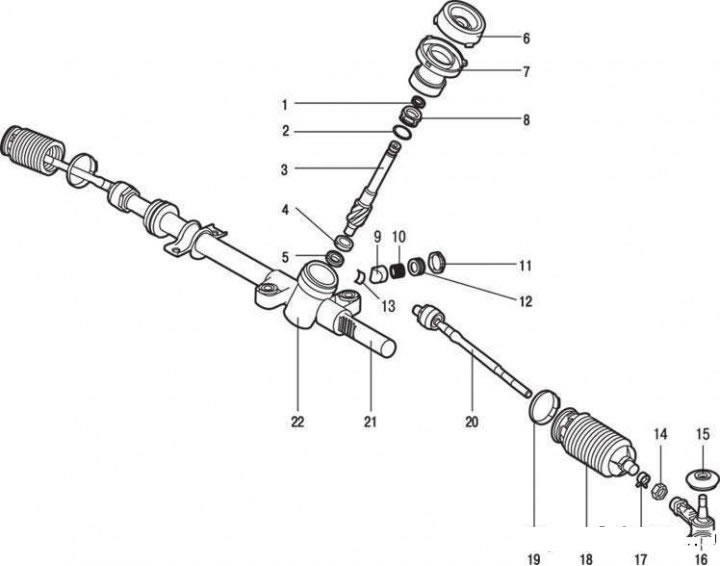
Steering gear assembly for cars without power steering ST-21: 1 – oil seal; 2 – sealing ring; 3 – drive gear; 4 – bearing; 5 – oil seal; 6 – anther; 7 – dust cap; 8 – top plug; 9 – rack stop; 10 – rack stop spring; 11 – lock nut; 12 – rack stop adjusting screw; 13 – insert; 14 – nut; 15 – protective cover; 16 – steering rod end; 17 – clamp; 18 – protective cover; 19 – clamp; 20 – steering rod; 21 – rack; 22 – steering gear housing
The steering mechanism of vehicles without power steering is shown in Figure 5.30, steering mechanism assembly (without power steering).
Removal
Place the car on a lift.
Raise the car.
Disconnect the front muffler.
Remove the front wheels.
Knock out the locking pin of the nut and use a puller to press the ball joint pin of the steering rod end out of the steering knuckle.
In the passenger compartment, disconnect the steering shaft from the steering gear.
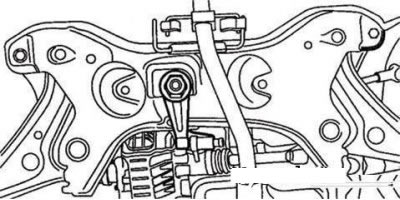
Rear Gearbox Mounting Bracket Fasteners
Loosen the bolts securing the rear front gearbox suspension bracket.
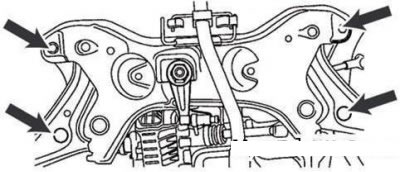
Subframe mounting bolts
Place a gearbox jack under the subframe and remove the four subframe mounting bolts.
Checking the technical condition and adjustment
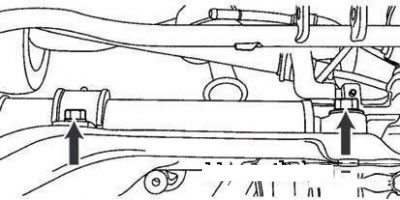
Steering gear mounting bolts
Loosen the steering gear mounting bolt and remove the mounting clamp.
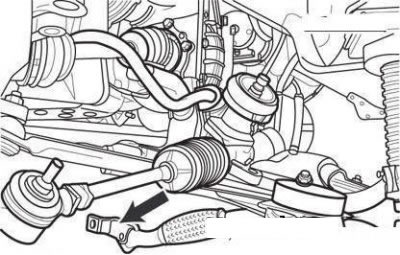
Removing the steering gear assembly with rods
Remove the steering gear assembly with rods, pulling it towards the right side of the vehicle.
Clamp the steering gear in a vice with brass or aluminum pads.
Caution! Only the mounting part of the steering gear may be clamped in a vice. Clamping any other part of it may cause damage to the steering gear.
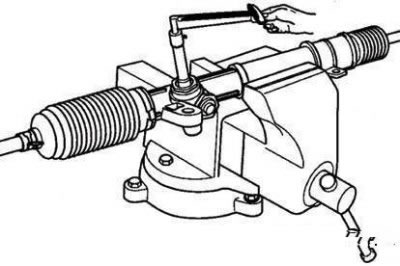
Checking the drive gear torque
Check the drive gear torque by rotating it at a speed of one revolution every 4–6 seconds.
Torque 0.6–1.3 Nm.
Attention!
- The torque of the drive pinion is measured over the entire travel of the rack.
- If the torque is not within the standard, adjust the rack stop, then check the torque again.
- If the required torque cannot be obtained by adjusting the rack stop, check the rack stop components and replace them if necessary.
Turn the steering rod sharply several times.
Using a spring scale, measure the torque of resistance to turning of the steering rod. It should be equal to 8–22 N·m.
If the obtained value exceeds the norm, replace the steering rod.
Caution! If the torque of resistance to rotation is below the specified limit, further use of the steering rod is possible, provided that its rotation occurs smoothly, without excessive play.
Check the protective covers for damage and deterioration of the material properties.
Make sure the covers are installed correctly.
Replace faulty covers with new ones.
Disassembly
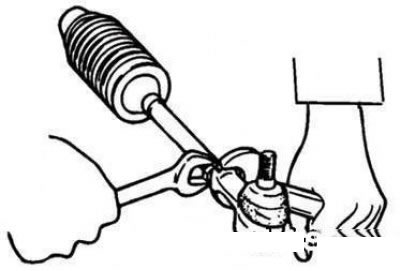
Removing the tie rod end
Remove the tie rod end.
Clamp the tie rod end in a vice and remove the ball joint boot.
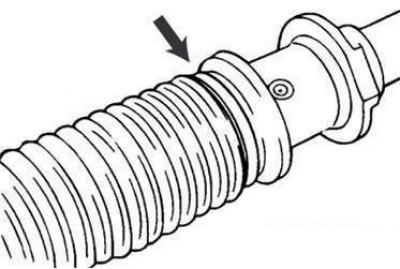
Clamp for fastening the protective cover of the rack
Remove the clamp securing the rack protective cover.
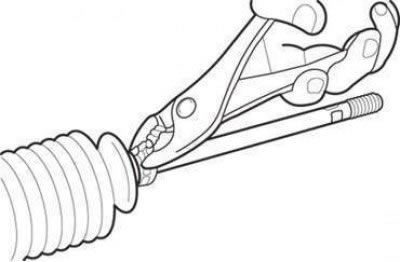
Removing the rack cover mounting clamp.
Remove the rack boot mounting clamp.
Remove the rack cover by sliding it onto the steering rod.
Note: When installing the cover, check the rack for signs of corrosion.
Use a chisel to bend back the lock washer securing the steering rod to the rack.
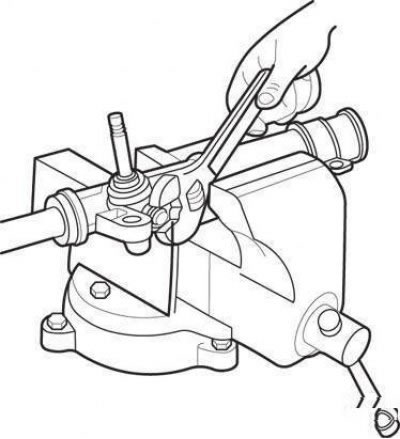
Unscrewing the locknut of the rack stop adjusting screw.
Loosen the lock nut of the rack stop adjusting screw.
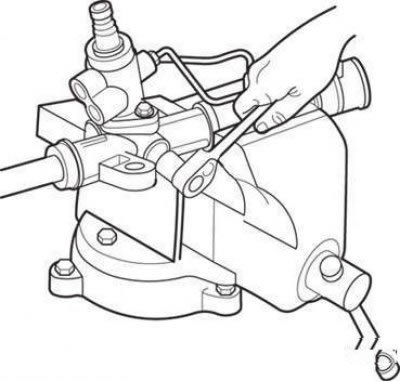
Unscrewing the rack stop adjusting screw.
Loosen the rack stop adjustment screw using a 14 mm socket wrench.
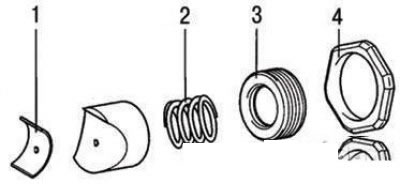
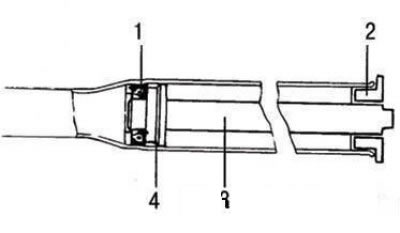
Rack stop: 1 – insert; 2 – stop spring; 3 – adjusting screw; 4 – lock nut.
Loosen the lock nut, remove the stop spring, rack stop and insert.
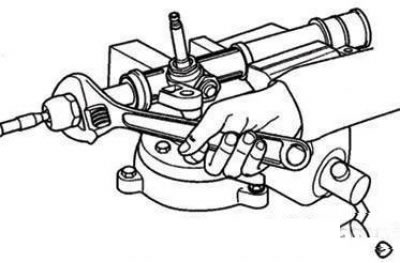
Loosening the inner ball joint of the steering rod.
Move the rack all the way inside the steering gear housing and clamp the housing at the level of the toothed part of the rack in a vice with brass jaws. Unscrew the inner ball joint of the steering rod and disconnect the rod from the rack.
Remove the rack from the steering gear housing.
Caution! Remove the rack towards the left side of the vehicle to avoid damaging the bearing shell with the rack teeth.
Assembly
Apply the specified brand of grease to the rack, insert the rack into the steering gear housing, and install the drive gear into the housing.
Insert the rack into the crankcase from the left side.
When installing the drive gear, engage it with the rack.
Remove excess grease.
Before installing the steering gear oil seal, apply grease to it.
Note: Replace the seal with a new one.
Install the rack stop, stop spring, stop adjusting screw and tighten the lock nut.
Tighten the rack stop adjusting screw to 11 N·m, then back it off by 30–60°. Tighten the adjusting screw lock nut.
Attention! Adjust the rack stop with the rack in the middle position. Install the lock nut on the sealant.
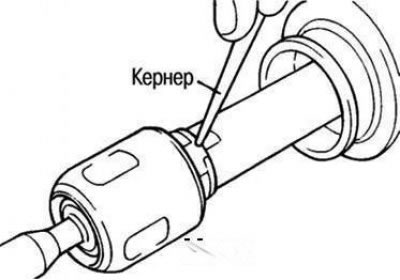
Locking the steering rod to the rack using a center punch
Attach the steering rod to the rack and lock it with a punch.
Replace the rack cover and secure it with a clamp and a clip.
Clamp the tie rod end in a vice and install the ball joint boot.
Install the tip onto the steering rod.
Installation
Install the steering gear through the right side of the vehicle.
Secure the steering gear to the subframe.
Raise the subframe with a jack and secure it to the body.
Secure the rear transmission mount bracket. Attach the tie rod ends to the steering knuckles.
Install the front muffler in place.
Lower the car.
Install the front wheels.
In the passenger compartment, connect the steering shaft to the steering gear.
Cars with power steering
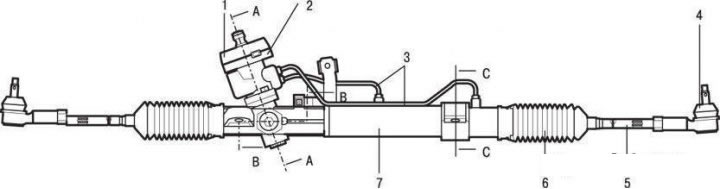
Steering mechanism of cars with power steering: 1 – anther; 2 – dust cap; 3 – hydraulic system pipelines; 4 – steering rod end; 5 – steering rod; 6 – steering rod protective cover; 7 – steering gear housing
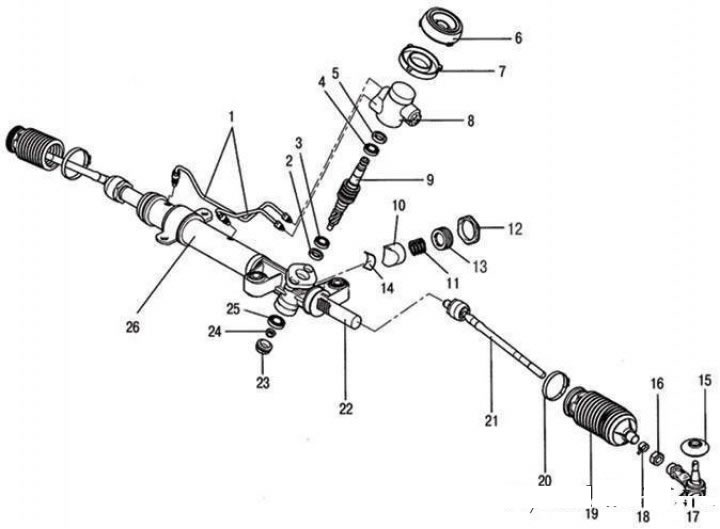
Steering gear of vehicles equipped with hydraulic power steering, complete: 1 – hydraulic system pipelines; 2, 5 – seals; 3, 4 – bearings; 6 – anther; 7 – dust cap; 8 – distributor housing; 9 – distributor; 10 – rack stop; 11 – rack stop spring; 12 – lock nut; 13 – rack stop adjusting screw; 14 – insert; 15, 19 – protective covers; 16 – nut; 17 – steering rod end; 18 – clamp; 20 – clamp; 21 – steering rod; 22 – rack; 23 – plug; 24 – nut; 25 – bearing; 26 – steering gear housing
Removal
Place the car on a lift.
Drain the power steering fluid from the system.
Remove the front wheels.
Knock out the locking pin of the nut and use the tool to press the ball joint of the steering rod end out of the steering knuckle.
In the passenger compartment, disconnect the steering shaft from the steering gear.
Raise the car.
Remove the high pressure hose clamp and unscrew the power steering system drain hose clamp bolt.
Disconnect the front muffler.
Loosen the bolts securing the rear gearbox suspension bracket.
Loosen the steering gear mounting bolt and remove the mounting clamp.
Place a gearbox jack under the subframe and remove the four subframe mounting bolts.
Disconnect the high pressure line and drain line fittings from the steering gear.
Remove the steering gear assembly with rods, pulling it towards the right side of the vehicle.
Checking the technical condition and adjustment
Loosen the steering gear mounting bolt and remove the mounting clamp.
Remove the steering gear assembly with rods, pulling it towards the right side of the vehicle.
Clamp the steering gear in a vice with brass or aluminum pads.
Caution! Only the mounting part of the steering gear may be clamped in a vice. Clamping any other part of it may cause damage to the steering gear.
Check the drive gear torque by rotating it at a speed of one revolution every 4-6 seconds; the torque should be equal to 0.6–1.3 Nm.
Note: The torque of the drive pinion is measured over the entire travel of the rack.
If the torque is not within the standard, adjust the rack stop, then check the torque again.
If the required torque cannot be obtained by adjusting the rack stop, check the rack stop components and replace them if necessary.
Turn the steering rod sharply several times.
Using a spring scale, measure the torque of resistance to turning of the steering rod; it should be equal to 8–22 N·m.
Caution! If the torque of resistance to rotation is below the specified limit, further use of the steering rod is possible, provided that its rotation occurs smoothly, without excessive play.
If the obtained value exceeds the norm, replace the steering rod.
Check the protective covers for damage and deterioration of the material properties.
Make sure the covers are installed correctly.
Replace faulty covers with new ones.
Disassembly
Remove the tie rod end.
Clamp the tie rod end in a vice and remove the ball joint boot.
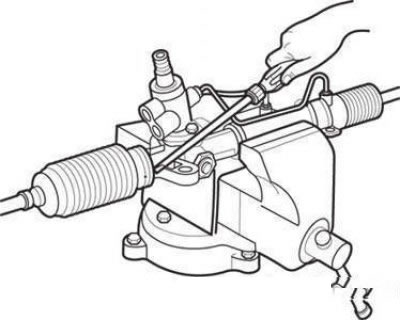
Clamp for fastening the protective cover of the rack
Remove the clamp securing the rack protective cover (Figure 5.49).
Note: When installing the cover, check the rack for signs of corrosion.
Remove the rack cover by sliding it onto the steering rod.
Slowly pull out the rack to drain the power steering fluid from the steering gear housing.
Use a chisel to bend back the lock washer securing the steering rod to the rack.
Disconnect the steering rod from the rack.
Caution! When disconnecting the steering rod from the rack, make sure that no twisting force is applied to the rack.
Loosen the lock nut of the rack stop adjusting screw.
Unscrew the stop using a 14 mm socket wrench.
Loosen the lock nut, remove the rack stop adjusting screw, stop spring, rack stop and insert from the steering gear.
Disconnect the supply line from the steering gear housing.
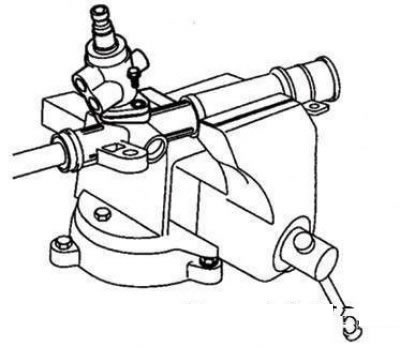
Distributor housing mounting bolts
Remove the distributor housing by unscrewing the bolts.
When the end of the snap ring comes out of the slotted hole, turn the rack stopper counterclockwise and remove the snap ring.
Caution: Be careful not to damage the rack.
Remove the rack bushing and rack from the steering gear housing.
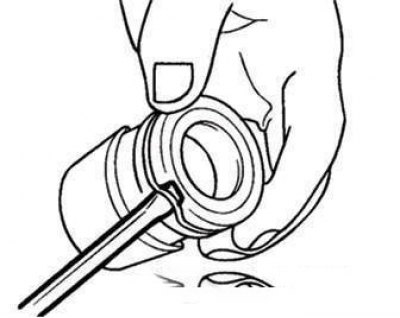
Crankcase sealing ring
Remove the sealing ring from the crankcase.
Remove the seal from the rack bushing.
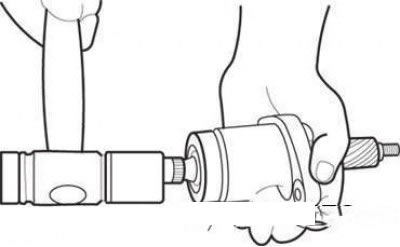
Knocking out the distributor from the housing
Knock the distributor out of the distributor housing with a soft-faced hammer.
Remove the oil seal and ball bearing from the distributor housing.
Remove the oil seal and O-ring from the steering gear housing.
Caution: Take precautions not to damage the pinion valve cylinder mirror in the steering gear housing.
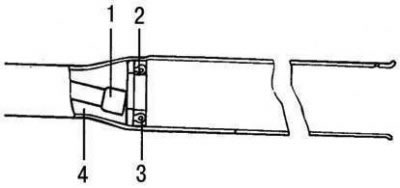
Removing the seal and ball bearing from the distributor housing: 1 – tool 09573-21200; 2 – thrust washer; 3 – oil seal; 4 – device 09573-21000
Using a special tool, remove the oil seal and ball bearing from the distributor housing (Figure 5.54).
Checking the technical condition
1. Rail.
- Check the rack teeth for damage and wear.
- Check the seal contact surface for damage.
- Check the rack for bending or twisting.
- Check the oil seal ring for damage or wear.
- Check the seal for damage or wear.
2. Drive gear and distributor.
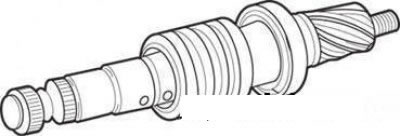
Drive gear and distributor
- Check the drive gear teeth for damage or wear.
- Check the seal contact surface for damage.
- Check the oil seal ring for damage or wear.
- Check the seal for damage or wear.
3. Bearing.
- Check the bearing for binding or increased noise when rotating.
- Make sure there is no excessive clearance in the bearing.
- Make sure all bearing needles are present.
- Check the steering gear housing cylinder mirror for damage and the protective boots for damage, cracks or aging.
Assembly
Lubricate the entire surface of the rack seal with PSF-3 working fluid.
Installing the oil seal in the steering gear housing: 1 – tool 09573-21200; 2 – device 09573-21000; 3 – device 09555-21000; 4 – device 09573-21100
Install the oil seal into the steering gear housing in the position shown in the figure.
Apply PSF-3 working fluid to the entire surface of the rack seal bushing.
Install the oil seal into the rack bushing.
Apply working fluid to the entire surface of the sealing ring and install the ring into the rack bushing.
Apply SAE J310a, NLGI general purpose grease to the rack teeth #2 EP.
Note: Be careful not to clog the rack vent hole with grease.
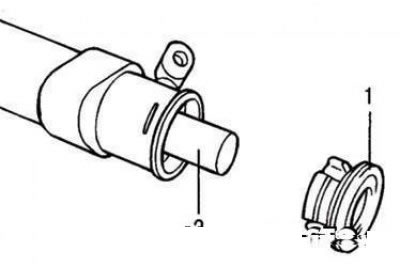
Installing the rack bushing: 1 – rack bushing; 2 – rack
Insert the rack into the steering gear housing, insert the rack bushing and move it inward until it aligns with the housing groove, then secure the bushing.
Using a special tool, install the oil seal and ball bearing into the distributor housing.
Install the distributor into the steering gear housing, for which apply working fluid and lubricant to the distributor.
Apply working fluid to the seal, install it in the steering gear housing and secure the distributor and sealing ring in the housing.
Attach the steering rod and counter-punch it with a chisel.
Install the insert, rack stop, stop spring in the order shown in the figure. Before installation, apply sealant to the thread of the rack stop adjusting screw.
With the rack in the middle position, screw the rack stop adjusting screw into the steering gear housing and tighten it with a 14 mm socket wrench to a torque of 12 N·m, then unscrew the screw at an angle of 30–60° and tighten the screw lock nut to a torque of 50–70 N·m.
Tighten the system feed line fastening nipple to the specified torque and install the rubber cushion onto the adhesive.
Apply silicone grease to the installation location of the protective boot (in the groove) of the steering rod.
Install a new mounting clamp onto the cover.
Note: Replace the mounting clamp with a new one each time you install the cover.
Place the cover back into place, making sure it is not twisted.
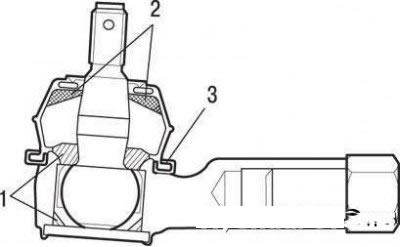
Loading grease into the protective boot of the ball joint of the steering rod: 1 – grease A; 2 – grease B; 3 – sealant
Apply grease to the ball joint boot and to the edge of the boot and secure the boot with a retaining ring by inserting it into the groove of the joint.
Grease A – POLE LUB GLY 801K or similar.
Grease B SHOWA SUNLIGHT MB 2 or similar.
The cavity and edge of the protective cover are THREE BOND.
Install the ball joint onto the steering rod.
Check the drive gear torque.
Installation
Install the steering gear into place through the right side of the vehicle.
Secure the steering gear to the subframe.
Connect the high pressure line and the drain line to the steering gear.
Raise the subframe with a jack and secure it to the body.
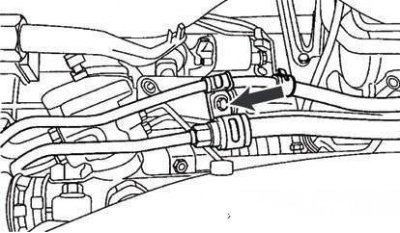
Clamp for fastening the high pressure hose and drain pipe (indicated by the arrow)
Secure the high pressure hose and drain pipe with a clamp.
Install the rear transmission mount bracket.
Attach the front muffler.
Lower the vehicle slowly.
Attach the steering rods to the steering knuckles.
Install the wheels.
Attach the steering shaft to the steering gear.
Pour the working fluid into the power steering reservoir.
Bleed the power steering system.
Power steering hoses and lines
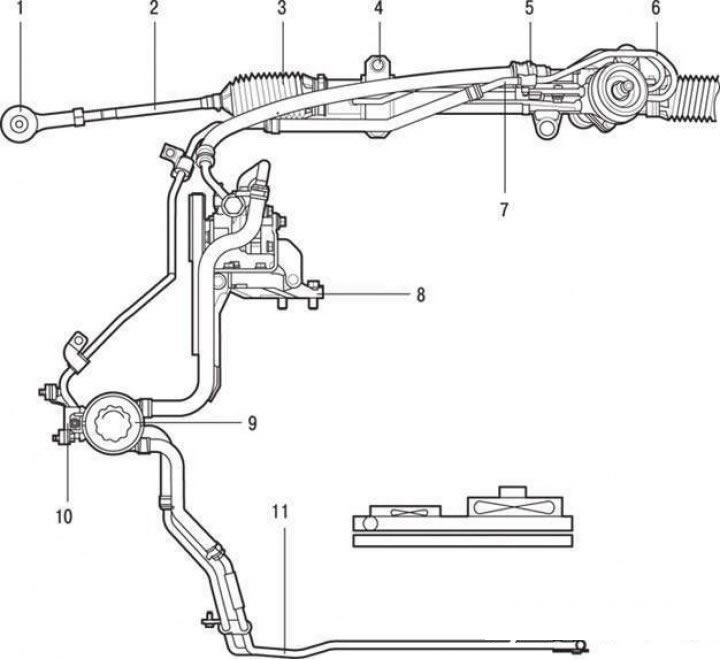
Power steering hoses and lines: 1 – steering rod end; 2 – steering rod; 3 – rack cover; 4 – steering gear mounting clamp; 5 – high pressure hose clamp; 6 – high pressure pipeline and hose; 7 – drain pipe; 8 – power steering pump mounting bracket; 9 – power steering pump reservoir; 10 – tank mounting bracket; 11 – oil cooler
Removal
Place the car on a lift.
Drain the power steering fluid from the system.
Remove the front wheels.
Knock out the locking pin of the nut and use a puller to press the ball joint pin of the steering rod end out of the steering knuckle.
In the passenger compartment, disconnect the steering shaft from the steering gear.
Raise the car.
Remove the high pressure hose clamp and unscrew the power steering system drain hose clamp bolt.
Disconnect the front muffler.
Loosen the bolts securing the rear gearbox suspension bracket to the subframe.
Place a gearbox jack under the subframe and remove the four subframe mounting bolts.
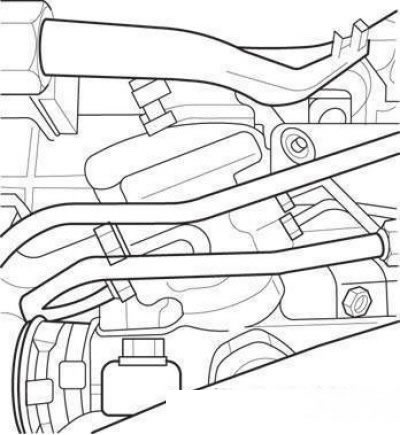
High pressure pipe and drain pipe fittings
Disconnect the high pressure line and drain line fittings from the steering gear.
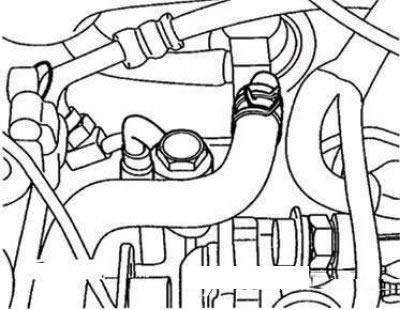
Power steering pump high pressure hose nipple
Lower the vehicle and disconnect the high pressure hose fitting from the power steering pump (if the high pressure hose is removed).
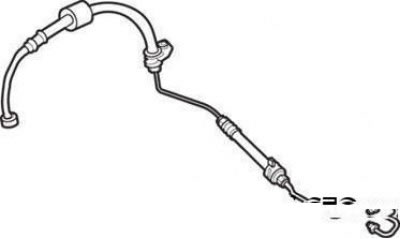
Power steering pump high pressure hose
Disconnect the high pressure hose and remove it (if removing the high pressure hose).
Remove the windshield washer reservoir and the two clamps securing the drain pipe and hose (when removing the drain pipe).
Remove the drain pipe retaining clamp, drain pipe and hose (if removing the drain pipe and hose).
Remove the two mounting bolts at the top of the front bumper (when removing the drain pipe).
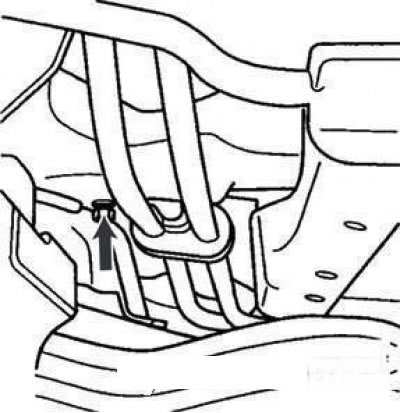
Drain pipe mounting clamp bolt
Loosen the bolt (10 mm) of the drain pipe mounting clamp (when removing the drain pipe).
Disconnect from the hose on the side of the power steering pump reservoir and remove the drain line (when performing work on the drain line).
Installation
Place the car on a lift.
Insert the drain pipe from the top of the front bumper to the bottom and tighten the two mounting bolts.
Install the drain pipe and hose, tighten the clamp bolt and install the tank (when installing the drain pipe and hose).
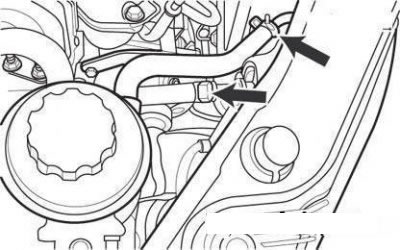
Drain Pipe Fastening Clamps
Attach the drain line to the hose on the power steering reservoir side and on the drain line and hose side, secure it with clamps (when installing the drain line).
Install the high pressure hose and line in place and connect them to the power steering pump (when installing the high pressure hose and line).
Raise the car.
Connect the high pressure line and drain line to the steering gear.
Place a gearbox jack under the subframe, insert and tighten the four subframe mounting bolts.
Tighten the high pressure line and drain line clamp bolt.
Attach the rear transmission mount bracket to the subframe
Attach the front muffler to the engine.
Lower the car.
In the passenger compartment, connect the steering shaft to the steering gear.
Tighten the two mounting bolts at the top of the front bumper (when installing the pipe).
Attach the tie rod ends to the steering knuckles.
Install the front wheels.
Pour the working fluid into the power steering pump reservoir.
Checking the technical condition
Check the hoses for cracks by twisting them by hand.
Make sure the hoses do not touch other parts.
Filling the power steering system with working fluid
Fill the power steering pump reservoir with fluid up to the "MAX" mark.
Use a jack to raise the front of the vehicle until the wheels are off the ground and turn the steering wheel from lock to lock five to six times at 13 rpm, activating the power steering pump and turning the engine over with the starter, but not starting it.
Let the engine idle and turn the steering wheel from lock to lock in both directions several times until there are no air bubbles in the fluid in the reservoir.
Filling is complete if the liquid is not milky and its level is constantly at the "MAX" mark.
Attention! If the fluid level changes when the steering wheel is turned or if the fluid overflows from the reservoir when the engine is stopped, then the air has not been completely removed from the system. It is necessary to repeat bleeding the system as described above, since the presence of air leads to increased noise during operation of the power steering and its premature failure.
Power steering pump
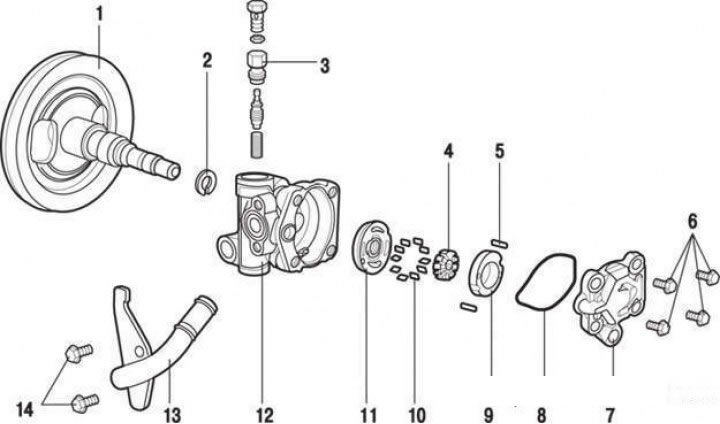
Power steering pump: 1 – pump shaft with drive pulley; 2 – ring; 3 – fitting parts; 4 – rotor; 5 – locking pin; 6 – mounting bolts; 7 – lid; 8 – gasket; 9 – cam ring; 10 – shoulder blades; 11 – lid; 12 – pump body; 13 – suction pipe; 14 – suction pipe mounting bolts
The power steering pump is shown in the figure. It provides pressure and circulation of the working fluid in the system. Hyundai Getz cars are equipped with a vane power steering pump. Vane pumps are the most widely used in passenger car steering hydraulic systems due to their high efficiency and low sensitivity to wear of the working surfaces. The pump is mounted on the engine, its drive is carried out by a belt transmission from the crankshaft.
Removal
Disconnect the high pressure hose from the pump.
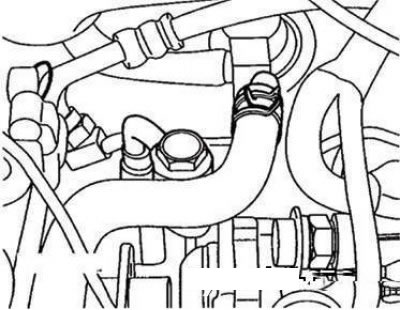
Suction hose
Disconnect the suction hose from the suction line and drain the liquid into a prepared container.
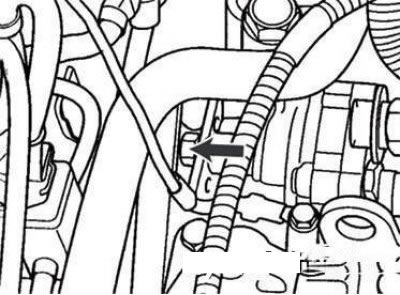
Power steering pump drive belt tension bolt
Loosen the tightening bolt of the power steering pump drive belt tensioner.
Remove the drive belt from the power steering pump pulley.
Remove the power steering pump by unscrewing the pump mounting bolts and the drive belt tension adjustment bolt.
Remove the power steering pump bracket.
Disassembly
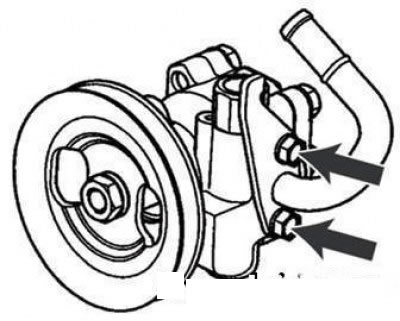
Suction pipe mounting bolts
Loosen the two mounting bolts and remove the suction pipe and sealing ring from the pump body.
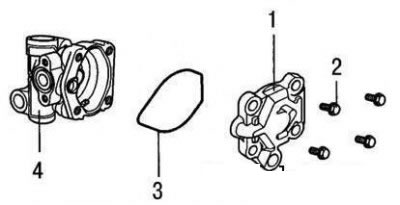
Power steering pump: 1 – pump cover; 2 – cover mounting bolts; 3 – gasket; 4 – pump body
Remove the pump cover by unscrewing the four bolts.
Remove the cam ring.
Use pliers to remove the retaining ring from the rotor shaft.
Remove the rotor and blades.
Remove the side cover of the pump.
Remove the shaft with the pulley from the pump housing.
Remove the seal from the pump body.
Unscrew the fitting from the pump body and remove the regulating valve and valve spring from the fitting.
Remove the sealing ring from the fitting.
Attention! Do not disassemble the control valve.
Checking the technical condition
Check the free length of the adjusting valve spring.
It should be 36.5 mm.
Make sure the control valve is not bent.
Check the rotor shaft for wear and damage.
Check the drive belt for wear and deterioration of the material properties.
Check the rotor and blade slots for lamellar abrasive wear.
Check the contact surfaces between the cam ring and the vanes for lamellar abrasive wear.
Assembly
Install the sealing ring, the spring of the control valve and the control valve itself into the nipple. Screw the nipple into the pump body.
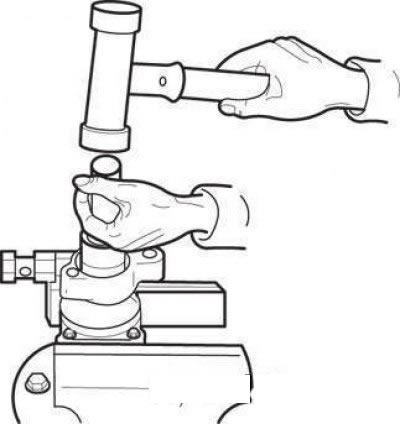
Pressing the seal into the pump body
Using tool 09222-32100, press the seal into the pump body.
Install the rotor shaft with pulley into the pump housing.
Check the rotor blades for damage.
Install the side cover and rotor.
Insert the locking pin into the groove of the pump body and install the cam ring.
Install the rotor.
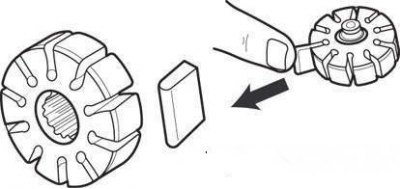
Installing blades into the rotor
Install the blades into the rotor with the rounded edges facing outward.
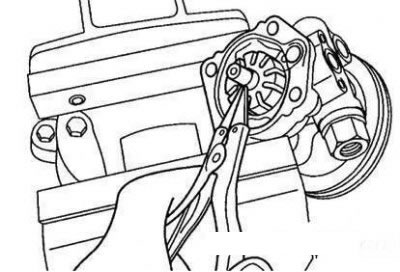
Installing the rotor on the shaft
Use pliers to secure the rotor to the shaft with a retaining ring.
Install the gasket and pump cover.
Install the suction pipe with the sealing ring.
Installation
Install the pump on the mounting bracket, put the drive belt on the pulley and tighten the belt tension adjustment bolt to a torque of 2.5–3.0 N·m for vehicles with 1.3 l engines, and 3.5–5.0 N·m for vehicles with 1.5 l engines.
Connect the suction hose.
Attention! Connect the high pressure hose to the pump using the end with the color marking.
Connect the high pressure hose to the pump.
Restore the PSF-3 working fluid level in the power steering reservoir to normal.
Note: When connecting the high pressure hose to the pump, do not allow it to twist or touch other parts.
Bleed the power steering system.
Check the power steering pump discharge pressure.
Electric power steering
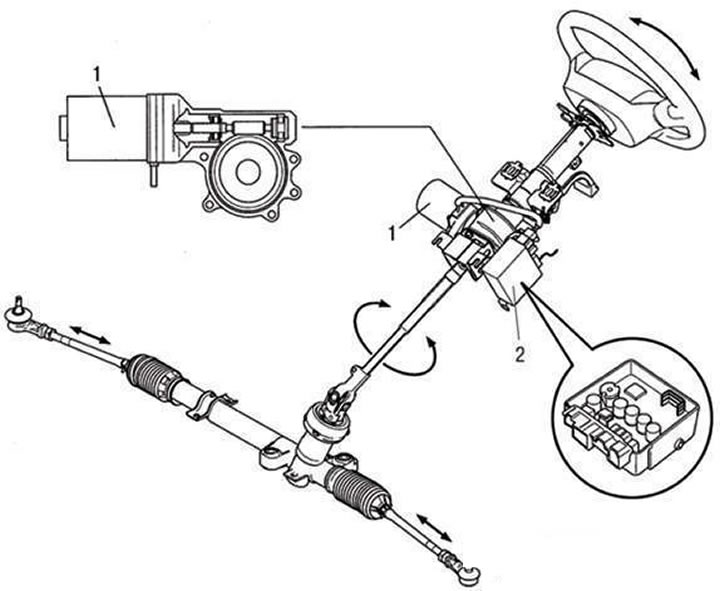
Electric Power Steering: 1 – Power steering motor; 2 – electronic control unit
Operating principle of electric power steering
Additional force on the steering wheel is created by the electric motor of the power steering, the action of which does not depend on the operating mode of the car engine. The electric motor is controlled depending on the driving conditions, due to which a higher adaptability of the degree of amplification is provided than when using a hydraulic booster, and energy consumption is reduced. The electric booster helps to reduce environmental pollution, since it does not use liquid, and the absence of pipelines and hoses of the hydraulic system in the engine compartment helps to reduce the weight of the car.
The steering wheel torque sensor, which is part of the electric power steering system, converts the change in the magnetic field into a current signal depending on the difference in the angle of rotation between the input and output shafts when the torsion bar is twisted.
The electric power steering (EPS) is located inside the passenger compartment and is therefore protected from contamination, exposure to high temperatures (from the engine in the engine compartment) and negative environmental influences.
Attention!
- Avoid impacts on electronic components. If dropped or impacted, replace them with new ones.
- Protect electronic components from exposure to high temperatures and humidity.
- Do not touch the wire terminals to prevent deformation and avoid the possibility of static electricity.
- Avoid impacts on the parts of the electric motor and steering wheel torque sensor. If dropped or impacted, replace them with new ones.
- Disconnect and connect the connectors with the ignition off.
Troubleshooting Guide
| Sign of malfunction | The element being tested | Explanations | Recommendations |
| Increased noise from the electric motor | Electric motor | Obvious or implicit damage if damaged (from falling) parts are used, the vehicle may pull to the side. Precision parts the electric motor and ECU are sensitive to vibration and shock. Sudden damage can be caused by overload | Do not use an EUR that has been damaged impact. Do not overload the nodes amplifier |
| Electrical circuit failure (soldering defects, PCB damage, damage to precision parts) | Electronic control unit | Same | Do not use an EUR that has been damaged blow |
| Insufficient turning force | Steering torque sensor wheels | Overload on the input shaft can cause the steering wheel torque sensor to malfunction | Avoid impacts on connecting parts (during installation and tightening). Remove the steering wheel using special device (do not allow it to be hit). Do not use parts subjected to impact |
| Insufficient turning force (uneven turning force when turning left and right) | Shaft | | Do not use a shock-exposed ECU |
| Power steering not working | Wiring | Connection between connectors and wires is broken | Check the wiring |
| Deviation of turning force from the norm Due to a malfunction of the electric motor or EPS | Electric motor and EPS | Under normal conditions, the amplifier is waterproof. Even a small amount of moisture can cause malfunction of precision components | Maintain normal temperature and humidity during storage. Do not allow the car to fall into water |
Troubleshooting Electric Power Steering
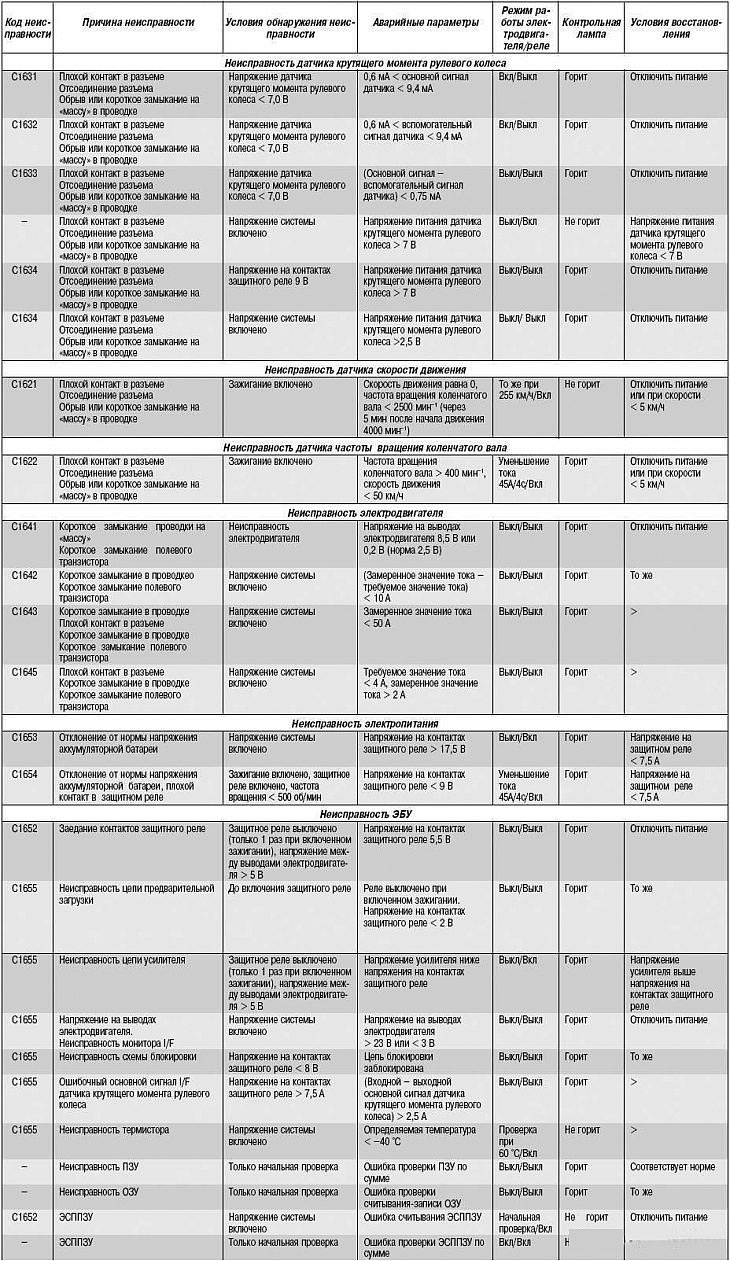
The electric power steering ECU records and displays any faults that occur (Table 5.1). Before you start troubleshooting the EPSU, check the power supply to the amplifier.
Error codes (when using the HI-SCAN tool)
| Code | Malfunction |
| C1631 | Open or short circuit in the main signal circuit of the steering wheel torque sensor |
| C1632 | Open or short circuit in auxiliary signal circuit of steering wheel torque sensor |
| C1633 | Mismatch between main and auxiliary signal of steering wheel torque sensor |
| C1634 | Steering wheel torque sensor power supply circuit malfunction |
| C1621 | Speed sensor signal circuit malfunction |
| C1622 | Crankshaft Speed Sensor Signal Circuit Malfunction |
| C1641 | Short circuit to ground in the electric motor circuit |
| C1642 | Increased supply current of the electric motor |
| C1643 | Excessively high supply current of the electric motor |
| C1645 | Insufficient supply current to the electric motor |
| C1652 | ECU EPS (protection relay jammed) |
| C1655 | ECU EPS (pre-load circuit) |
| C1653 | Increased voltage in the system |
| C1654 | Low voltage in the system |
If the system is in good working order, the EPS control lamp lights up when the ignition is turned on and goes out after the engine is started. If a malfunction occurs, the EPS control lamp continues to light after the engine is started, but if the malfunction has already occurred before the engine is started, the lamp will not light up.
The EPS control lamp lights up under the following conditions:
- the vehicle speed is no more than 1 km/h, the crankshaft speed is not less than 2500 min⁻¹ for more than 20 s;
- crankshaft rotation speed not more than 400 min⁻¹, travel speed not less than 50 km/h for more than 21 s.
Emergency modes of operation of the electric power steering