


Caution: Do not allow anyone to be in front or behind the vehicle during this test.
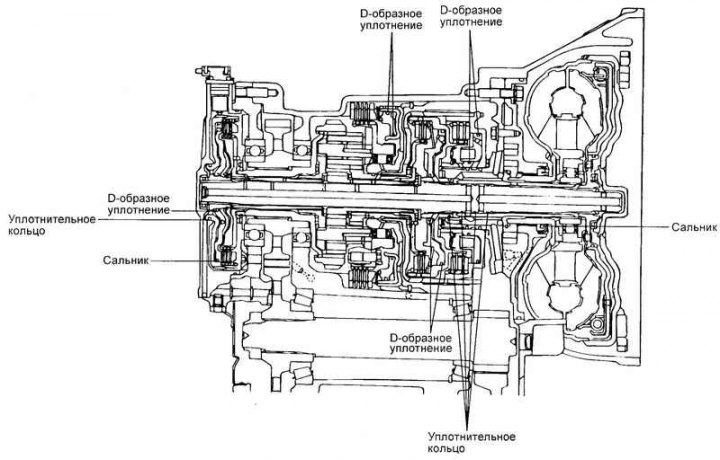
Fig. 3.71. Section of the torque converter
Check the automatic transmission fluid (ATF) level and temperature, as well as the engine coolant temperature. The ATF level should be at the "HOT" mark on the dipstick. The ATF should be warmed up to normal operating temperature (70–80°C). The engine coolant should also be warmed up to normal operating temperature (80–90°C).
Install brake pads (chocks) under the rear wheels of the car.
Install a reference tachometer to measure engine crankshaft speed.
Fully lift the parking brake lever and depress the brake pedal all the way.
Start the engine.
Set the automatic transmission selector lever to the "D" position, press the accelerator pedal fully to determine the maximum engine speed at this moment. During this test, do not hold the throttle valve fully open longer than necessary to determine the maximum engine speed or more than five seconds. If this test is to be performed more than once, then after each test, move the automatic transmission selector lever to the "N" position and let the engine run at 1000 min⁻¹ for 2 minutes to cool the automatic transmission fluid (ATF) between tests.
Nominal value: engine crankshaft speed with the vehicle fully braked (Stall test): 2300–2700 rpm.
Move the selector lever to the "R" position and repeat the check with the vehicle fully braked, similar to the points mentioned above.
When checking in the "D" range with the vehicle fully braked, the engine crankshaft speed is greater than the nominal value
Exceeding the nominal value of the engine crankshaft speed indicates slippage of the rear clutch or overrunning clutch of the gearbox. In this case, check the pressure in the automatic transmission control hydraulic system to determine the cause of slippage.
When checking in the "R" range with the vehicle fully braked, the engine crankshaft speed is greater than the nominal value
Exceeding the nominal value of the engine crankshaft speed indicates slippage of the front clutch of the gearbox or the brake of the first gear and reverse gear. In this case, check the pressure in the automatic transmission control hydraulic system to determine the cause of slippage.
When checking in the "N" range with the vehicle fully braked, the engine crankshaft speed is less than the nominal value
If the engine crankshaft speed is less than the nominal value, the cause is insufficient (inappropriate) engine output power or a faulty torque converter. Check for misfires in the cylinders (misfiring), ignition timing, valve clearance, etc. If no faults are found in any of the above points, then the torque converter is faulty.
The publication is borrowed from the website (www.hyundaibook.ru)