


2. Warm up the engine to normal operating coolant temperature.
Note: If the car has been parked for a long time, warm up the engine for approximately 20 minutes.
3. Turn off the engine, then wait about 5 minutes for the oil to drain into the engine crankcase.
Note: Perform the check with the engine off. If the engine is running, turn off the engine and wait for a while before starting the check.
4. Remove the engine oil dipstick and use a clean cloth to wipe any oil off the dipstick.
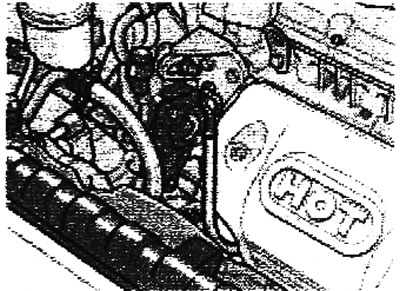
5. Insert the oil dipstick into the dipstick guide tube.
6. Slowly remove the engine oil dipstick and check that the engine oil level is within the acceptable range indicated on the dipstick. If the engine oil level is near or below the minimum level (mark "L"), check for leaks and add the recommended oil to the "F" mark (see section "Engine oil change").
Caution: Filling engine oil above the maximum level will adversely affect engine performance.
Note:
- The distance between the "F" and "L" marks on the dipstick corresponds to approximately 1 liter.
- Engine oil consumption increases under severe operating conditions (driving at high speeds, frequent acceleration and braking, prolonged engine operation at high speeds, low quality or inappropriate oil viscosity).
- The manufacturer allows engine oil consumption of no more than 1 l per 1,500 km under normal operating conditions (no more than 1 l per 1,000 km under severe operating conditions).
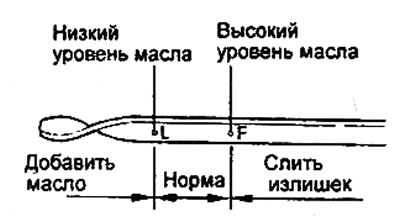
7. Make sure that the engine oil has the appropriate viscosity for the season (no discoloration or dilution). Check the degree of contamination of the oil, and also make sure that there are no impurities of coolant or fuel in the oil.
8. After adding oil, start the engine, let it idle, and then turn it off. Wait for a while and check the oil level again to make sure it is within the acceptable range.