


Note:
- When operating the vehicle in difficult conditions, change the oil twice as often.
- When changing the engine oil, it is recommended to replace the oil filter at the same time.
- The frequency of replacing engine oil and engine oil filter is the same.
1. Place the vehicle on a level, horizontal surface and apply the parking brake.
2. Start the engine and warm it up at idle speed until the coolant temperature gauge needle is above the minimum division of the scale.
Note: In general, it is recommended to warm up the engine until the coolant temperature reaches 80-90°C (the temperature gauge needle is approximately in the middle of the scale).
3. Turn off the engine. Set the automatic transmission selector lever to the "P" position or the manual transmission control lever to the reverse gear position. Open the hood.
4. Drain the old engine oil.
- a) Remove the engine oil filler cap.
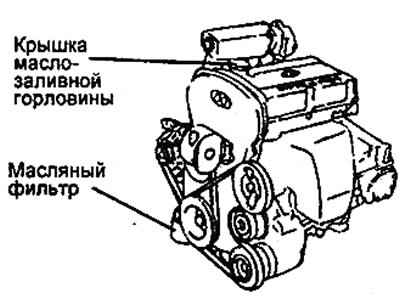
Engines 2.0 l./2.4 l.
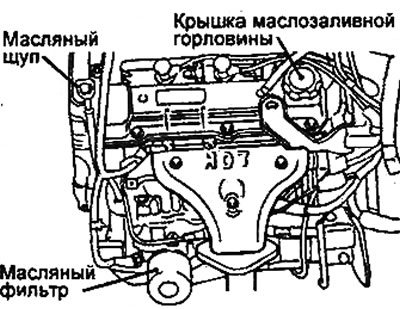
Engine 2.7 l.
- b) Unscrew the drain plug on the engine oil pan and drain the oil into a suitable container.
Caution: Be careful not to burn yourself as the engine oil is hot.
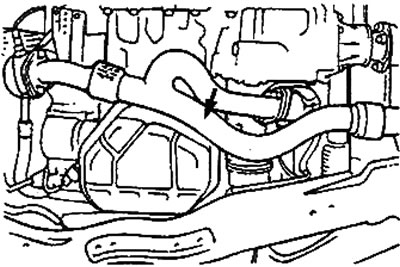
- c) After the engine oil has completely drained, reinstall the oil pan drain plug. Before installing, clean the drain plug and install a new gasket. Tighten the plug to the specified torque.
Note: Install the drain plug gasket as shown in the figure.
- Tightening torque: 35-45 Nm
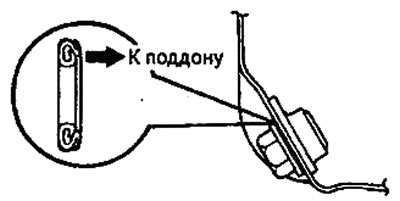
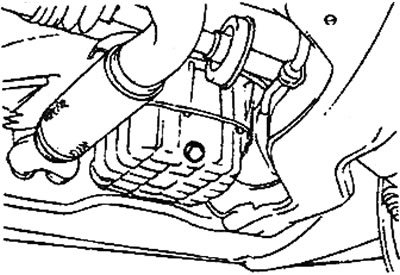
Engines 2.0 l./2.4 l. |
Engine 2.7 l. |
5. Replacing the oil filter.
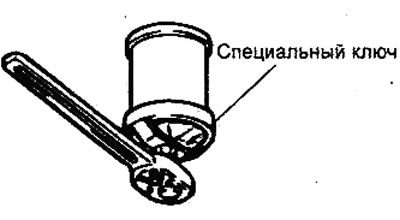
- a) Remove the oil filter from the engine using a special key. If you don't have a key, wrap the oil filter in a rag and unscrew it by hand.
Caution: Be careful not to burn yourself as the engine oil may be hot.
Note: Before removing the oil filter, place a suitable container underneath it to collect the oil.
- b) Check and, if necessary, clean the surface adjacent to the filter.
- c) Lubricate the O-ring of the new oil filter with a small amount of clean engine oil.
- d) Install the oil filter, tighten it by hand until the filter O-ring fits tightly to the mating surface.
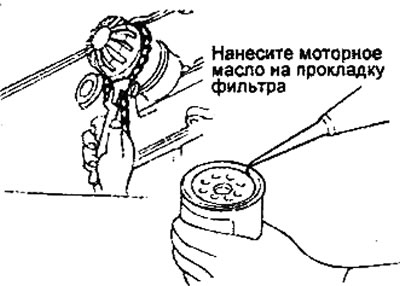
Note: Before installing a new oil filter, make sure that any remaining gasket from the old filter is removed from the surface of the bracket that contacts the filter.
- d) Finally tighten (tighten) the oil filter within 3/4 turn to one turn using a special wrench.
- Nominal tightening torque with a special key: 14±2 Nm
Note: It is recommended to tighten the filter with a special wrench, since hand tightening may be weak and cause oil leaks.
6. Fill the required amount of new engine oil through the engine oil filler neck, checking the level with a dipstick.
[The original source of the article is the website: HyundaiBook]
Caution: Do not fill engine oil above the maximum level, as this may cause serious damage to engine parts.
- Oil quality according to API (not lower): class SG or SH
Filling capacity:
- 2.0L/2.4L Engines:
- total: 4.3 l
- in oil pan: 4.0 l
- in oil filter: 0.3 l
- 2.7L Engine:
- total: 4.5 l
- in oil pan: 4.0 l
- in oil filter: 0.5 l
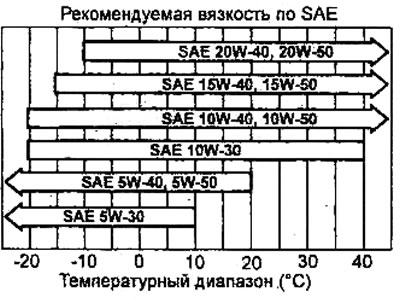
Note: Select the engine oil viscosity (SAE classification) according to the temperature range diagram corresponding to the vehicle operating conditions until the next oil change.
7. Replace the oil filler cap.
8. Start the engine and press the accelerator pedal 2-3 times for several minutes. Check for oil leaks from the oil filter and drain plug.
9. Turn off the engine and check the engine oil level using the dipstick. Add oil if necessary.