


Start the engine. With the vehicle stationary, turn the steering wheel several times in a row until the operating fluid temperature rises to approximately 50–60°C.
With the engine idling, turn the steering wheel several times to the right and left until it stops.
Check for cloudiness or foaming of the fluid in the power steering reservoir.
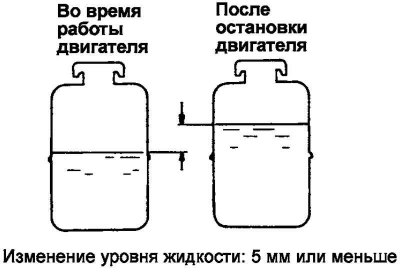
Fig. 5.9. Difference in fluid levels in the power steering reservoir before and after engine installation
Check the difference in fluid levels in the power steering system reservoir with the engine running and not running (Fig. 5.9).
Note: If the fluid level changes by more than 5 mm, it is necessary to bleed the air from the power steering hydraulic system again. If the fluid level rises sharply after the engine is stopped, it means that the air from the hydraulic system has not been completely removed. If the air from the power steering hydraulic system is not completely removed, extraneous rattling noises occur from the power steering pump and the fluid flow control valve, which leads to a reduction in the service life of the pump and other components of the hydraulic system.