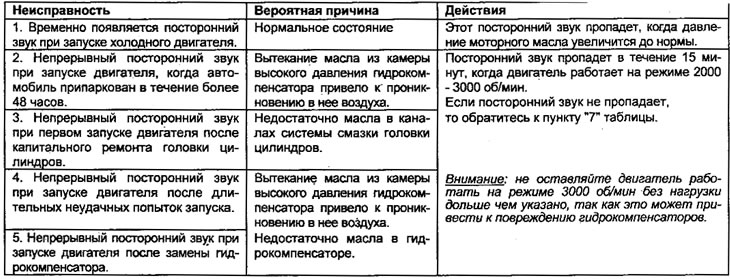
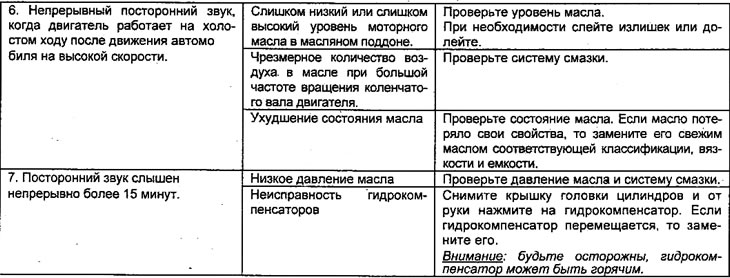
- a) If the amount of oil in the engine crankcase is insufficient, air enters through the mesh filter of the oil intake into the channel of the lubrication system.
- b) If the amount of oil is greater than the norm, the oil foams excessively when the crankshaft rotates, and a large amount of air is mixed into the oil.
- c) As the oil ages (the oil has lost its properties - degenerated), the air mixed into the oil cannot easily separate from it, and its quantity in the oil constantly increases.
Attention: if, due to one of the above reasons, there is a large amount of air in the oil and it penetrates into the high-pressure chamber of the hydraulic compensator, the air inside the hydraulic compensator is compressed when the valve opens and the hydraulic compensator is also compressed (the plunger will "sag"), resulting in abnormal noise when the valve closes. That is, the same thing happens when too large a thermal clearance is mistakenly set in the valve mechanism drive. If the air is removed from the cavities of the hydraulic compensators, their operation is restored.
2. To assess the condition of the hydraulic compensators, perform engine diagnostics (see the table "Checking hydraulic compensators on a vehicle".
3. If any deviation from the norm is detected in the operation of the hydraulic compensators, remove the camshafts and take out the hydraulic compensators for inspection (see section "Replacing the cylinder head gasket").
4. Checking hydraulic compensators after removal.
Fix the surface "A" of the hydraulic compensator filled with engine oil and press the stop "B" of the hydraulic compensator by hand. If the stop "B" moves, replace the hydraulic compensator.
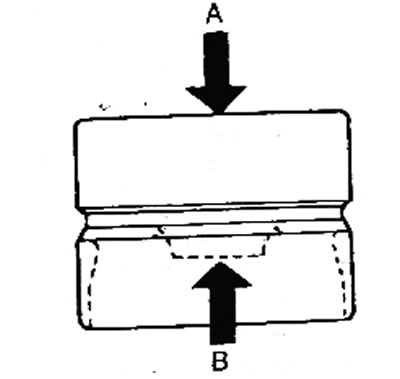
Table. Checking hydraulic compensators on a vehicle.