


The engine control unit excites the primary windings of the coils by connecting them to the "ground". The moment of supplying the control signal to the ignition coils is determined by the ECU based on signals from the crankshaft position sensor. When voltage is supplied and removed from the primary winding, a high-voltage pulse is induced in the secondary winding, which is supplied to the corresponding spark plug.
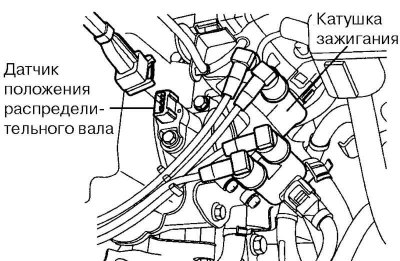
Fig. 2.254. Ignition coil
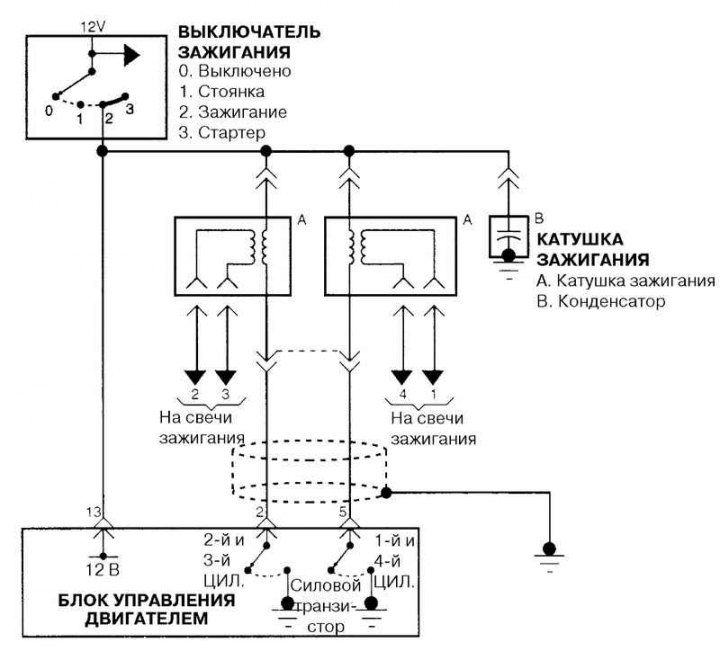
Fig. 2.255. Wiring diagram of the ignition coil and the ECU
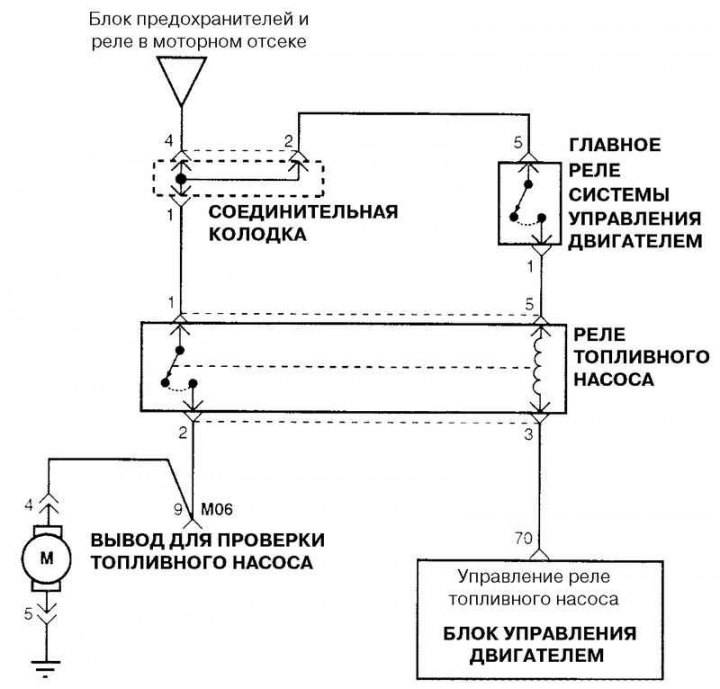
Fig. 2.256. Fuel pump connection diagram
Conditions for storing fault codes
The ECU stores the P0300 code in its memory and the engine management system malfunction indicator lamp comes on if 2 misfires of the working mixture per 100 crankshaft revolutions occur in two driving cycles.
The misfire frequency is measured every 200 crankshaft revolutions under the following conditions:
- the rate of change of the crankshaft rotation frequency does not exceed 1000 min⁻¹ per second;
- the crankshaft speed is in the range of 600–4000 min⁻¹;
- engine load above 2 milliseconds;
- fuel cutoff does not occur;
- the starter does not work;
- the car is moving on a level road (the acceleration sensor detects accelerations of no more than 0.3 g).
The material is republished from the web portal: HyundaiBook
If the misfire repetition rate per 200 crankshaft revolutions increases by 5–25%, there is a risk of failure of the catalytic converter, and the engine management system malfunction lamp first flashes and then lights up continuously. If the misfire repetition rate is high enough, the temperature of the catalytic converter can reach 1950°C. When the ECU stores this code, it indicates a malfunction of the ignition circuit of the corresponding cylinder.