


Contents: Forced crankcase ventilation system ⇓ Fuel vapor recovery system ⇓ Adsorber ⇓ Evaporative Evaporative Canister…⇓ Exhaust gas cleaning system ⇓ Catalytic converter for exhaust…⇓
There are three toxicity reduction systems:
- 1. Forced crankcase ventilation system.
- 2. Fuel vapor recovery system.
- 3. Exhaust gas cleaning system.
Forced crankcase ventilation system
The Positive Crankcase Ventilation system is designed to prevent air pollution caused by blow-by gases. This system provides fresh air to the engine crankcase through the air filter. Inside the crankcase, fresh air mixes with blow-by gases and passes through the Positive Crankcase Ventilation (PCV) valve into the intake system.
Fuel vapor recovery system
The fuel vapor recovery system is designed to prevent fuel vapor from escaping into the atmosphere.
Adsorber
When the engine is not running, the fuel vapors that accumulate in the fuel tank are adsorbed and stored in the canister. When the engine is running, the adsorbed fuel vapors from the canister enter the intake system through the canister purge solenoid valve.
Evaporative Evaporative Canister Purge Solenoid Valve
The purge solenoid valve of the adsorber is controlled by the electronic control unit; when the engine coolant temperature is low and the engine is idling, it closes to prevent evaporated fuel from entering the intake manifold. After the engine warms up, when driving under normal conditions, it opens and allows evaporated fuel to enter the intake manifold.
Exhaust gas cleaning system
The exhaust gas cleaning system is a highly efficient system that controls the composition of exhaust gases and maintains optimum engine performance.
(The material was obtained from a web resource: hyundaibook.ru)
Catalytic converter for exhaust gases (for gasoline engine)
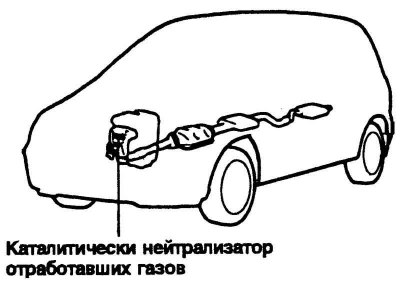
Fig. 1.191. Catalytic converter of exhaust gases
A catalytic converter is part of the exhaust emission control system. It removes some of the engine's emissions from the exhaust. The catalytic converter looks like a muffler and is located at the bottom of the vehicle's exhaust system.
Exhaust gases passing through the catalytic converter heat it up considerably. If a large amount of unburned fuel gets into the catalytic converter, it can cause it to catch fire.
It is necessary to follow the operating rules of the catalytic converter given below.
Use only unleaded gasoline.
Keep the engine in good technical condition. Excessively high catalytic converter temperature may cause electrical, ignition or fuel injection systems to malfunction.
Do not drive the car when the fuel level is very low. If the fuel is used up completely, there may be an ignition failure and an overload of the exhaust gas catalytic converter.
Do not allow the engine to idle for more than 10 minutes.
Do not start the vehicle's engine by towing it. This may cause damage to the exhaust gas catalytic converter.
Avoid parking in areas where hot exhaust system components may come into contact with flammable materials or objects, such as dry fallen leaves or grass. This could cause them to catch fire.
Do not touch the catalytic converter or other exhaust system parts while the engine is running, as they become very hot.