

Contents: Checking the idle speed ⇓ Adjusting the speed with an…⇓ Checking the fuel pump ⇓ Checking fuel pressure ⇓
Checking the idle speed
Verification conditions:
- The engine coolant temperature is 80-95°C.
- Engine oil temperature is above 80°C.
- The lights, electric cooling fan and all auxiliary devices are switched off.
- The transmission is in neutral (position "P" or "N" for vehicles with A/T)
- The steering wheel is in a position corresponding to the straight-line movement of the car.
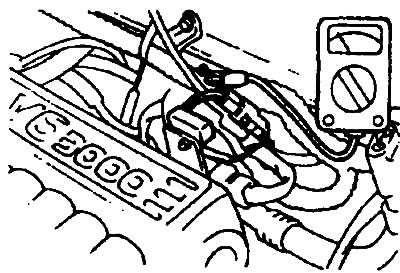
1. Install a tachometer or connect a scan tool to the data collection connector in the fuse box.
2. Start the engine to idle.
3. Check the ignition timing and adjust it if necessary.
4. Set the engine speed from 2000 to 3000 rpm for more than 5 s.
5. Let the engine idle for 2 minutes.
6. Check the idle speed. If it is outside the specified limits, check the idle speed control system.
- Idle speed: 700±100 rpm.
Note: Idle speed control is not usually required since the system controls the idle speed.
Adjusting the speed with an adjusting screw
Regulation conditions:
- Engine coolant temperature from 80 to 90°C.
- Engine lubrication temperature is above 80°C.
- Lighting fixtures, electric fan and all other electrical consumers are switched off.
- The steering wheel is in the straight-ahead position of the car.
1. Disconnect the accelerator pedal control cable.
2. Connect the tachometer.
3. Ground the ignition timing adjustment connector terminal.
Start the engine and set it to idle mode.
Check the ignition timing.
Adjust the ignition timing if necessary.
- The standard value of the ignition advance angle is 5°±2° before TDC.
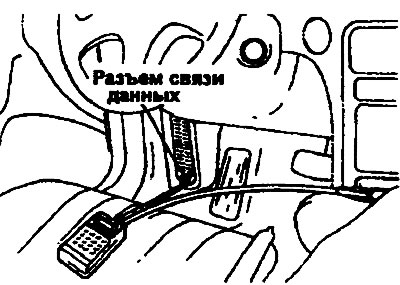
4. Turn the ignition off and ground the data link connector terminal. Also, connect the scan tool to this connector.
5. Run the engine for at least 5 seconds at a speed of 2000 to 3000 rpm.
Let the engine idle for 2 minutes.
Record the idle speed.
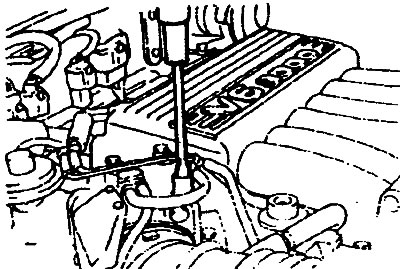
If it is not within the specification limits, adjust it with the adjusting screw.
- Nominal idle speed - 700±100 rpm
 |
 |
Checking the fuel pump
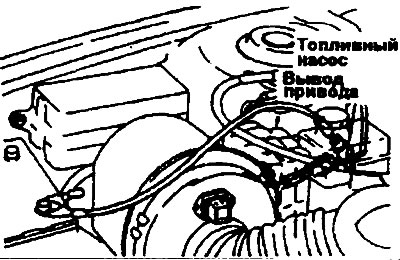
1. Turn the ignition switch to the OFF position.
2. To check the pump's functionality, apply battery voltage to the fuel pump drive terminal.
Note: The fuel pump is located inside the tank, so to hear its noise, you need to remove the cap from the fuel tank.
3. Pinch the fuel hose with your fingers to feel for fuel pressure.
Checking fuel pressure
1. Reduce the pressure in the hoses and fuel lines as follows.
- Disconnect the fuel pump wiring harness.
- Start the engine and after it stops, turn the ignition switch to the OFF position.
- Disconnect the negative battery terminal.
- Connect the fuel pump wiring harness.
2. Disconnect the high pressure fuel hose from the fuel supply side.
Caution: Cover the hose connection with a rag to prevent any remaining fuel in the line from leaking.
3. Using a fuel pressure sensor adapter (09353-33000, 09353-24000, 09353-24100), install a fuel pressure measuring device on the fuel supply line.
4. Connect the negative battery terminal.
5. Apply voltage to the fuel pump drive terminal and let it run; check for fuel leaks from the pressure measuring device or connectors.
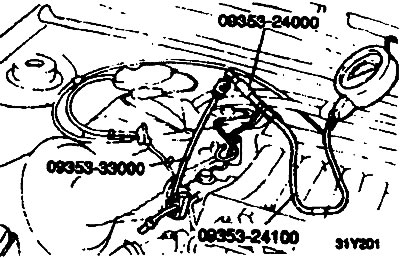
6. Disconnect the vacuum hose from the pressure regulator and cap the end of the hose. Measure the fuel pressure at idle.
- Standard pressure value is 320-340 kPa
7. Measure the fuel pressure with the vacuum hose connected to the pressure regulator.
- Standard pressure value is about 270 kPa
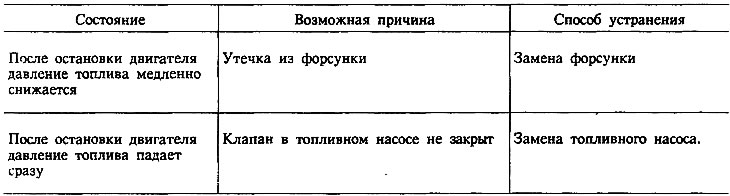
8. If the measurement results are not within the standard value, use the table below to determine the probable cause and then correct it.
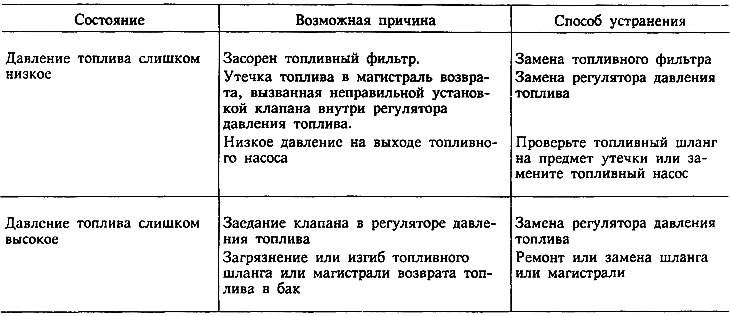
9. Turn off the engine and check the change in fuel pressure: it should not decrease.
If the pressure decreases, note the degree of decrease.
Identify and eliminate the causes using the following table.
10. Reduce the fuel pressure in the fuel line.
11. Disconnect the high pressure hose and remove the pressure gauge.
Warning: Cover the pipe connection with a rag to prevent fuel from leaking.
12. Install a new O-ring on the end of the high pressure line.
13. Connect the high pressure hose to the fuel injection line, tightening it to the torque specified below.
- Tightening torque: 3-4 Nm.
14. Check for fuel leaks
- Apply voltage to the fuel pump drive terminal.
- Check for fuel leaks under pressure while the fuel pump is running.