


1. Check the engine oil level. Make sure the starter works properly and the battery is fully charged.
2. Determine the top dead center position and clear the top dead center data from the engine control unit memory.
3. Start the engine and warm it up to a temperature of 80–95°G.
4. Disconnect the connector from the fuel pump.
5. Turn off the engine and remove the high-voltage wire tips from the spark plugs.
6. Remove the spark plugs.
7. Disconnect the connector from the ignition system control unit.
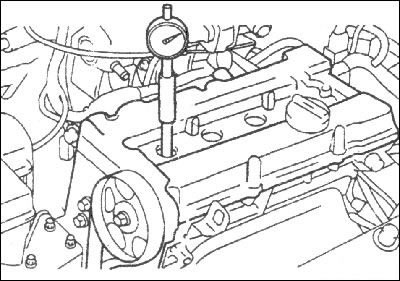
8. Turn the engine crankshaft.
9. Screw the compression tester tip into the spark plug hole.
10. Open the throttle valve fully by pressing the accelerator pedal all the way down.
11. Turn the engine crankshaft with the starter and determine the compression using the instrument scale.
Compression: 1500 kra
Minimum allowable compression: 1400 kra
12. Repeat steps 9–11 on the remaining cylinders, making sure that the pressure difference for each cylinder is within acceptable limits.
Permissible pressure difference in engine cylinders: no more than 100 kPa
13. If compression is low in all cylinders, pour a few drops of engine oil into the cylinders through the spark plug holes and repeat steps 9–12.
- 1) If adding oil increases compression, the piston rings may be worn out.
- 2) If the compression remains at the same level, the valves may be burnt out or the cylinder head gasket may be damaged.
Spark plug tightening torque: 20–30 Nm.