


Contents: If the engine does not start ⇓ If the engine does not turn over…⇓ Starting the engine from an external…⇓ If the engine overheats ⇓
If the engine does not start
Warning! If the engine does not start, do not attempt to start it by towing the vehicle. This may result in an accident or other damage. Furthermore, starting the engine by towing may overload the catalytic converter and cause a fire.
If the engine does not turn over with the starter or turns over very slowly
1. If the vehicle is equipped with an automatic transmission, move the selector to position "P" or "N" and apply the emergency brake.
2. Check the battery terminal connections to ensure they are clean and tight.
3. Turn on the interior light. If the light glows dimly or goes out when the starter is turned on, the battery is discharged.
4. Check the tightness of the starter wire connections.
5. Do not start the engine by towing.
6. Check the fuel level in the tank.
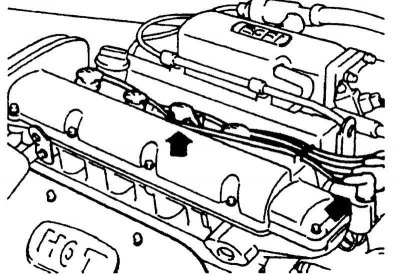
Fig. 1.139. Checking the ignition system wire connections
7. Check the connections of all ignition system wires, the coil and spark plugs. Reconnect any disconnected or poorly connected connections (Fig. 1.139).
8. Check the fuel line in the engine compartment.
Starting the engine from an external source
The battery used as an additional source must have a nominal voltage of 12 V.
To start a car with a discharged battery from an external source, strictly follow the instructions below.
Warning! The gas released by the battery during engine starting is highly explosive. Failure to follow these instructions may result in serious damage to the vehicle or injury. If you are unsure of how to perform this operation correctly, seek qualified assistance. Car batteries contain hydrochloric acid. It is poisonous and corrosive.
1. If the battery used as an additional source is installed in another vehicle, make sure that the vehicles do not touch each other.
2. Turn off all unnecessary lights and additional equipment on both vehicles.
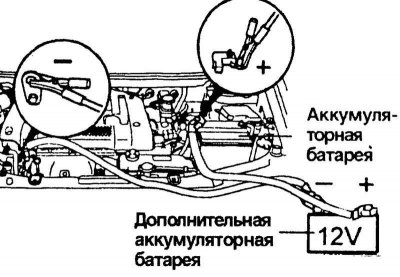
Fig. 1.140. Starting the engine from an external source
3. Connect the connecting cables to the battery terminals in the order shown in Figure 1.140.
First, connect one end of the jumper cables to the positive (+) terminal of the dead battery. Then connect the other end of this cable to the positive (+) terminal of the battery in the other vehicle (used as an additional source). Then, using another jumper cable, connect one end of it to the negative (–) terminal of the battery in the other vehicle (used as an additional source). Then connect the other end of this cable to the engine block of the vehicle with the dead battery, in a place that is as far away from the battery as possible. Do not connect the jumper cable to moving parts of the engine.
[The original can be read on the resource: hyundaibook.ru]
4. Start the engine of the vehicle with the battery that is used as an additional source and let the engine idle for a few minutes. This will ensure that the battery is fully charged. During engine starting, maintain the engine speed of the vehicle with the battery used as an additional source of current at 2000 min⁻¹.
5. Start the vehicle using the normal engine starting procedure. After the engine starts, do not remove the jumper cables and let the engine idle or run at 2000 rpm for several minutes.
6. Carefully remove the connecting wires in the reverse order of their installation. First remove the connecting cable from the negative terminals, then from the positive ones.
If the engine overheats
1. Pull off the road and stop the car in a safe place.
2. Move the selector lever to the "P" (Park) position (automatic transmission) or the gearshift lever to the neutral position and apply the parking brake. If the air conditioner is running, turn it off.
3. If coolant is leaking from under the vehicle or steam is coming from under the hood, turn off the engine. Do not open the hood until coolant stops leaking from under the vehicle or steam stops coming from under the hood. If there is no visible sign of coolant leaking, leave the engine running and make sure the radiator fan is working. If it is not working, turn off the engine.
4. Check for the presence of the coolant pump drive belt. If it is in place, check its tension.
5. If the drive belt or coolant pump is faulty, or there is a coolant leak, turn off the engine immediately and seek professional help.
Warning! Do not open the radiator cap while the engine is hot. This may cause boiling coolant to escape.
6. If the cause of overheating is not found, wait until the engine coolant temperature returns to normal. If there is a coolant leak, carefully remove the radiator cap and add coolant to the half-mark of the liquid level in the expansion tank.
Caution! A significant decrease in the coolant level indicates a leak in the cooling system.