


Avoid towing a trailer for the first 2,000 km (1,200 mi) to allow the new vehicle to break in. Failure to do so could result in serious damage to the engine or transmission.
Towing hooks
Select the correct towing hitch combination, making sure that its location matches the mounting location on the trailer or towed vehicle.
Use a towing hitch that distributes the load evenly across the chassis.
The towing hitch must be securely attached to the vehicle by a qualified mechanic.
Warning! Do not use a towing hitch designed for temporary installation or a towing hitch that is attached only to the vehicle bumper.
Trailer with brakes
If the trailer is equipped with brakes, make sure they meet federal and/or local laws and that they are properly installed and in good working order.
Caution! Do not connect the trailer's brake system to the vehicle's brake system.
Caution! When towing a trailer on a steep incline (exceeding 12°), pay special attention to the engine coolant temperature gauge to prevent it from overheating. If the engine coolant temperature gauge needle enters the "H" ("Hot") zone on the scale, stop the vehicle in a safe place and let the engine idle until it cools down. Then you can continue driving.
Maximum trailer weight and maximum towing hitch load
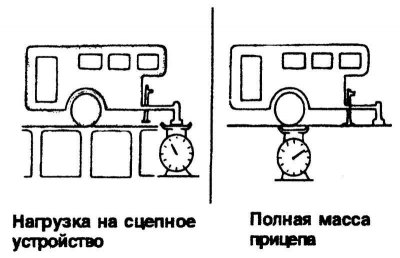
Fig. 1.137. Maximum trailer weight and maximum load on the coupling device
The coupling load can be increased or decreased by redistributing the load in the trailer. This can be verified by checking the gross weight of the loaded trailer and the coupling load (Fig. 1.137).
Note: 1. Do not load the trailer so that the rear half is loaded more than the front. 60% of the trailer's cargo weight should be in the front half of the trailer and the remaining 40% in the rear half.
Note: 2. The mass of the vehicle with a trailer must not exceed the maximum gross vehicle weight rating (GVWR) indicated on the identification plate. Gross vehicle weight rating is the mass of the vehicle, the driver, all passengers and their luggage, the towing hitch, the load on the towing hitch, and any other additional equipment.
Note: 3. The front or rear axle load must not exceed the gross vehicle weight rating (GAWR) indicated on the vehicle identification plate. It is possible that the trailer towed does not exceed the gross vehicle weight rating (GVWR) but exceeds the gross vehicle weight rating (GAWR). Improper trailer loading and/or excessive luggage in the trunk of the vehicle may cause the rear axle to be overloaded. Redistribute the load and recheck the axle loads.
Note: 4. The maximum permissible static vertical load on the coupling device is 52 kg.
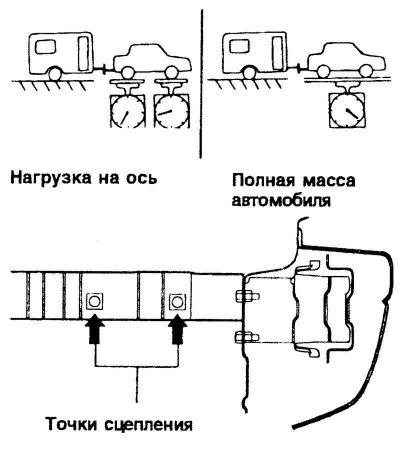
Fig. 1.138. Checking axle load and clutch point reach
5. The maximum permissible reach of the coupling point is 760 mm (Fig. 1.138).