


Contents: Combination ignition switch ⇓ Ignition switch positions ⇓ Starting the engine (for vehicles…⇓ Cars with manual transmission. ⇓ Cars with automatic transmission. ⇓
Combination ignition switch
If your vehicle has a manual transmission, move the gearshift lever to neutral and fully depress the clutch pedal.
If the vehicle is equipped with an automatic transmission, move the selector lever to the "P" (Park) position.
To start the engine, insert the key into the ignition switch and turn it to the "START" position. Release the ignition key immediately after the engine starts. Do not hold the ignition key in the "START" position for more than 15 seconds.
Note: For safety reasons, the vehicle's engine cannot be started unless the automatic transmission selector is in the P (Park) or N (Neutral) position (automatic transmission vehicles only).
Ignition switch positions
"LOCK" : "Blocking".
"ASS": "Additional equipment".
"ON" : "On".
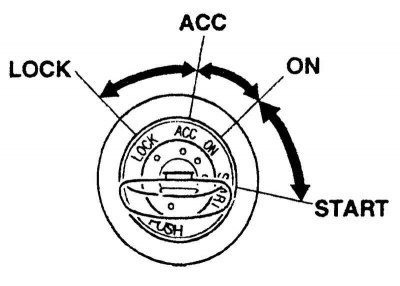
Fig. 1.131. Ignition switch positions
"START" : "Starter".
In this position, the starter operates. It turns the engine crankshaft until the ignition is turned off.
"ON"
In this position, the engine is running and all electrical systems can be turned on. Do not leave the ignition key in the "ON" position when the engine is not running. This will drain the battery and cause the ignition system to fail.
"ASS"
When the ignition key is in this position, some electrical systems (radio, cigarette lighter, etc.) can be turned on.
"LOCK"
The ignition key can only be inserted or removed in this position.
Note: To unlock the steering wheel, insert the key into the ignition switch and turn the steering wheel slightly while turning the ignition key.
To remove the key from the ignition:
- turn the ignition key to the "ACC" position.
- simultaneously press and turn the ignition key counterclockwise from the "ACC" position to the "LOCK" position.
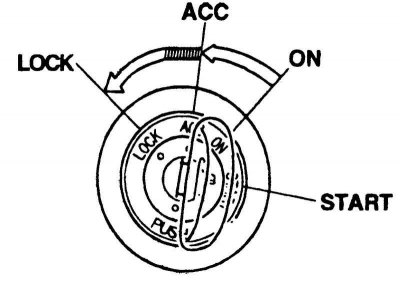
Fig. 1.132. Removing the key from the ignition switch
Starting the engine (for vehicles with a distributed fuel injection system)
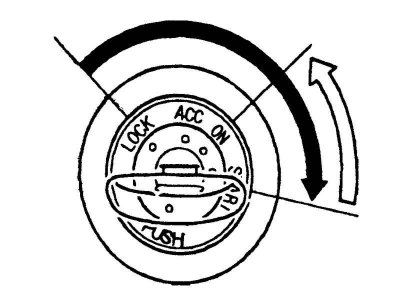
Fig. 1.133. Starting the engine
1. The driver and all passengers in the vehicle must fasten the appropriate seat belts.
2. Check that the parking brake is engaged.
3. Press the brake pedal.
Cars with manual transmission.
Fully depress the clutch pedal and move the gearshift lever to the neutral position. Keep the clutch pedal fully depressed while the starter operates.
Cars with automatic transmission.
Move the range selector lever to the "P" (Park) position. If you need to start the engine while the vehicle is moving, move the range selector lever to the "N" (Neutral) position.
Note: Vehicles with automatic transmission.
Note: The starter will not engage unless the range selector lever is in the P (Park) or N (Neutral) position.
5. Turn the ignition switch to the "START" position and hold the handle in this position until the engine starts (but not longer than 10 s).
6. After starting, let the engine idle for about 10 seconds.
Note: If the key is difficult to turn in the ignition switch, rock the steering wheel from side to side to relieve the load on the locking element.