HyundaiBook.ru
Repair Chevrolet Repair Honda Repair Toyota Repair Land Rover Repair VAZ Repair Renault Repair Nissan
English Русский
Български
Беларускі
Український
Српски
Hrvatski
Română
Polski
Slovenský
Magyar
ArticlesSitemapContacts  


  Accent   Elantra   Getz   Grandeur   Sonata   Santa Fe   Tucson   Others
Sonata 3 (1993-1998) Sonata 4 (2001-2012, petrol)
  • Main
  • Sonata
  • EF (2001-2012)
  • Chassis
  • Rear suspension
  • Rear wheel knuckle and hub

Rear wheel knuckle and hub (Hyundai Sonata EF)

0
Contents: Removal ⇓ Disassembly ⇓ Examination ⇓ Assembly ⇓ Installation ⇓
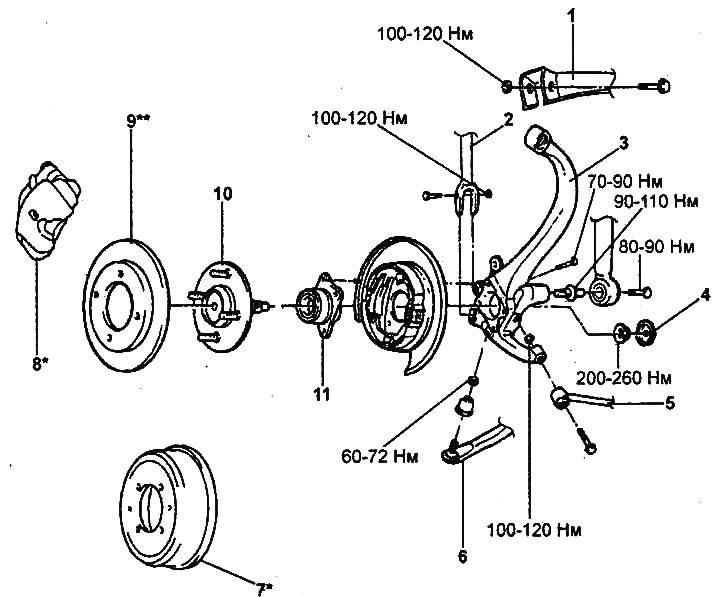
Rear wheel knuckle and hub.

Rear wheel knuckle and hub.

1 - upper arm of the rear suspension, 2 - longitudinal rod of the rear suspension, 3 - knuckle, 4 -, 5 - transverse rod of the rear suspension, 6 - transverse arm of the rear suspension, 7 - brake drum, 8 - caliper, 9 - brake disc, 10 - rear wheel hub, 11 - hub bearing housing, 12 - drum* / parking** brake.


Note:
  • * - for models with drum brakes,
  • ** - for models with disc brakes.


Removal


1. Make sure the parking brake is not applied.

2. Jack up the car, unscrew the bolts and remove the rear wheel.
  • Tightening torque: 90-110 Nm

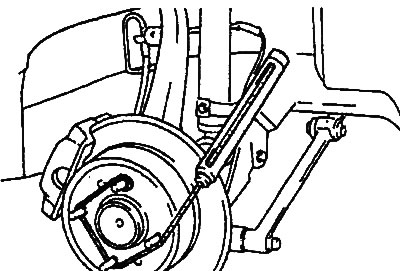
3. Remove the wheel speed sensor (see chapter "Brake system").

4. Unscrew the bolt and, having disconnected the brake caliper from the knuckle, hang it on the wire.
  • Tightening torque: 69-85 Nm

5. Remove the brake disc.

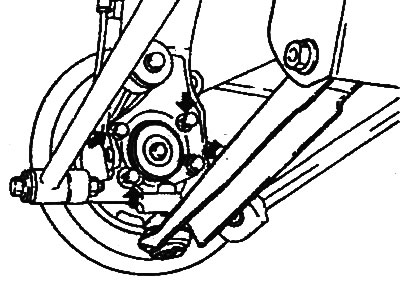
6. Unscrew the four bolts and remove the rear wheel hub assembly with the bearing housing.
  • Tightening torque: 70-90 Nm

Tightening torque: 70-90 Nm


7. Using the special tool, remove the wheel speed sensor rotor.
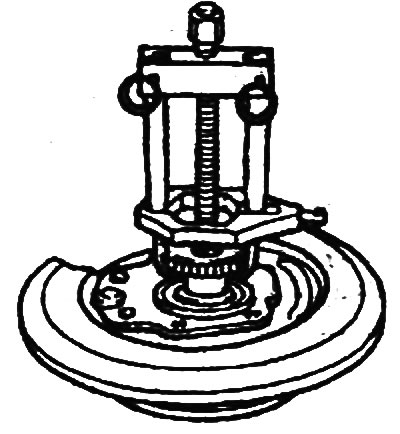


7. Using the special tool, remove the…


8. Unscrew the stud, unscrew the nuts, remove the bolts and remove the knuckle.

Tightening torque:
  • studs: 90-110 Nm
  • upper arm and rear suspension rod mounting nuts: 100-120 Nm
  • rear suspension lower arm mounting nuts: 60-72 Nm
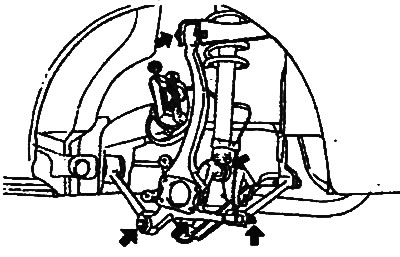
rear suspension lower arm mounting…


Disassembly


1. Unscrew the flange nut.
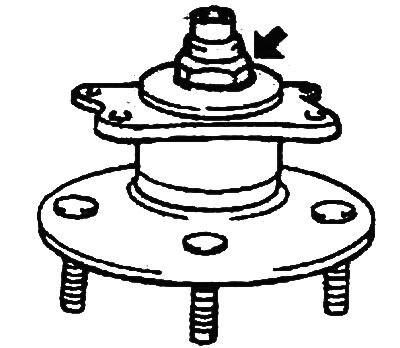
1. Unscrew the flange nut.


2. Using a special tool, remove the hub from the bearing housing.
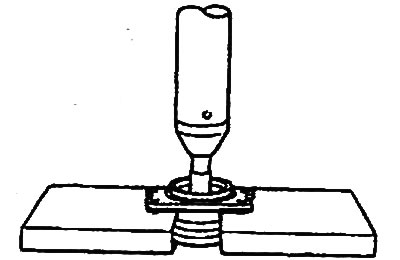


2. Using a special tool, remove the hub…


3. Using a special tool, remove the inner bearing race from the hub.
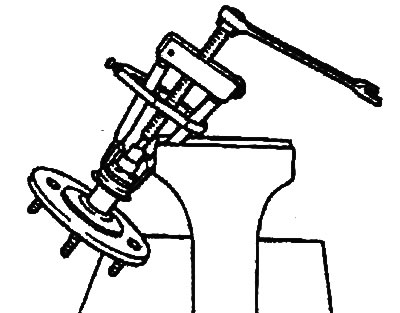
3. Using a special tool, remove the…


4. Using special tools, remove the two bushings from the knuckle.
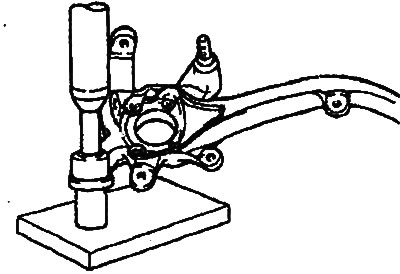
4. Using special tools, remove the two…


Examination


1. Check the bearing housing for wear and damage.

2. Make sure that there is no damage to the teeth of the wheel speed sensor rotor.

3. Check the inner surface of the hub for burrs.


4. Check that there is no damage to the fist.

Assembly


The installation of the rear wheel hub and knuckle is carried out in the reverse order of removal; the tightening torque of the nut is indicated in the text of the description of the disassembly procedure and in the assembly drawing "Knuckle and rear wheel hub".

Installation


1. The rear wheel hub and knuckle are installed in the reverse order of removal; the tightening torques for the bolts and nuts are specified in the text describing the removal procedure and in the assembly drawing "Knuckle and rear wheel hub".

2. If necessary, change the position of the brake pads by turning the adjuster.
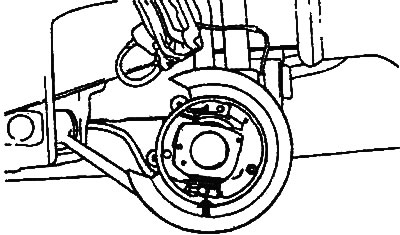
2. If necessary, change the position of…


3. Measure the breaking torque of the hub bearing as shown in the figure.

(This publication is based on information from the portal HyundaiBook.ru)
  • Breakaway torque: 28 N or less

Breakaway torque: 28 N or less


4. Measure the axial runout of the wheel hub as shown in the figure.
  • Axial runout: 0.008 mm
This article is available at russian, bulgarian, belarusian, ukrainian, serbian, croatian, romanian, polish, slovak, hungarian
This article has been reviewed by: Konstantin Smirnov
Add to social network:

Previous
Sonata 4: Rear suspension
Next

Checking and adjusting the rear wheel alignment angles
Rear Suspension Strut (Pre-2001 Models)
Rear Suspension Strut (2001 and later models)
Upper arm rear suspension
Rear suspension longitudinal rod
Rear suspension crossbar
We recommend other articles on the topic of Hyundai manuals:

Checking the axial clearance of the rear wheel bearing Hyundai Accent 1 (1994-1999)
Rear Wheel Alignment — Checking and Adjusting Hyundai Elantra 1 (1990-1995, petrol)
Front wheel steering knuckle and hub Hyundai Getz (2002-2011)
Rear wheel hub — removal and installation Hyundai Santa Fe 2 (2007-2012, petrol)
Rear axle coupling (all-wheel drive vehicle) — device Hyundai Tucson 1 (2005-2010)
Rear wheel hub Hyundai Matrix (2001-2010, petrol)

Link in different formats to this article

Visitor comments
No comments yet


How much will 19 + 47 ?


Sonata 4 (2001-2012, petrol) 
  • General information
  • User manual
  • Maintenance
  • Power unit
  • 2.0 and 2.4 liter engines
  • 2.7 liter engines
  • Engine overhaul
  • Cooling system
  • Intake and exhaust systems
  • Lubrication system
  • MFI fuel injection system
  • Engine electrical equipment
  • Transmission
  • Clutch
  • Mechanical gearbox
  • Automatic gearbox
  • Drive shafts
  • Chassis
  • Front suspension
  • Rear suspension
  • Steering
  • Brake system
  • Body
  • Exterior
  • Interior
  • Heater and air conditioner
  • Security systems
  • Electrical equipment
  • Troubleshooting
  • Electrical circuits
Sonata 3 (1993-1998) 
  • General information
  • Maintenance
  • Power unit
  • Engine repair I4 DOHC
  • Engine repair I4 SOHC
  • Engine repair V6 SOHC
  • Cooling system
  • Intake and exhaust system
  • Exhaust gas treatment
  • Fuel system
  • Transmission
  • Clutch
  • Mechanical gearbox
  • Automatic transmission KM-175
  • Automatic transmission F4A33
  • Chassis
  • Front suspension
  • Rear suspension
  • Steering
  • Brake system
  • Body
  • Body elements
  • Electrical equipment
  • Equipment and devices
HyundaiBook.ru © 2018-2026 · Mobile version · Sitemap: EN BG BY UA RS HR RO PL SK HU · Administration · Site search · Hyundai owners Accent 1 · Accent 2 · Accent 3 · Elantra 1 · Elantra 2 · Elantra 3 · Getz · Sonata 3 · Sonata 4 · Santa Fe 2 · Tucson 1 · Tucson 2 · Matrix ·
This site uses cookies to optimize its functionality. By continuing, you agree to our terms.