


Contents: General safety precautions ⇓ Replacing system components ⇓ Working with tubes, hoses and…⇓
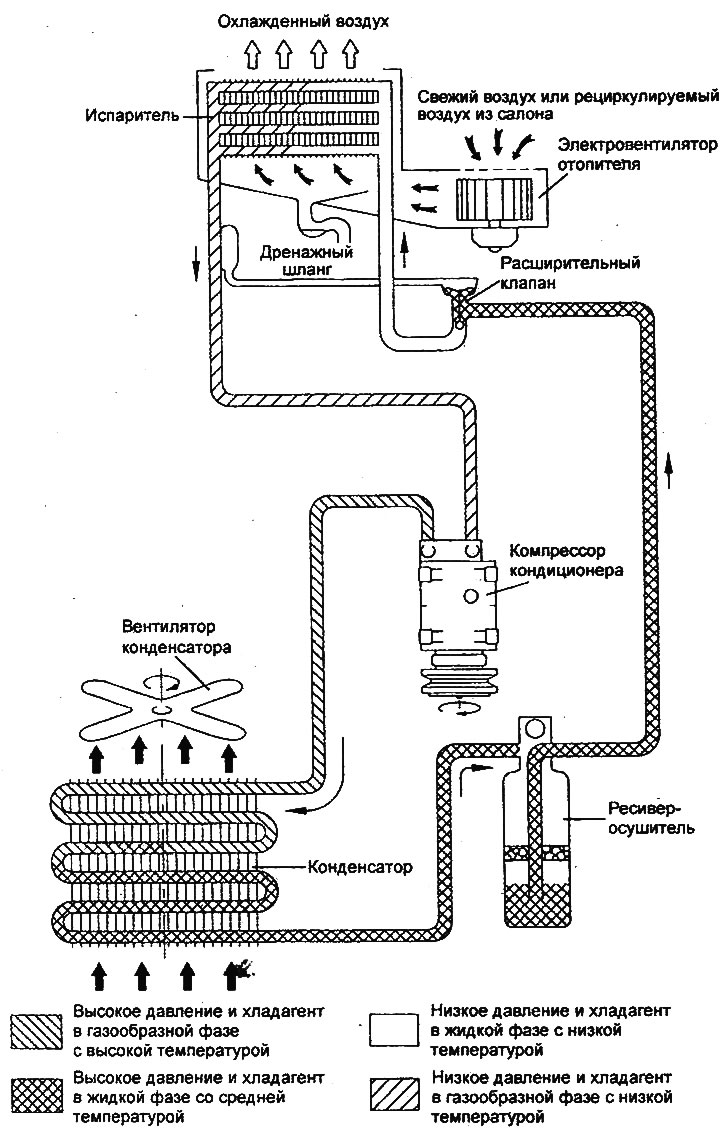
Air conditioning system operation diagram.
General safety precautions
1. Refrigerant R-134a is a transparent, colorless substance, both in liquid and gaseous phases, with a high evaporation rate. If the refrigerant comes into contact with the skin, local frostbite may occur. Always wear protective gloves when working with the refrigerant.
2. If refrigerant splashes into your eyes, rinse them with clean water immediately, then seek medical attention. Standard safety precautions when servicing an air conditioning system usually include special glasses to protect your eyes and special gloves to protect your hands.
3. R-134a refrigerant is in a cylinder under high pressure. Never leave the refrigerant cylinder in places with high temperatures. Make sure that the temperature of the room where the cylinder is stored does not exceed 52°C.
Warning: Do not heat the cylinder with a soldering iron or gas torch.
4. Use a special leak detector for R-134a to check the system for leaks. Keep in mind that contact of refrigerant vapors with an open flame (this detector burns propane to produce a small flame) leads to the formation of toxic phosgene gas.
5. Use only the recommended compressor oil to lubricate the air conditioning system (R-134a refrigerant system) and its components. If any other compressor oil is used, the system may malfunction.
- Recommended compressor oil: FD46XG
6. Compressor oil very quickly absorbs moisture from the surrounding air, so it is necessary to follow the instructions below:
- a) When disconnecting any component of the air conditioning system, immediately install plugs on the open holes to prevent moisture from entering the air conditioning system.
- b) When installing any component on a vehicle, remove the plugs immediately before connecting the component to the system.
- c) Tighten the air conditioning system pipes and hoses as quickly as possible to prevent moisture from entering the system.
- d) Use recommended compressor oil for lubrication only from a sealed container.
7. If there is an unauthorized leak of refrigerant from the system, immediately ventilate the work area before resuming work.
8. Always disconnect the negative battery cable when replacing air conditioning system components.
Replacing system components
1. Never open or loosen any system components before the refrigerant has been pumped out of the system.
2. Immediately close the disconnected pipes with caps or plugs to prevent moisture and contaminants from entering the system.
3. Do not remove plugs from replacement components until they are ready to be installed.
4. Always install new O-rings before connecting the pipes. Lubricate the pipe and O-ring with compressor oil before connecting.
Working with tubes, hoses and connections
1. Flange with guide pin.
Check the O-ring for damage (use only the original O-ring when replacing) and lubricate it with compressor oil. Gradually tighten the fastening nut by hand, pushing the tubes into each other. Tighten the nut to the rated torque.
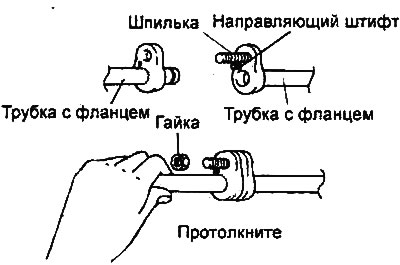
2. Maintenance of pipes and connections.
The internal surfaces of the air conditioning system components remain chemically stable as long as pure, moisture-free refrigerant is used with sufficient compressor oil. The presence of moisture, dirt or air inside the system will compromise the chemical stability of the system and may cause malfunctions or serious damage.
3. The following safety precautions must be observed:
- a) If it is necessary to depressurize the system, prepare in advance everything that may be needed for maintenance or repair work, so as not to leave the system depressurized longer than necessary.
- b) Install caps or plugs on open openings of pipes and system nozzles to prevent moisture and contaminants from entering the system.
- c) The openings of all pipes and components of the air conditioning system located in the spare parts warehouse must be closed with covers or plugs until they are actually installed.
- d) Never attempt to re-bend already bent tubes during assembly. Install only original (non-deformed) tubes when replacing parts.
- d) All tools and equipment, including vacuum gauge, test manifold, pressure gauges and test hoses must be kept clean and dry.