


Contents: Disassembly ⇓ Checking the front cover ⇓ Checking balance shafts ⇓ Checking the seal ⇓ Checking the oil pressure switch…⇓ Checking the oil pump ⇓ Replacing the balance shaft bearing ⇓ Assembly ⇓
Disassembly
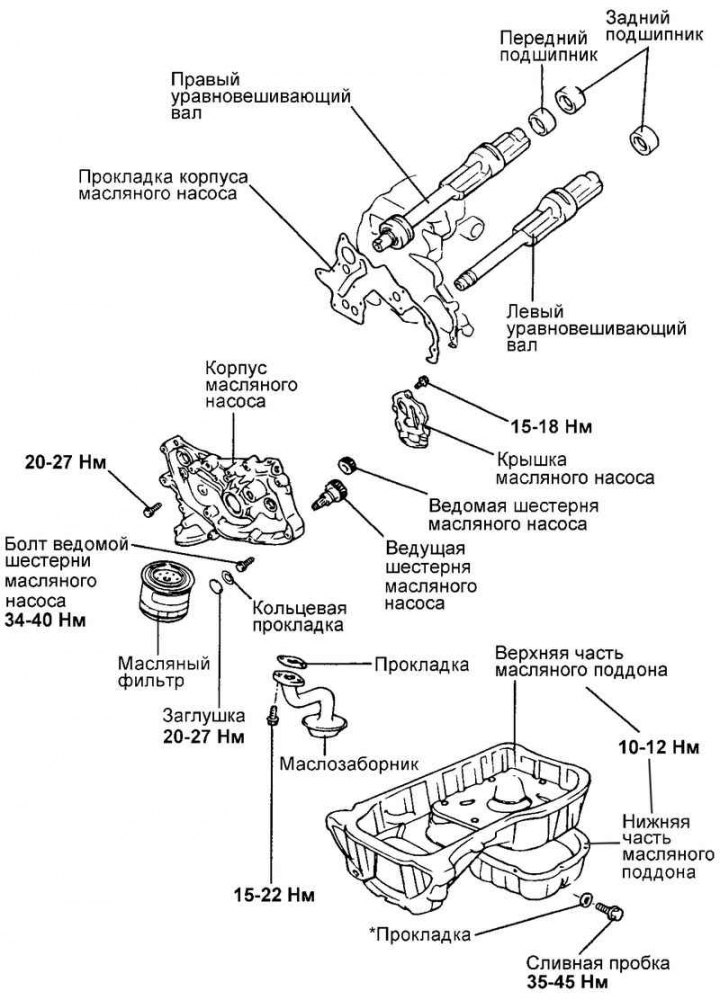
Fig. 2.85. Oil pump housing, oil pump and balance shafts
The oil pump housing, oil pump and balance shafts are shown in Fig. 2.85.
Remove the timing belt.
Remove the oil pan mounting bolts.
Use a rubber mallet to knock down the pan and remove both parts.
Remove the oil pickup and its gasket.
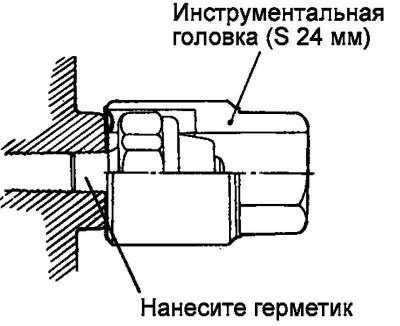
Fig. 2.86. Removing the oil pressure switch
Remove the oil pressure switch sensor (Fig. 2.86).
Remove the oil filter bracket and its gasket.
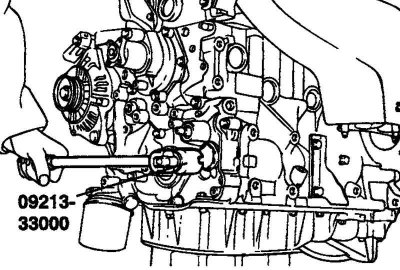
Fig. 2.87. Removing the oil pump plug in the front cover
Using a special key (09213-33000) unscrew the oil pump plug in the front cover (Fig. 2.87).
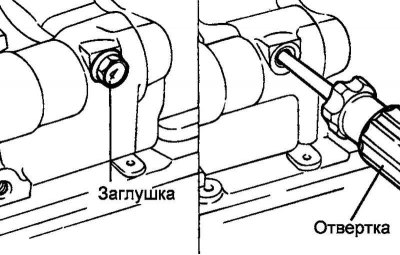
Fig. 2.88. Removing the plug and installing the screwdriver
Unscrew the plug on the left side of the cylinder block and insert a screwdriver with a diameter of 8 mm into the hole in the plug. The screwdriver should go to a depth of more than 60 mm (Fig. 2.88).
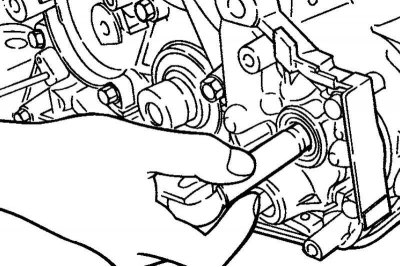
Fig. 2.89. Removing the left balance shaft mounting bolt
Loosen the bolt securing the driven gear of the oil pump and the left balance shaft (Fig. 2.89).
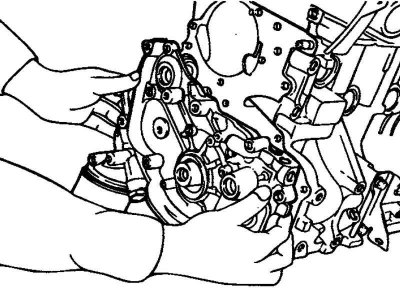
Fig. 2.90. Removing the front cover
Loosen the front cover mounting bolts. Remove the cover and gasket (Fig. 2.90).
Remove both balance shafts.
Remove the oil pump cover from the front cover.
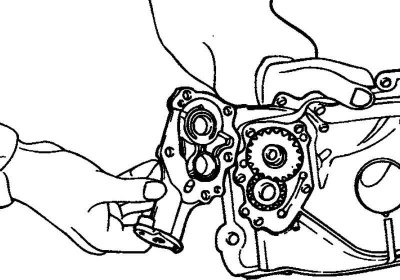
Fig. 2.91. Removing the oil pump gears
Remove the oil pump gears (Fig. 2.91).
Remove the screwdriver from the plug hole on the left side of the cylinder block.
Checking the front cover
Check the condition of the oil passages of the cover. Clean if necessary.
Check the condition of the balance shaft front bearing. If the bearing is faulty, replace the front cover.
Check the lid for cracks or other damage.
Replace the front cover if necessary.
Checking balance shafts
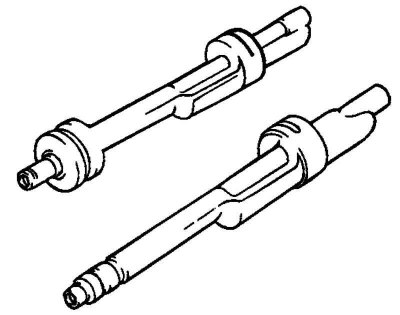
Fig. 2.92. Balance shafts
Check the balance shaft journals for wear or scoring (Fig. 2.92).
If there is scoring of the journals, carefully check the condition of the bearings.
Replace bearings or balance shaft if necessary.
Checking the seal
Check the seal lip for deterioration. Replace the seal if necessary.
Checking the oil pressure switch sensor
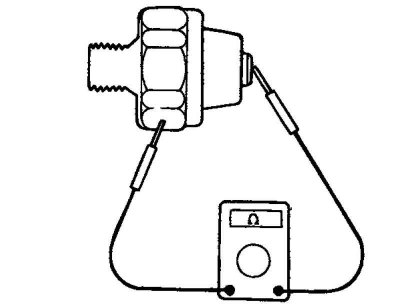
Fig. 2.93. Checking the oil pressure switch sensor
Using an ohmmeter, check for a closed circuit between the terminal and the body of the sensor-switch. If the circuit is open, replace the sensor-switch (Fig. 2.93).
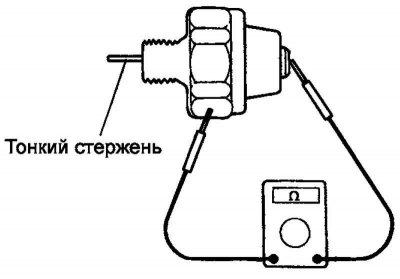
Fig. 2.94. Installing a thin rod into the hole of the sensor-switch
Insert a thin rod into the hole of the sensor-switch and press on the diaphragm. If the circuit remains closed between the terminal and the body of the sensor-switch, replace the sensor-switch (Fig. 2.94).
If the circuit between the terminal and the body of the sensor-switch is open when a vacuum of 50 kPa acts on the diaphragm of the sensor-switch, then the sensor-switch is in good condition. If the vacuum is not maintained, then the diaphragm of the sensor is damaged. Replace the sensor-switch.
Checking the oil pump
Install the oil pump gears into the front cover. Check that the gears rotate smoothly and that there is no significant play in the engagement.
Check for annular wear marks on the end surfaces of the front cover and oil pump cover (gear contact points).
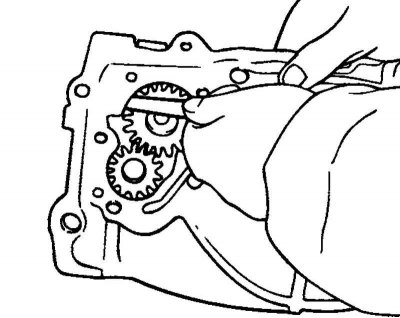
Fig. 2.95. Measuring the clearance between the pump body and the tops of the gear teeth
Measure the gap between the pump body and the tops of the gear teeth (Fig. 2.95).
Nominal clearance:
- Pinion gear - 0.16-0.21 mm
- Driven gear - 0.18-0.21 mm
Maximum clearance:
- Leading gear - 0.25 mm
- Driven gear - 0.25 mm
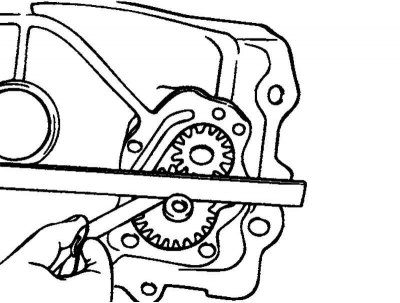
Fig. 2.96. Measuring the end gap
Measure the end gap (Fig. 2.96).
Nominal clearance:
- Pinion gear - 0.08-0.14 mm
- Driven gear - 0.06-0.12 mm
Maximum clearance:
- Leading gear - 0.25 mm
- Driven gear - 0.25 mm
Replacing the balance shaft bearing
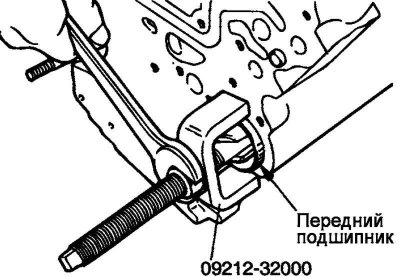
Fig. 2.97. Removing the front bearing of the right balance shaft
Using a special tool, remove the front bearing of the right balance shaft from the cylinder block (Fig. 2.97).
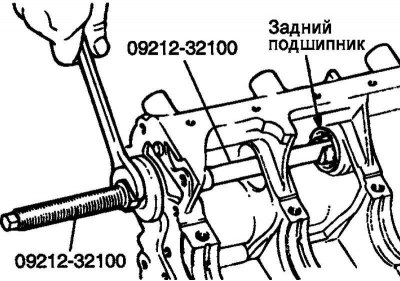
Fig. 2.98. Removing the rear bearing of the right balance shaft
Using a special tool, remove the rear bearing of the right balance shaft from the cylinder block (Fig. 2.98).
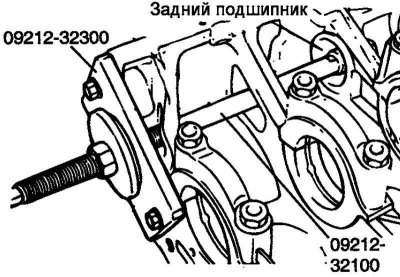
Fig. 2.99. Securing a special tool to the front end of the block
Using a special tool, remove the rear bearing of the left balance shaft from the cylinder block. Secure the tool to the front end of the block (Fig. 2.99).
Using a special tool, install the rear bearing of the left balance shaft into the cylinder block.
Note: When installing, lubricate the bearing and its seat with engine oil.
The rear bearing of the left balance shaft does not have an oil supply hole.
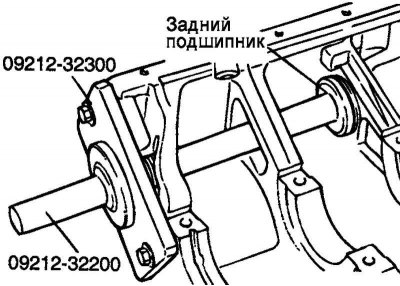
Fig. 2.100. Installing the rear bearing of the right balance shaft
Using a special tool, install the rear bearing of the right balance shaft into the cylinder block (Fig. 2.100).
Note: When installing, lubricate the bearing and its seat with engine oil.
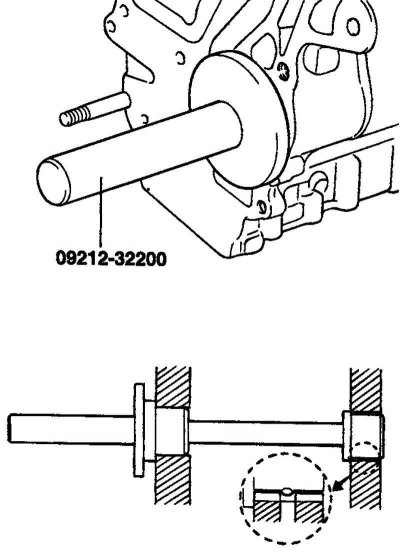
Fig. 2.101. Scheme of alignment of the oil supply hole in the bearing and block
Align the oil supply holes in the bearing and block (Fig. 2.101).
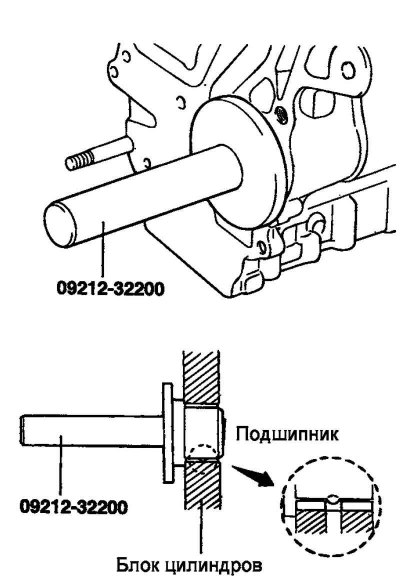
Fig. 2.102. Installation diagram of the front bearing of the right balance shaft
Using a special tool, install the front bearing of the right balance shaft into the cylinder block (Fig. 2.102).
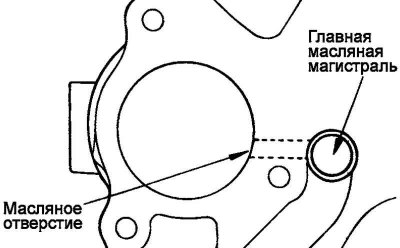
Fig. 2.103. Scheme of alignment of the oil supply hole in the bearing and block
Note: Align the oil supply holes in the bearing and block (Fig. 2.103).
Assembly
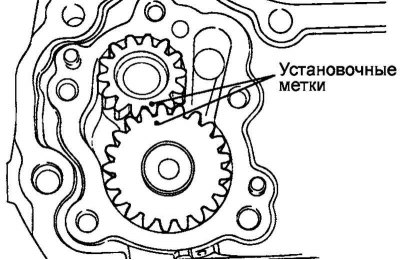
Fig. 2.104. Oil pump gear timing marks
Lubricate the oil pump gears with engine oil. Install the gears into the housing, aligning the timing marks (Fig. 2.104).
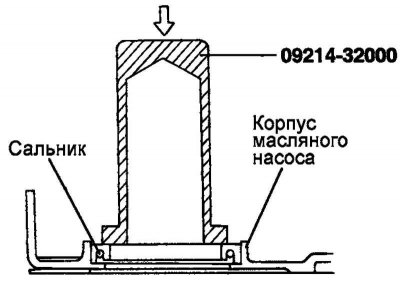
Fig. 2.105. Front crankshaft oil seal installation
Using a mandrel (09214-32000) install the front crankshaft oil seal into the cover (Fig. 2.105).
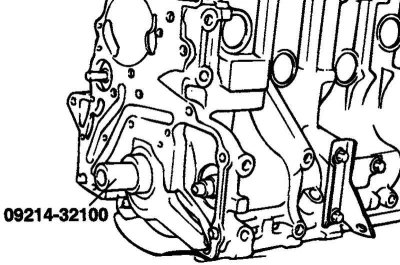
Fig. 2.106. Installation of a special mandrel on the crankshaft
Install the mandrel on the crankshaft (09214-32100). Lubricate the mandrel with engine oil (Fig. 2.106).
Install a new front cover gasket. Install the front cover. Hand tighten the mounting bolts.
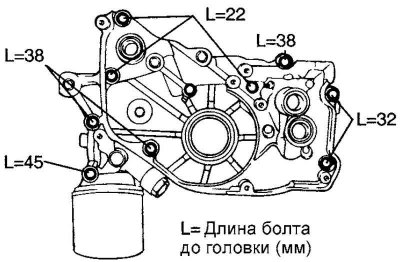
Fig. 2.107. Front cover mounting bolts
Tighten the mounting bolts to the specified torque (Fig. 2.107).
Tightening torque of front cover mounting bolts: 20–27 N·m.
Insert a screwdriver into the plug hole on the left side of the block. Check the depth of the screwdriver. If necessary, change the position of the balance shaft. Tighten the new shaft mounting bolt.
Install a new oil pump plug sealing ring.
Using a special key, tighten the pump plug to the specified torque.
Oil pump plug tightening torque: 20–27 N·m.
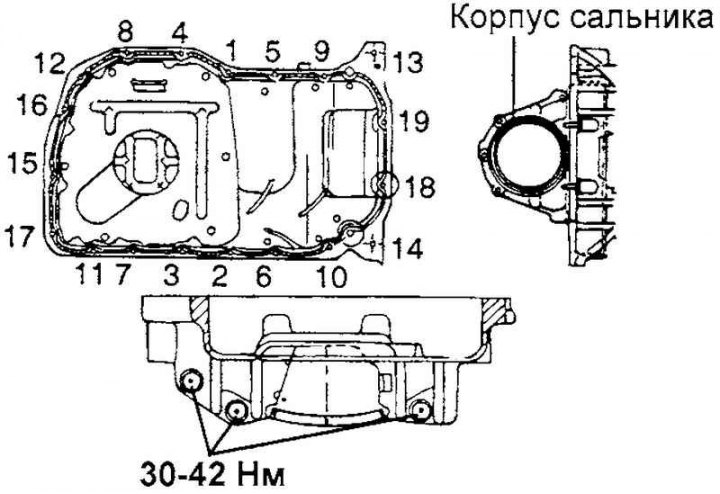
Fig. 2.108. Sealant installation diagram
Apply a bead of sealant to the oil pan flange groove as shown in Figure 2.108.
Note: The diameter of the sealant bead is approximately 4 mm.
Note: After applying the sealant, install the tray within 15 minutes.
Install the upper and lower pallets, tighten the mounting bolts to the specified torque.
Tightening torque of oil pan mounting bolts: 10–12 N·m.
Apply sealant to the threads of the oil pressure switch sensor. Screw in the sensor using a 24 mm deep socket.
Sealant: Three Bond 1104 or equivalent.
Note: Do not exceed the specified tightening torque of the sensor switch.
Tightening torque of the oil pressure switch: 8–12 N·m.