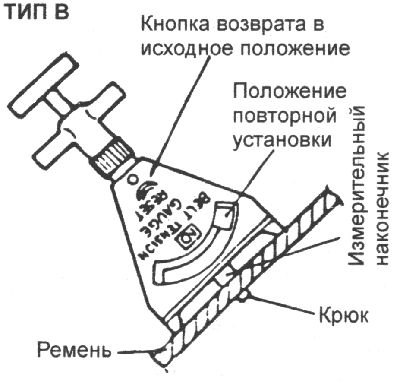


2. Check the belt tension by applying 100 N of force to it at a location equidistant from the pulleys and measure the belt deflection.
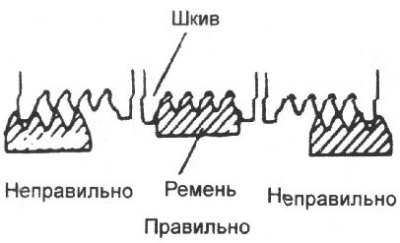
Attention!
- 1. Check that the belt ribs are positioned correctly in the pulley grooves.
- 2. If the poly V-belt makes any extraneous noise during operation, check the belt for wear and damage, as well as the working surfaces of the pulleys.
Nominal belt tension during adjustment
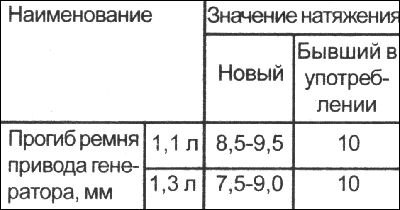
Note.
- 1. Belt tension must be measured exactly at the center between the pulleys.
- 2. When a new belt is installed, adjust the tension to the average value given in the "New" column. A used belt is one that has been running on the engine for more than 5 minutes and its tension must be adjusted to the average value given in the "Check" column.
- 3. When adjusting the tension of a used belt or a belt that has been in operation on the engine for more than 5 minutes, it is necessary to adjust its tension to the average value given in the "Used" column.
- 4. For periodic inspections, please refer to the "Check" column.
Measuring tension with a special device type A
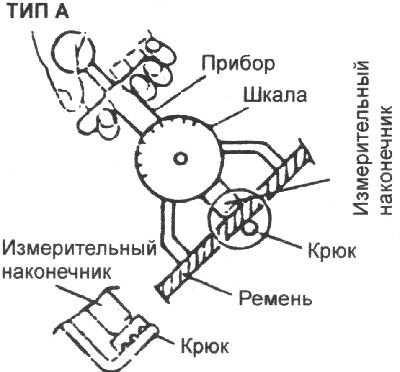
When measuring the tension of the poly V-belt, the device must not touch other engine elements.
Measuring tension with a special device type B
1. When measuring, make sure to turn the reset button in the direction of the arrow to reset the meter arrow to its original position.
2. After removing the instrument from the belt, the instrument arrow will still indicate the belt tension.