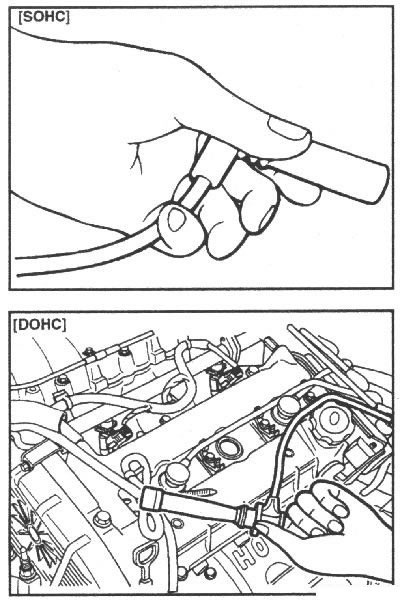
Note: When disconnecting spark plug wires from spark plugs, pull on the wire tip, not the wire, as it may be damaged.
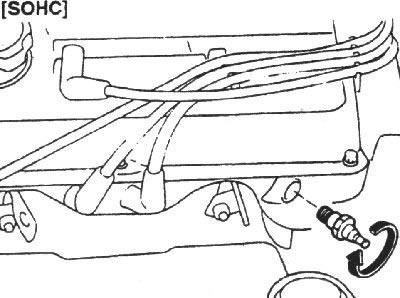
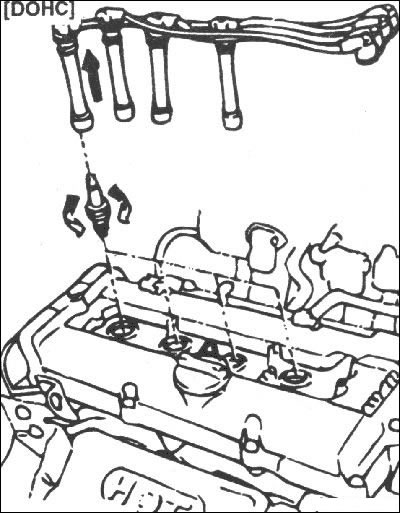
2. Remove the spark plug using a spark plug wrench. To avoid damaging the spark plug, install the spark plug wrench strictly along the spark plug axis.
Caution! Clean the spark plugs with compressed air to prevent dirt from getting into the engine cylinders after unscrewing the spark plugs.
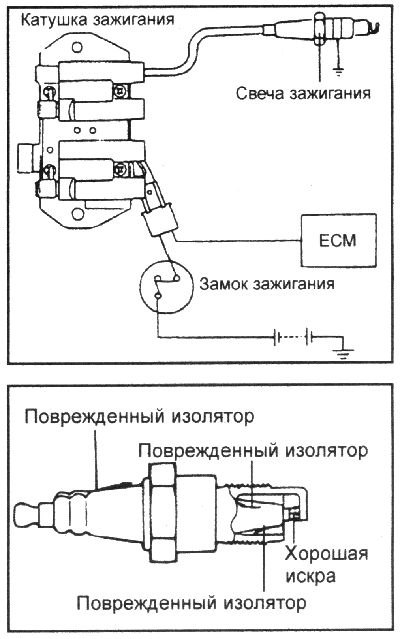
3. Check the spark plugs for the following defects:
- 1) damage to the insulator;
- 2) wear of electrodes;
- 3) carbon deposits;
- 4) damage to the gasket;
- 5) the condition of the insulator at the tip of the spark plug.
4. Use a wire gauge to check the spark plug gap.
The gap is adjusted by bending the side electrode. The spark plug interelectrode gap is of great importance, since too large or too small a gap changes the size of the spark, which reduces the efficiency of the engine. The gap must always meet technical requirements.
The central electrode must not be bent under any circumstances, as this may cause the insulator to break and the spark plug to fail. The spark plug interelectrode gap is 1.0–1.1 mm.
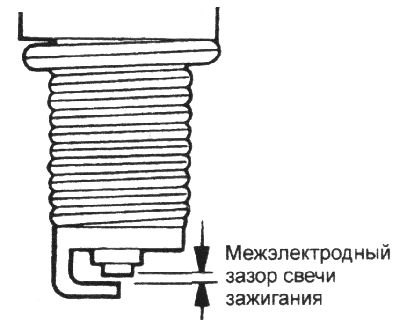
5. Screw the spark plug into the cylinder head. Overtightening the spark plugs can damage the spark plug threads.
Tightening torque: 20–30 Nm.
Spark plug analysis
Visual inspection of the working part of the spark plugs can indicate the condition of the engine.
Dark colored carbon deposits:
- Over-enriched fuel mixture
- Insufficient air content in the fuel mixture
Light colored carbon deposits:
- Lean fuel mixture
- Too early ignition
- Insufficient tightening of spark plugs
Checking the functioning of spark plugs
Connect the spark plug to the high-voltage wire. Holding the spark plug with special pliers with insulated handles, connect the spark plug body to the vehicle ground.
Warning: Do not touch the vehicle body while performing the following operations.
The assistant should turn the engine crankshaft with the starter, and a stable, strong spark should be observed between the spark plug electrodes.
If there is no ignition spark or the ignition spark is weak, check the condition and correct the following defects:
- if there is carbon deposits, clean or replace the spark plug;
- if contaminated with oil, clean or replace the spark plug;
- if the electrodes are worn out or burnt out, replace the spark plug;
- if the ceramic insulator is damaged, replace the spark plug;
- if the spark plug ring is damaged, replace the spark plug;
- if the interelectrode gap in the spark plug is damaged, adjust the gap.