


Description of the system
The immobilizer system consists of a passive transponder (for mutual recognition) mounted in the head of the car key and a Smartra antenna unit (Smart Transponder Antenna).
The Smartra unit includes a built-in inductive antenna and electronic circuits connected to the ignition switch. The Smartra unit is connected to the engine control unit by a special communication line.
This method of controlling the Smartra unit is the most appropriate, since the engine start is controlled by the engine control unit.
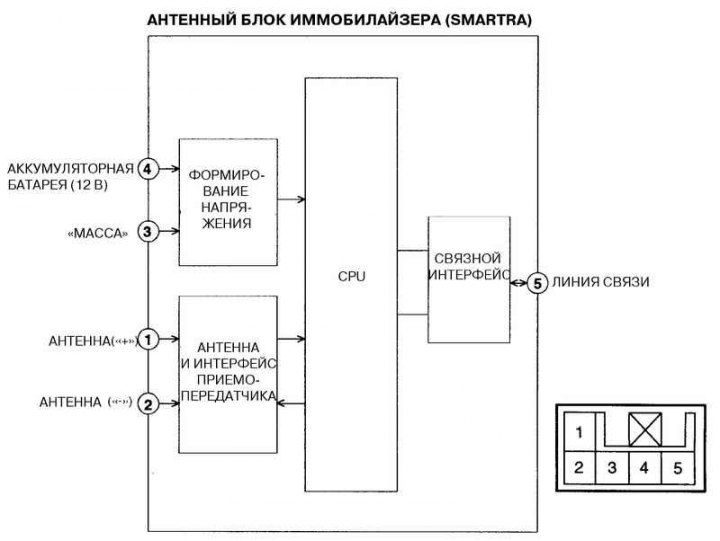
Fig. 7.77. Block diagram of the immobilizer antenna unit
Operating principle of the engine control unit system
The engine control unit identifies the ignition key using a special coding algorithm that operates in parallel in the transponder. The engine can only be started if the results of the algorithm match. The engine control unit stores data from all transponders supplied with the vehicle.
The engine control unit and the Smartra unit communicate with each other via a special communication line. The engine control unit establishes communication via the K line either with the Smartra unit or with other devices (for example, with a test device during maintenance) by turning on the multiplexer and starting special communication procedures. The multiplexer is part of the engine control unit hardware. The Smartra unit communicates via a transponder built into the ignition key. Communication is carried out at a radio frequency of 125 kHz. The Smartra unit is installed on the ignition switch next to the loop transceiver radio antenna. The radio frequency signal received by the loop antenna is converted by the Smartra unit into messages for serial communication, and the messages received from the engine control unit are converted into a radio frequency signal transmitted via the antenna to the transponder.
The Smartra unit does not perform transponder identification or coding algorithm calculations. It is an advanced interface that converts the received radio frequency data stream from the transponder into a sequence of messages sent to the engine control unit, and vice versa.
Transponder – type "Hitag2" with an advanced coding algorithm. When programming the key, special data about the car is entered into the transponder, which is recorded by its memory device. The recording procedure is one-time, so the contents of the transponder"s memory cannot be changed. The data is entered as a chain of 9 bytes, compiled at the manufacturing plant. The contents of the transponder"s memory are divided into two chains, which are called "identifier" and "key password".
The article is based on information website HyundaiBook
After this programming, the transponder memory is locked and its contents cannot be read or changed. The transponder goes from the "clean" state to the "programmed" state.
In addition, each transponder has its own 32-bit IDE identification number. The IDE numbers of transponders are not repeated. The IDE number is entered at the factory and is read only.
The identifier and password of the key are not transmitted from the engine control unit to the transponder or vice versa. Only the results of the coding algorithm are transmitted. It is almost impossible to calculate the special data of the car from the coding result.
For key programming or other purposes, the engine control unit is connected to a test device, which can serve as a factory maintenance tester used at service stations. Communication is carried out via the K-line protocol of the engine control unit.