


Contents: Measuring the resistance of the…⇓ Measuring the resistance of the…⇓ Checking and cleaning ⇓
Measuring the resistance of the primary winding of the ignition coil
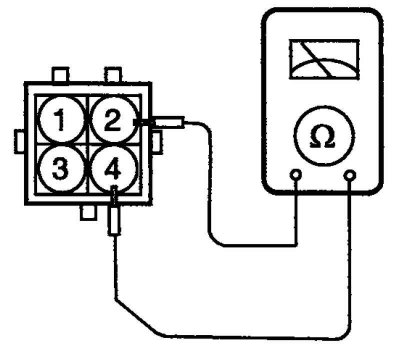
Fig. 7.13. Measuring the resistance of the primary winding of the ignition coil
Measure the resistance between terminals 1 and 2 of the ignition coil (ignition coil for cylinders #3 and #6), terminals 2 and 4 of the ignition coil (ignition coil for cylinders #1 and #4), and terminals 2 and 3 of the ignition coil (ignition coil for cylinders #2 and #5) (Fig. 7.13).
Nominal value: 0.74 ±10% Ohm.
Measuring the resistance of the secondary winding of the ignition coil
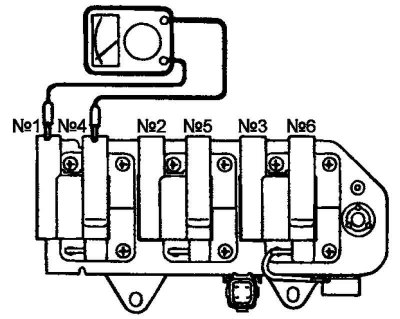
Fig. 7.14. Measuring the resistance of the secondary winding of the ignition coil
Measure the resistance of the secondary winding between the high-voltage terminals of coil No.3 and No.6, No.1 and No.4, No.2 and No.5 (Fig. 7.14).
Nominal value: 13.3 ±15% kOhm.
Caution! When measuring the resistance of the secondary winding, the ignition coil connector must be disconnected.
Checking and cleaning
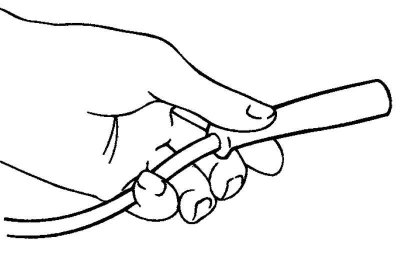
Fig. 7.15. Removing the spark plug wire
Disconnect the high tension spark plug wires from the spark plugs (Fig. 7.15).
Note: When disconnecting the spark plug wire, pull on the insulating cap, not on the wire itself. Otherwise, the wire may be damaged.
Using a spark plug removal tool, remove the spark plugs from the cylinder head
Caution: Be careful not to allow dirt to enter the engine cylinders through the spark plug hole.
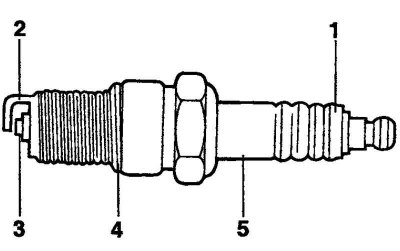
Fig. 7.16. Spark plug components to be tested
Check the spark plugs for the defects listed below (Fig. 7.16).
- 1. Damage to the insulator
- 2. Burnout of electrodes
- 3. Carbon deposits
- 4. Damage or crack of the sealing washer
- 5. The condition of the insulator enamel at the end of the spark plug (absence of traces of breakdown on the surface).
[Original version of the article on the website: HyundaiBook.ru]
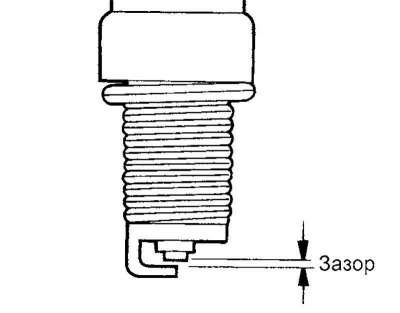
Fig. 7.17. Gap between spark plug electrodes
Check the gap between the spark plug electrodes using a wire feeler gauge and adjust it if necessary (Fig. 7.17).
Nominal value: 1.0–1.1 mm.
Install the spark plugs and tighten them to the specified torque. If the spark plugs are tightened to a torque greater than the specified value, the threads in the cylinder head may be damaged.
Tightening torque: 20–30 Nm.
Caution: When replacing a spark plug, the new spark plug must have a built-in resistor.