


Contents: Checking the clutch pedal ⇓ Checking the starter relay ⇓ Checking the starter interlock switch ⇓
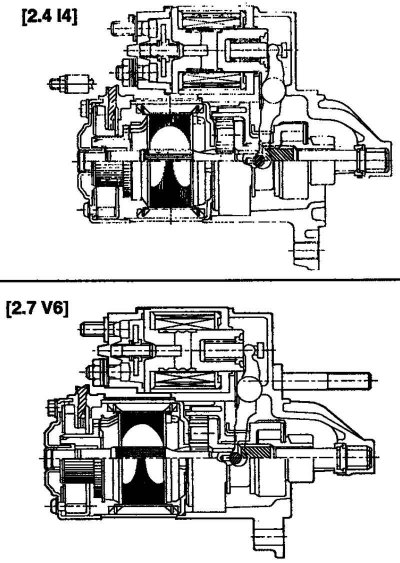
Fig. 7.49. Starter
The engine starting system consists of a battery, starter, traction relay, ignition switch, starter interlock switch (automatic transmission models only), connecting wiring and battery wires.
When the ignition key is turned to the "START" position, current flows through the starter traction relay pull-in winding. The traction relay anchor moves the drive lever (fork), which in turn engages the drive pinion (made together with the overrunning clutch) with the flywheel ring gear (or automatic transmission torque converter). At the same time, the movement of the traction relay anchor closes the contacts and the starter begins to rotate the engine crankshaft.
To prevent damage to the starter caused by high rotation speed of the starter armature after the engine is started, the starter overrunning clutch disengages the pinion gear.
Checking the clutch pedal
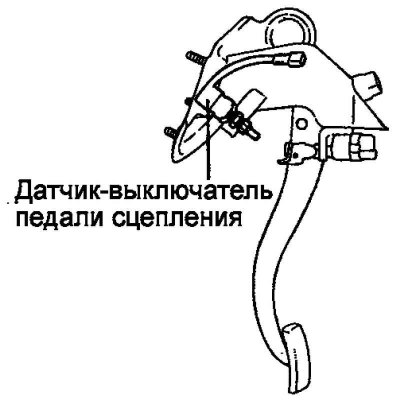
Fig. 7.50. Clutch pedal switch sensor
Make sure that the height of the clutch pedal above the floor, the free play of the pedal and the play in the clutch pedal pin connection are within the norm (Fig. 7.50).
Checking the starter relay
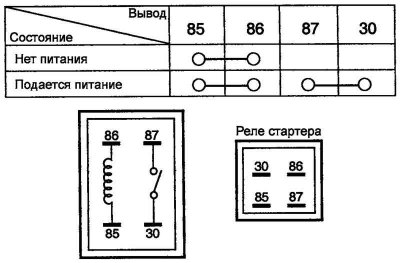
Fig. 7.51. Starter relay test diagram
Remove the starter relay and check the circuit condition between the terminals according to the table. If the circuit condition differs from the specified one, replace the relay (Fig. 7.51).
Checking the starter interlock switch
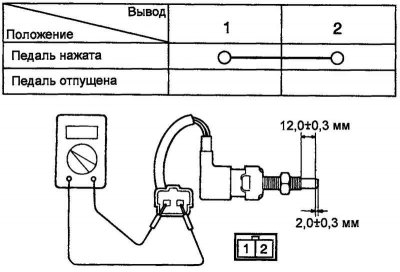
Fig. 7.52. Starter interlock switch test diagram
Remove the starter interlock switch and check the circuit condition between the terminals according to the table. If the circuit condition differs from that specified, replace the switch (Fig. 7.52).
(This publication is based on information from the portal: HyundaiBook)