


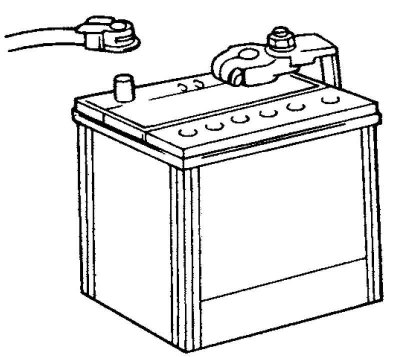
Fig. 7.48. Disconnecting the wire from the battery terminal
Disconnect the wires from the battery terminals (disconnect the wire from the negative terminal first) (Fig. 7.48).
Remove the battery from the vehicle.
Warning! Use extreme caution if the battery case has cracks or other sources of electrolyte leakage, avoid skin contact with the electrolyte. Always wear suitable rubber gloves when removing the battery (do not use household gloves).
Check the battery tray for corrosion caused by acid (electrolyte) leakage. If corrosion is present, wash the damaged areas with a solution of clean warm water and soda. Clean the damaged areas with a stiff wire brush and wipe with a cloth soaked in a soda solution.
Clean the top of the battery with the solution.
Check the battery case and cover for cracks. If cracks are present, replace the battery.
Clean the battery terminals with a suitable battery cleaner.
Clean the inside surface of the battery cable terminal clips with a suitable special tool. Replace damaged or worn cables and damaged terminal clips.
Install the battery into the vehicle.
Connect the jumper cable contacts to the battery terminals and check that the ends of the contact retainers are flush with the ends of the battery terminals.
Tighten the connector wire contact retainer nut securely.
After tightening, apply a small amount of mineral grease to all connection points.
[The material is reprinted from another resource HYUNDAIBOOK.ru]
Warning! When charging a battery, flammable and explosive gas is released under the battery cover. Do not smoke or use an open flame near a battery that is being charged or has recently been charged. Do not disconnect live circuits near the terminals of a battery that is being charged. A spark may appear between disconnected wires (in an open circuit) and cause an explosion. Keep flammable objects away from an open battery.