
HyundaiBook.ru
Repair Chevrolet Repair Honda Repair Toyota Repair Land Rover Repair VAZ Repair Renault Repair Nissan
English Русский
Български
Беларускі
Український
Српски
Hrvatski
Română
Polski
Slovenský
Magyar
ArticlesSitemapContacts  


  Accent   Elantra   Getz   Grandeur   Sonata   Santa Fe   Tucson   Others
Matrix (2001-2010, petrol)
  • Main
  • Hyundai
  • Matrix (2001-2010)
  • Power unit
  • Cooling and lubrication system
  • Removal, inspection and installation of the cooling system radiator

Removal, inspection and installation of the cooling system radiator (Mitsubishi Matrix)

0
Contents: Removal ⇓ Examination ⇓ Radiator Fan Motor ⇓ Installation ⇓
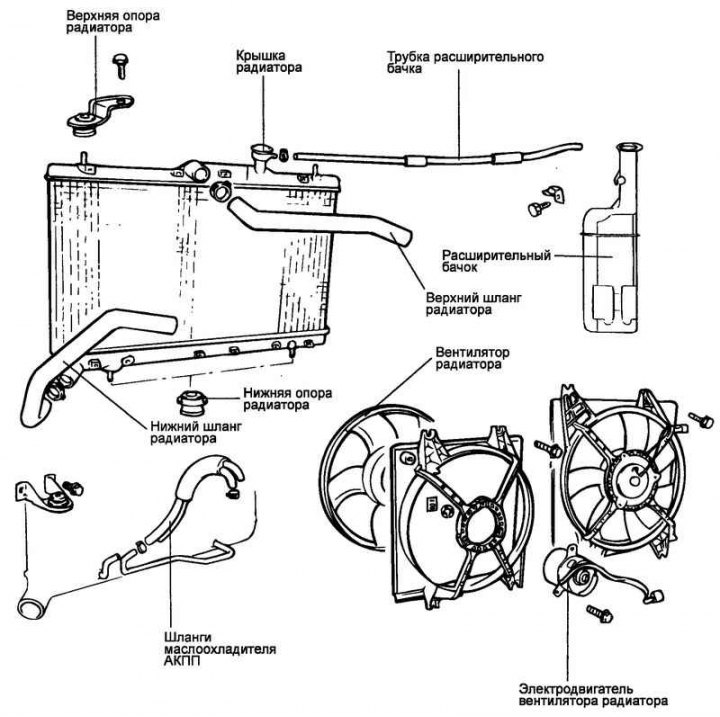
Fig. 2.177. Components of the cooling…

Fig. 2.177. Components of the cooling system radiator


Removal


Disconnect the radiator fan motor connector.
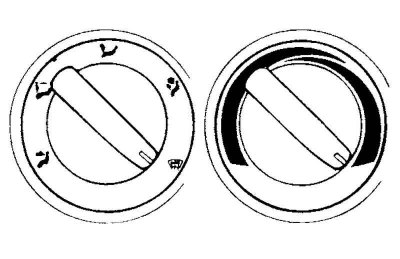
Fig. 2.178. Temperature controller…

Fig. 2.178. Temperature controller switch


Set the temperature control switch to the maximum heating position (Fig. 2.178).

Remove the radiator drain plug and drain the coolant.

Disconnect the upper and lower radiator hoses and the expansion tank tube.

On models with automatic transmission, disconnect the automatic transmission oil cooler hoses.

Attention! After disconnecting the automatic transmission oil cooler hoses, it is necessary to plug the holes in the hoses, the radiator fittings and the automatic transmission pipes to prevent automatic transmission oil from leaking out and foreign particles from getting inside.


Loosen the radiator support mounting bolts.

Remove the radiator together with the radiator electric fan.

Remove the electric fan from the radiator.

Examination


Check the radiator for bent or damaged fins and for foreign objects between the fins.

Check the radiator for damage and any scale, rust or corrosion deposits.

Check the radiator hoses for cracks, damage or deterioration (wear).

Check the expansion tank for damage.

Check the radiator cap spring for damage.

Check the opening pressure of the radiator cap valves using a special tester for checking the cooling system.

Radiator Fan Motor
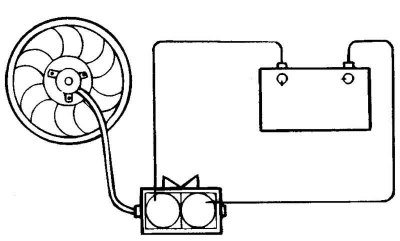


Fig. 2.179. Checking the radiator…

Fig. 2.179. Checking the radiator electric fan


Check that the radiator electric fan rotates when battery voltage is applied to the electric motor terminals (Fig. 2.179).

Check for any extraneous noise when the radiator electric fan rotates.

Installation


Fill the radiator and expansion tank with clean coolant.

Start the engine and warm it up until the thermostat valve opens. Then turn off the engine.

Remove the radiator cap and add fluid to the base of the radiator filler neck, then add fluid to the expansion tank to the upper mark.

Check for any fluid leaks from the radiator, hoses or connections.
This article is available at russian, bulgarian, belarusian, ukrainian, serbian, croatian, romanian, polish, slovak, hungarian
This article has been reviewed by: Konstantin Smirnov
Add to social network:

Previous
Matrix: Cooling and lubrication system
Next

Centrifugal pump of the cooling system
Cooling system device
Checking the radiator cap
Removal, checking and installation the thermostat
Coolant temperature sensor
General information about the lubrication system
Removal, checking and installation the oil pump
We recommend other articles on the topic of Hyundai manuals:

Cooling system Hyundai Accent 1 (1994-1999)
General description of the cooling system Hyundai Elantra 1 (1990-1995, petrol)
Checking the electric fans of the cooling system Hyundai Getz (2002-2011)
Engine cooling system Hyundai Sonata 3 (1993-1998)
Checking the electric fans of the cooling system Hyundai Santa Fe 2 (2007-2012, petrol)
Technical characteristics of the cooling system Hyundai Tucson 1 (2005-2010)

Link in different formats to this article

Visitor comments
No comments yet


How much will 43 + 18 ?


Matrix (2001-2010, petrol) 
  • User manual
  • Control devices
  • Salon equipment
  • Car driving
  • Current service
  • Vehicle specifications
  • Power unit
  • Engine specifications
  • Engine maintenance
  • Engine repair 1.6 l
  • Engine repair 1.8 l
  • Cooling and lubrication system
  • Power and exhaust system
  • Control system
  • Transmission
  • Transmission specifications
  • Clutch
  • Mechanical gearbox
  • Automatic gearbox
  • Drive shafts
  • Chassis
  • Suspension and wheels
  • Steering
  • Brake system
  • Body
  • Exterior (external elements)
  • Passive safety system
  • Heater and air conditioner
  • Electrical equipment
  • Specifications
  • Equipment and devices
  • Power devices
  • Electrical circuits
HyundaiBook.ru © 2018-2026 · Mobile version · Sitemap: EN BG BY UA RS HR RO PL SK HU · Administration · Site search · Hyundai owners Accent 1 · Accent 2 · Accent 3 · Elantra 1 · Elantra 2 · Elantra 3 · Getz · Sonata 3 · Sonata 4 · Santa Fe 2 · Tucson 1 · Tucson 2 · Matrix ·
This site uses cookies to optimize its functionality. By continuing, you agree to our terms.