


Contents: Locking and unlocking the front…⇓ Locking doors from outside the car ⇓ Locking doors from inside the car ⇓ Rear door locking (child protection) ⇓ Central door locking system…⇓ Automatic door locking when the…⇓
Warning! Driving with unlocked doors can be dangerous. Before driving (especially if there are children in the car), make sure that all doors are securely closed and locked and cannot be accidentally opened from inside the car. This ensures that the doors will not open unexpectedly while the car is moving. When seat belts are used correctly, locking the doors helps prevent passengers from being thrown out of the car in the event of a traffic accident. Before opening the door, make sure that there is no approaching vehicle. In the event of an accident, the doors lock automatically (additional equipment).
Locking and unlocking the front doors with the key
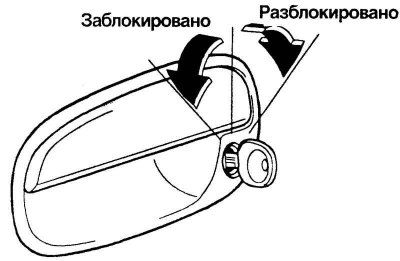
Fig. 1.9. Locking and unlocking the door
The door can be locked and unlocked using the key. To lock the door, turn the key towards the front of the car, and to unlock it, turn the key towards the rear of the car (Fig. 1.9).
Locking doors from outside the car
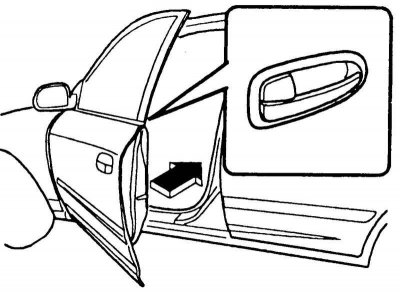
Rice. 1.10. Locking the door without a key
The doors can be locked without using a key (Fig. 1.10).
To lock the doors from the outside of the vehicle, first set the interior door lock button to the "LOCK" position so that the red mark on the end of the button is not visible, then close the door. Note that the door will not lock if the key is in the ignition and both front doors are closed.
Note: When locking the doors without a key, be careful not to leave the ignition key inside the vehicle. To prevent theft, always remove the key from the ignition, roll up all windows, and lock all doors when leaving the vehicle unattended.
Locking doors from inside the car
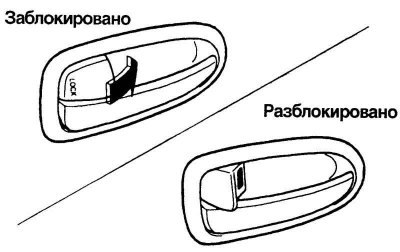
Fig. 1.11. Locking the door from inside the car
To lock the doors from inside the vehicle, simply close the door and set the interior door lock button to the "LOCK" position (Fig. 1.11).
After this, the door will not be able to be opened using the outer and inner door handles.
Note: When the door is locked, the red mark on the end of the button will change to "LOCK".
Rear door locking (child protection)
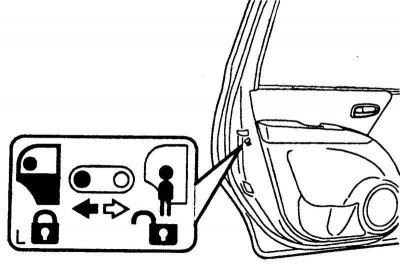
Fig. 1.12. Rear door locking system
The car is equipped with a rear door lock ("child protection") (Fig. 1.12).
If the locking levers are in the locking position, the rear doors cannot be opened from inside the vehicle. It is recommended to use the rear door locking device if there are small children in the rear seat.
To prevent the rear doors from being opened from inside the vehicle, move the door lock lever to the position
 and close the door. To return to normal door lock operation, move the door lock lever to the position opposite to the .
To open the rear door when the lock lever is in the "locked" position, use the outside door handle.
Central door locking system (additional equipment)
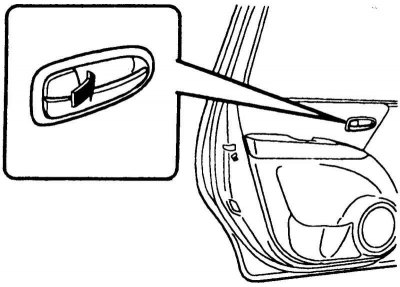
Fig. 1.13. Central door lock switch
The central door lock switch is located in the driver's door armrest (Fig. 1.13).
The central door locking operates when the front or rear part of the switch is pressed. If the front passenger door or the rear door is open when the switch is pressed, it will be locked after it is closed.
Note: Pressing the rear of the central door lock switch will unlock all doors (including the rear door). Pressing the front of the central door lock switch will lock all doors (including the rear door).
Note: When the door is locked, the red mark on the end of the button will change to "LOCK".
The central door locking system is activated when the key is turned in the lock (models with anti-theft system: driver's and front passenger's doors; models without anti-theft system: driver's doors only) towards the front or rear of the vehicle.
Automatic door locking when the vehicle is moving (additional equipment)
When the vehicle speed exceeds 40 km/h for 2-3 seconds, all doors are locked for the safety of the driver and passengers. If you remove the key from the ignition, all doors will be automatically locked.