


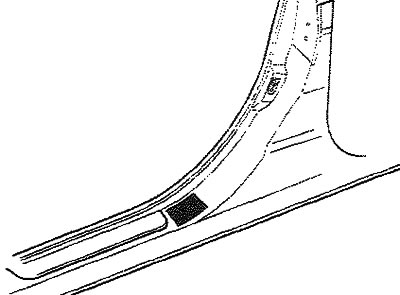
The recommended tire pressure label is located on the outer panel of the center pillar on the driver's side.
| Disk size | Tire size | Pressure, kPa | |||
| No more than two people | At maximum load | ||||
| Front | Rear | Front | Rear | ||
| 4.5J x 13 | 155/80R13 | 210 | 210 | 230 | 230 |
| 5.0J x 13 | |||||
| 5.0J x 14 | 175/65R14 | ||||
| 5,5J X 14 | |||||
| 5,5J X 15 | 185/55R15 | ||||
| 4,0T x 14 | T105/70D14 | 420 | 420 | 420 | 420 |
This pressure is selected to ensure maximum ride comfort, minimum tire tread wear and stability under normal driving conditions.
Tire pressure should be checked at least once a month. Maintaining correct tire pressure is important for the following reasons:
- Low tire pressure results in uneven tire tread wear and poor vehicle handling.
- High tire pressure increases the risk of wheel damage from impact and causes uneven tire tread wear.
Caution: Always observe the following:
- Check the air pressure on cold tires. The tires are considered cold if the car has been parked for at least three hours and has not traveled more than 1.6 km since the engine was started.
- Check the air pressure in the spare tire every time you check the tire pressure.